




How Low-Phosphorus, Low-Ash Oil Can Improve Truck Reliability
PC-12, the next performance category for heavy-duty engine oils, will drive improvements across several key performance criteria. Here’s how heavy-duty trucking professionals stand to benefit.
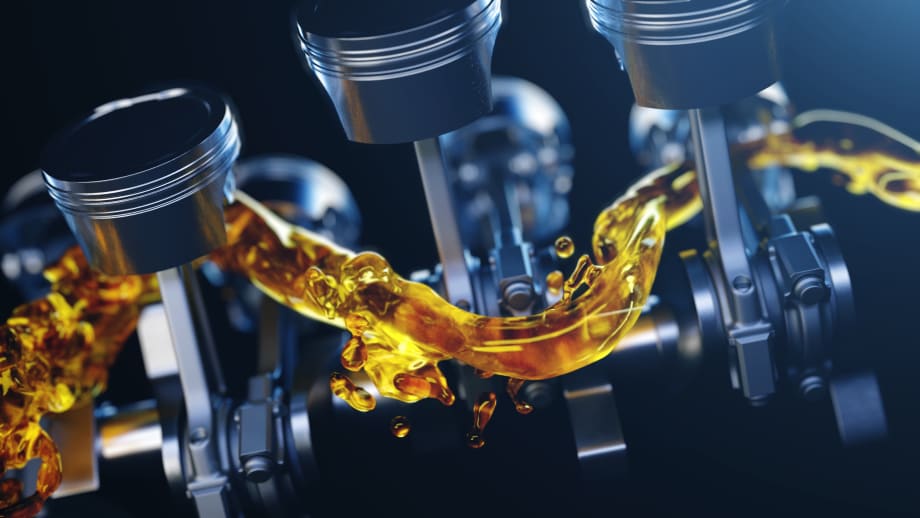
Heavy duty engine oils meeting the upcoming API PC-12 category will elevate the next generation of engine performance.
Photo: Lubrizol
Change is coming for heavy-duty engine oils. The American Petroleum Institute’s Proposed Category 12 (PC-12) is currently under development. PC-12 will raise the bar for engine oil performance across a range of key criteria, including fuel economy, wear protection, and more.
That means change is coming for the lubricants that heavy-duty trucking professionals use. The new PC-12 category for heavy-duty engine oils is scheduled to go into effect in January 2027, replacing the current API CK-4 category. It’s worth staying educated on what those changes mean.
Protecting Aftertreatment Devices
One of PC-12’s most noteworthy changes is enhanced protection for aftertreatment devices, including diesel particulate filters (DPFs) and selective catalytic reduction (SCR) systems. This will help to reduce the frequency of time-consuming regenerations and extend the life of DPFs.
But how next-generation oils will accomplish this goal — a reduction in phosphorus and ash-containing anti-wear chemistry — has raised some questions about engine protection. It’s a formulation requirement that the lubricants industry is working diligently to satisfy.
In this article, we’ll explore next-generation lubricants and aftertreatment device performance, additional PC-12 updates, and their anticipated benefits for on-road vehicles, plus how trucking professionals can prepare and make the best lubricant choices for their operations.
Why Do We Need a New Oil Category?
To understand some of the changes coming for next-generation lubricants, it can be helpful to understand the drivers behind them.
Stringent new emissions standards are coming for on-road as well as for off-highway heavy-duty engines.
Set by the U.S. Environmental Protection Agency in 2022 and coming into effect for model year 2027 engines, tomorrow’s trucks must achieve:
A 75% reduction in nitrogen oxide (NOx) emissions from current allowable levels.
A 50% reduction in particulate matter (PM).
Extended service life for exhaust aftertreatment devices, growing from about 435,000 miles to 800,000 miles.
Meeting these new standards will be a significant challenge for original equipment manufacturers, requiring changes to hardware design and operation.
Doubling the service life of aftertreatment devices is not simple. It will also require meaningful contributions from engine oils, which is why it's one of the main driving forces behind PC-12.
Protecting Critical Aftertreatment Devices
One way to protect aftertreatment devices (SCRs and DPFs) and extend their service life has already been determined for PC-12: reduce phosphorus and ash-containing chemistry levels in heavy-duty engine oil.
Highly efficient exhaust gas aftertreatment equipment allows trucks to meet EPA and California emission criteria.
The selective catalytic reduction (SCR) system reduces NOx levels in exhaust gases through the action of a metal catalyst in conjunction with diesel exhaust fluid to produce benign byproducts.
However, during engine operation, phosphorus in the lubricant can enter the exhaust and react with the SCR’s catalyst, reducing its activity. This leads to a drop in the effectiveness of the system to reduce emissions and shortens the lifespan of aftertreatment devices.
Therefore, low-phosphorus formulations are required to prolong the functionality of the aftertreatment device. As a result, phosphorus levels in PC-12 fluids will be limited to 800 parts per million (ppm), a 30% reduction from the 1200 ppm figure allowable in current oils.
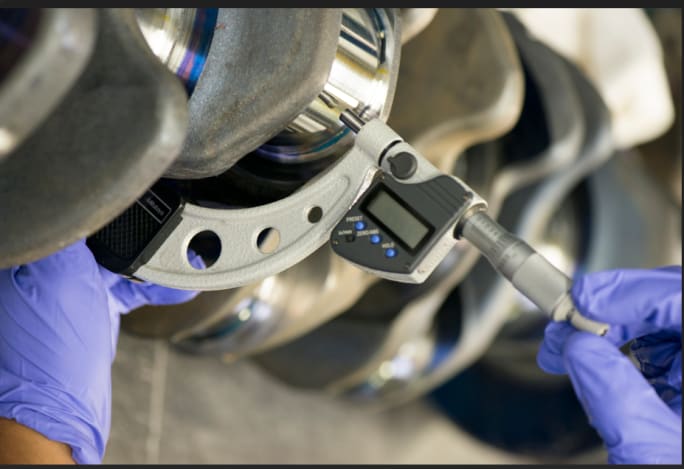
An engineer uses a micrometer to measure a critical engine part during testing of new oil formulations.
Photo: Lubrizol
But phosphorus has historically been used in engine oils for an important reason: providing reliable wear protection.
Specifically, zinc dialkyldithiophosphates (ZDDPs) have been widely used for anti-wear properties for many years. ZDDPs also help to inhibit oxidation and deposit formation within the lubricant formulation. Historically, they’ve been an important tool in the oil formulator’s toolbox.
Formulators have been developing alternative formulations with new chemistries that can stand up to the demands of heavy-duty equipment.
Various phosphorus-free anti-wear chemistries have shown that effectiveness across each performance area will require more than a simple one-to-one replacement. A combination of several additive chemistries will be needed to replace ZDDPs.
However, heavy-duty trucking professionals can rest assured that effective formulations will be available despite the new formulation restrictions. Low-phosphorus formulations are already available today and are commonplace in global markets.
The Benefits of Low-Phosphorus, Low-Ash Oil Formulations
Enhanced aftertreatment device protection in next-generation engine oils can have a real impact on heavy-duty trucking fleet operators.
Consider that DPF regeneration (often simply referred to as “regen”) is an essential maintenance procedure for fleets. This process, which burns off soot and particulates that accumulate in the DPF, is critical for keeping emissions systems working properly and maintaining expected engine performance.
Passive regeneration happens automatically during normal on-road activity when exhaust temperature reaches appropriate levels, but fleets must often perform active or manual regeneration for excessive buildup:
Active regen requires the engine to inject extra fuel into the exhaust stream to reach the right temperatures. It may occur while driving or idling.
Manual regeneration must be performed while the truck is parked and may take anywhere from 30 to 60 minutes.
Both processes require extra resources, such as extra fuel, downtime, or both, which can add up across an entire trucking fleet.
Next-generation lubricants will better contribute to the health and longevity of engine’s aftertreatment equipment, reducing downtime and maintenance.
On top of that, lubricants that can contribute to extended lifespans for DPFs can save fleets on repair or replacement costs.
These savings, taken across an entire fleet, have the potential to add up to a significant benefit for the bottom line.
Additional Benefits for Higher-Performing Engine Oils
Lubricants that meet the elevated standards of PC-12 can also contribute to enhanced fuel economy.
Like API CK-4 and its lower-viscosity counterpart FA-4, PC-12 will be split into two categories.
The F category will be intended for new-model trucks and will contribute to improved fuel economy. For trucking fleets, it’s worth investigating these lower viscosity formulations. Compared to traditional 15W-40 grade lubricants, trucks can see a 1-2.2% improvement in fuel economy by choosing a low-viscosity FA-4 oil.
While it may sound like a small gain per truck, it can add up to significant savings across an entire large fleet. Start by ensuring OEM approval and work with your oil supplier to evaluate your options.
OEMs, oil marketers, and additives suppliers continue to work closely to ensure that end users can depend on reliable, effective solutions that allow heavy-duty equipment of all types to perform as intended.
While 2027 may seem far off, fleets can start preparing themselves for next-generation fluids today. It is worth consulting with your lubricants suppliers early and often about PC-12-compliant fluids. Engagement in early-stage collaboration, testing, and on-road use can best prepare your fleet for success when PC-12 sees first license, and is critical for developing reliable new fluids. The entire heavy-duty trucking industry stands to benefit.

About the author: Zachary L. Rodgersis the Engine Oil Development Manager at Lubrizol Additives, where he leads formulation strategies for heavy-duty engine oils. He specializes in North American heavy-duty and Latin American passenger car product development.
This article was authored and edited according to Heavy Duty Trucking’s editorial standards and style to provide useful information to our readers. Opinions expressed may not reflect those of HDT.
More Maintenance

Color Match Smarter: Tools That Restore & Perform
For fleet managers and collision repair professionals keeping heavy-duty trucks on the road, getting the color right the first time isn't just about appearance — it's about efficiency, turnaround time, and bottom-line results. Discover how today's digital color tools are transforming the repair process from guesswork to precision.
Read More →
Wrong Repair Prompts Recall of Freightliner, Western Star 4x2 Trucks
DTNA is recalling more than 2,400 trucks that received an incompatible software fix instead of the hardware repair required to address brake valve corrosion.
Read More →
Truck Drivers Need More Than Another Alert
Fleets have more visibility into truck health, safety events, and driver activity than ever. The next challenge is turning all that information into useful guidance for the person who has to decide what to do next.
Read More →
The Maintenance Checks Trucking Fleets Should Prioritize Before Fall Freight Picks Up
Making it through August isn’t the same as being ready for the next several months of operation. Find out what systems may have suffered from summer heat and need to be checked out before fall.
Read More →
What Three Fleets Are Doing Differently When Buying Truck Parts in 2026
With freight improving but costs still climbing, fleet maintenance executives explain how they're balancing price, quality, and supplier relationships.
Read More →
Paccar Recalls 2027 Trucks Built This Summer for Possible Electrical Problem
The nearly 6,000 Kenworth and Peterbilt trucks in the recall could potentially lose engine power, among other things.
Read More →
Will API PC-12 Oil Change Trucking Fleet Maintenance?
The new API PC-12 heavy-duty engine oil category reflects the changing demands of modern diesel engines. But fleets like Foodliner are looking to getting their own data before making decisions on adopting the new oils and questions such as extending oil drain intervals.
Read More →
Brake Safety Week to Focus on Drums and Rotors
Commercial vehicle inspectors are focusing on truck brakes during CVSA's Brake Safety Week, August 23-29.
Read More →Possible Battery-Cable Fires Prompt Recall of 15,000+ International MV and HV Trucks
On the recalled vehicles, manufacturing variations can cause the battery interconnect cable to contact the auxiliary stud and hold down the bracket.
Read More →
Rush, MCT Team Up to Grow Refrigeration Service Network
The joint venture will operate MCT's network of Carrier Transicold dealerships and mobile service locations, with the companies promising greater service capacity and uptime for refrigerated fleets.
Read More →