




How Fitness for Duty Exams Can Prevent Worker’s Comp Claims
There’s a simple way to avoid many worker’s compensation claims: Don’t put the wrong worker to work. The “wrong worker,” simply put, is anyone who is physically unable to perform essential job functions.
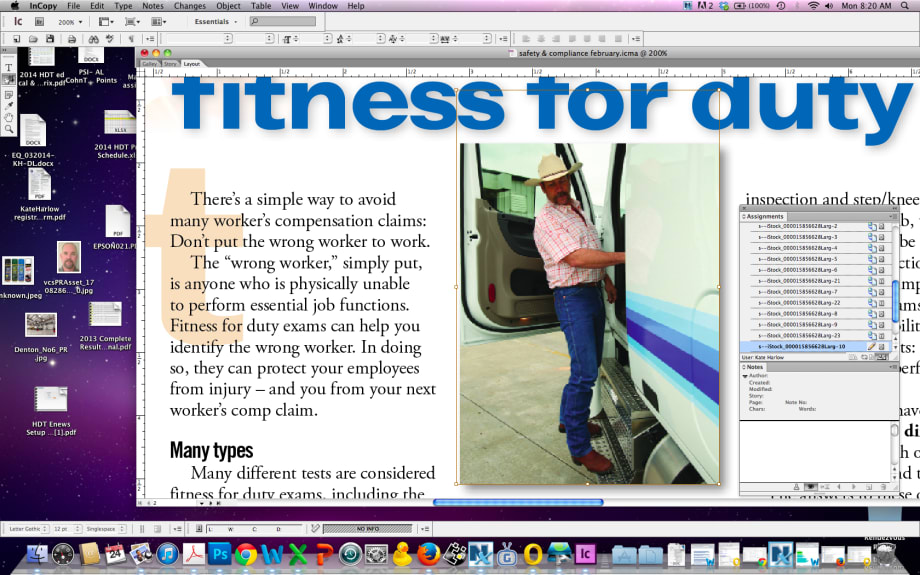
Con-way Truckload is one of a growing list of carriers that are requiring pre-employment agility testing for drivers.
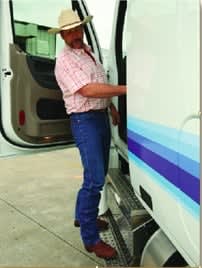
Con-way Truckload is one of a growing list of carriers that are requiring pre-employment agility testing for drivers.
There’s a simple way to avoid many worker’s compensation claims: Don’t put the wrong worker to work.
The “wrong worker,” simply put, is anyone who is physically unable to perform essential job functions. Fitness for duty exams can help you identify the wrong worker. In doing so, they can protect your employees from injury – and you from your next worker’s comp claim.
Many types
Many different tests are considered fitness for duty exams, including the following:
1. Return to work: Conducted if you doubt whether an employee is ready to come back after an injury, even though the worker’s doctor has given the all clear.
2. Job performance: Conducted if you’re concerned that an employee cannot perform the functions of the job or that an employee can’t perform up to the standards of other workers.
3. Post-offer physical examinations: Includes extensive questionnaire for employee to complete, musculoskeletal assessment, drug screen and medical surveillance. Physical abilities testing is a type of post-offer screening.
You also may have heard about functional capacity evaluations. These are interchangeable with fitness for duty exams. Enhanced physical is another term tossed around when talking about screening worker health.
Regardless of the name or acronym, taking any steps to head off a worker’s comp claim is good risk management.
Are fitness for duty exams legal?
Employers do have a legal right to perform fitness for duty exams.
The Family and Medical Leave Act and worker’s comp laws both allow for employers to request an independent medical opinion about a worker’s fitness for duty. In short, employers are empowered to use these screening tools.
According to the Americans with Disabilities Act, you cannot discriminate against a disabled worker when hiring — but his disability cannot prevent him from doing the essential functions of the job. For example, it is illegal to not hire someone because he walks with a limp. If the candidate is able to crouch to perform a pre-trip inspection and step/kneel to get up and down from the cab, trailer and catwalk, then he may be able to perform the essential functions for the position even with a limp.
Fitness for duty exams lean on the Americans with Disabilities Act for two primary guideposts:
• Can the worker perform the essential functions?
•Does the worker have a medical condition that poses a direct threat to the safety and health of the worker or to the people around the worker?
The answers to these questions will guide decisions regarding whether an employee is ready to work.
Also be aware of reasonable accommodations in complying with ADA. This comes into play with ancillary job tasks. One resource that employers can turn to for guidance is The Job Accommodation Network, a free consultation service employers can use to determine if a reasonable accommodation can be made.
For instance, say you are hiring a driver and he has chronic back pain. A suspension seat and vehicle cushion that absorbs vibration could be provided so that the driver can sit comfortably for longer periods of time.
These types of reasonable accommodations can’t be overlooked in fitness for duty exams.
Recipe for success
The goal of fitness for duty exams is to determine whether a worker is up to the physical demands of a position. Fitness for duty exams help discover an employee’s capacity for work, sometimes following a medical leave of absence. Keep that framework in mind as you consider the following best practices for a fitness for duty exam.
Remember that each case is individual. Just because an individual has a particular medical history (for instance, a rotator cuff tear), that doesn’t necessarily mean the worker can’t perform the job. After a rotator cuff repair an applicant could be the poster child for success in your organization and have many years of work ahead of him. You never know.
Information, information, information. The more information the medical professional conducting the fitness for duty exam has, the better. We recommend sharing the following with the medical professional to arrive at the best outcome for the worker and the employer:
• A job description that covers essential functions and physical demands. It may be helpful to have an occupational therapist assist you in creating this. You will want to figure out how to objectively measure the physical demands of pulling the fifth wheel pin, sliding a tandem and cranking the dollies along with other exposures specific to your operation.
• Medical records. The employee might say one thing, but the records will tell another story. Remember: The goal is to avoid an injury and the worker’s comp claim that goes with it.
• A phone conversation to allow the provider to dig deeper about the employee and his job. It’s a good idea to document what was said in the phone conversation in an email or cover letter for a permanent, written record as well.
Employers need to protect themselves by doing all they legally can to determine if an applicant can safely perform the physical demands of a job – or risk a worker’s comp claim that could have easily been avoided.
HNI is a non-traditional insurance and business advisory firm. This article originally appeared in the HNI blog.
More Drivers

Truck Drivers Need More Than Another Alert
Fleets have more visibility into truck health, safety events, and driver activity than ever. The next challenge is turning all that information into useful guidance for the person who has to decide what to do next.
Read More →
FMCSA Removes 110 Truck Driver Training Schools from Certified ELDT List
Federal regulators also are targeting more than 160 additional training providers and launching a nationwide audit of third-party CDL skills testers as part of a broader crackdown on trucking fraud.
Read More →
Hours of Service Pilot Programs: FMCSA Readies for 2027 Rollout
Two pilot programs could eventually reshape hours-of-service rules, giving truck drivers options to pause their 14-hour clock or use longer split sleeper rest periods.
Read More →
Medical Cards, English Proficiency Reshape Roadcheck Violations
Medical-card violations jumped to the top of the driver out-of-service list during CVSA’s 2026 International Roadcheck, while English-language proficiency violations appeared among the leading violations for the first time.
Read More →
Driver Trust Can Make or Break the Success of Fleet Safety Technology
New Teletrac Navman research suggests that onboarding, transparency about driver data, and positive feedback can play a significant role in how commercial drivers respond to safety and coaching technology.
Read More →
EEOC Sues KLLM Over Alleged Sex Discrimination in Driver Training
KLLM is facing a federal sex-discrimination lawsuit over policies the EEOC alleges put female truck driver trainees at a disadvantage.
Read More →
FMCSA Moves to Codify English Language Requirements for Commercial Drivers
By changing regulations on English-language proficiency requirements for commercial drivers, rather than relying on a guidance memo, the FMCSA said future administrations won't be able to walk back the Trump administration's stricter enforcement with just a memo.
Read More →
Drivers Put Western Star Trucks to the Test at Star Nation Experience
Watch to get an inside look at the Western Star trucks, technology, and community behind the Star Nation Experience 2026!
Read More →
Trump Administration Looks to Put More Veterans Behind the Wheel
The Freedom Haulers program pulls together existing and expanded programs at several federal agencies to recruit veterans to drive commercial heavy-duty trucks and cut the red tape for them to get a CDL, training, and employment.
Read More →
Putting Mack’s Command Steer to the Test
A test drive of Mack’s Command Steer active steering system evaluates how it can make truck driving easier and less tiring.
Read More →