



Opportunity Knocks: A Big Investment in Technology Is on Deck for the Logistics Industry
Tomasz Jamroz writes about Roadrunner’s journey.
 MENU
MENU SEARCH
Roadrunner Transportation was near death’s door in 2017. Today, it bills itself as “transportation’s greatest comeback story.” Find out how data and machine learning helped the LTL carrier come back from the brink.
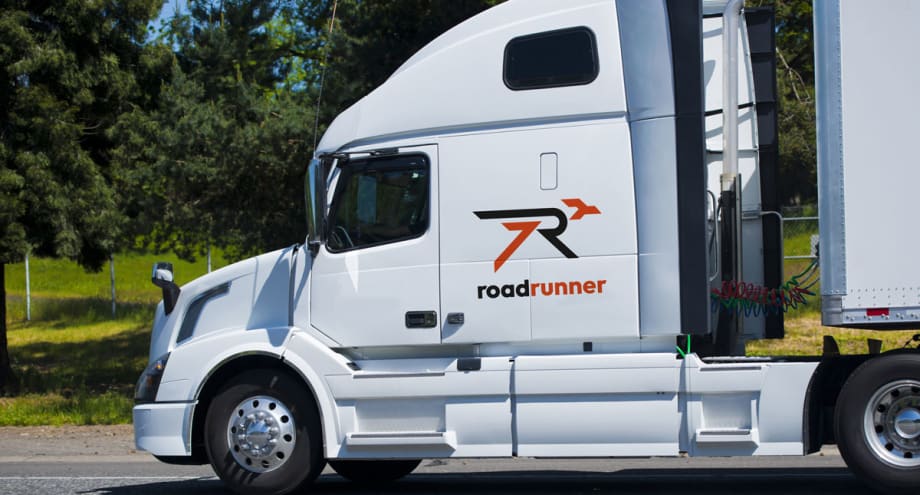
With a less-than-truckload operation that uses owner-operators and small carriers, managing the network and the freight becomes a complex question. Roadrunner turned to machine learning to help.
Photo: Roadrunner
Roadrunner Transportation was near death’s door in 2017. After going public in 2010, in five years Roadrunner had made more than 20 acquisitions. However, those mostly truckload acquisitions affected the company’s service and reputation in its traditional less-than-truckload market. The company was bleeding money, losing millions of dollars — but hiding those losses from shareholders, regulators, and customers by manipulating its financial reports.
It all came crashing down in 2017, when Roadrunner announced that it would restate its previously reported financial results due to accounting irregularities. Shareholders lost millions when the stock price plummeted. Former Chief Financial Officer Peter Armbruster would eventually be sentenced to prison for securities fraud and ordered to pay $1.14 million in restitution. The company itself ended up settling with the Securities and Exchange Commission earlier this year.
New leadership was brought in to turn the company around. By August 2020, Roadrunner had divested its truckload business, turning the company back into a standalone less-than-truckload carrier — and was back in the black financially.
Today, Roadrunner bills itself as “transportation’s greatest comeback story.." It says the carrier has been recognized by Newsweek as one of America’s most trustworthy companies and awarded Most Improved LTL Carrier by Mastio. And it continues to win service quality awards from multiple shippers.
“We have been working with Roadrunner for the last 12 years,” says James Vickery, head of logistics at Custom Service Hardware, a Roadrunner customer.
“Roadrunner has not always been the most dependable LTL carrier, but they have changed a lot in the last couple of years. They really focus on getting things when and where expected and improving their lane times and service levels.”
Roadrunner this year is expanding its network for the first time in years with new inbound service to Denver. The service to Denver marks the first step of new market expansions, with openings of Kansas City and Portland planned for 2023.
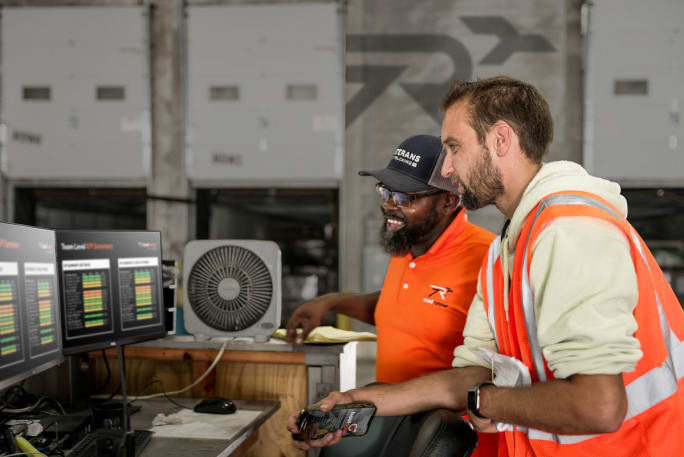
Roadrunner's investments in technology, increased lane density, dock automation, and training and service center improvements allowed the carrier to improve transit times in 130 major lanes.
Photo: Roadrunner
“At a very high level, our strategy is to become the best LTL provider in the U.S.,” explains Tomasz Jamroz, head of operations linehaul and technology. “Our goal is not to be everything to everybody. Our goal is to offer a particular niche in the market. We’re not competing with the XPOs and Saias of the world.”
That niche is focusing on metro-to-metro transportation, with fast, direct service, no relays, and minimal handling.
“Our strategy is to really offer our customers what they really need. We’re not trying to be the cheapest but trying to be the best value providers in the market.”
To accomplish this, the Downers Grove, Illinois-based company turned to data analysis and machine-learning technology. Instead of doing things the way it used to, Jamroz says, leadership decided to make decisions based on data.
Roadrunner made the business decision to treat the development of its next-generation logistics technology as a start-up enterprise. It recruited from outside the logistics industry and launched an incubator to support the development and deployment of a state-of-the-art technology platform.
All this meant a culture shift.
In the past, Jamroz says, there were a lot of “silos” in the business, with executives in each silo making their own decision, fighting with other silos, everyone embroiled in corporate politics.
Today, departments are more integrated.

"The point of data is not to make you look good. It’s actually the opposite," says Tomasz Jamroz, Roadrunner head of operations linehaul and technology.
Photo: Roadrunner
“One of my direct reports was telling me it’s so amazing she can go and talk to anyone in the organization to solve problems,” he says. “Because we created that culture of enabling everybody to drive the change. Moving from that culture of one person taking all the glory versus the whole team working and people being empowered to make decisions.” Because those decisions, he says, are based on data.
Jamroz, who is passionate about data, calling himself “a data cookie monster,” got his start at Roadrunner working to make the necessary data available.
“As we were enabling it from a technical perspective, we stood up a data governance process,” he says, to make sure everyone is using the same data, that raw data is not being manipulated to make a point. You can’t have the sales team excluding a certain bit of data and operations excluding a different bit of data.
“We were looking at different reports, and some people removed some codes because they make us look bad. That’s not the point of having data. The point of data is not to make you look good. It’s actually the opposite. The data needs to be able to tell you where you have a problem…. [and] how to become better.”
As the company moved to a more data-driven organization, management was able to identify inefficiencies and address them.
“We looked at our network and identified certain terminals and areas [brought in through acquisitions] that made zero sense from our point of view,” he says. “So we went through a bit of network reorganization and figured out we don’t really need to serve that area. We were just creating headaches for ourselves.”
One of those data-driven decisions was divesting its intermodal business.
“Rail was not good for our customers,” Jamroz says. In 2020, Roadrunner was moving 30% of customers’ freight on the rails. Today it’s zero.
“We run 0% of our miles on rail, and we stopped relying on low-quality third-party agent partners in remote areas,” says Shari Leon, Roadrunner vice president of linehaul operations. “We have best-in-class custodial control and provide full tracking visibility to our customers. We focus on where we are best, a Smart Network connecting more metro-to-metro lanes directly and faster than ever.”
Roadrunner uses team drivers where needed, multiple daily departures and customized dock automation, and gives shippers access to its network on weekends with what it calls “Weekend Plus.”
With a less-than-truckload operation that uses owner-operators and small carriers, managing the network and the freight becomes a complex question.
“Think about how many input parameters have to be taken into consideration when you move the freight,” Jamroz explains. “I have about 30 terminals. The permutations that can exist between those terminals are in the thousands. Think about how many zip codes in those terminals. Then I have the driver moving from point A to point B. The terminal needs to be open at the origin and destination for it to work. Then I have the driver, he can drive a number of miles, but we need to take into consideration the hours of service. And this is just the beginning.
“There needs to be a shipment going in that direction that needs to be picked up or delivered locally that can be used for aggregation of freight, because I don’t want to send a half empty trailer across the country.
“Then we need to look into the cost, which is another input that your models or algorithm need to take into consideration. Then I need to optimize where the driver goes next. Is he coming back to Chicago or going somewhere else? And the drivers are not my employees. I can’t tell them they have to do it, so I need to take that into consideration in my model.
“It’s all too complex for a human to understand.”
So Roadrunner developed its own machine-learning algorithm that allows it to optimize the network. And over the past 18 months, the less-than-truckload carrier has announced improved transit times four times.
The Roadrunner team uses proprietary optimization technology to build direct loads and eliminate rehandling. The company focuses on assuring the integrity of custodial control of customer freight through the use of driver teams that execute over-the-road moves (with no customer freight ever moving on rail) via the most direct route possible, eliminating the need to re-handle and thereby reducing the risk of loss or damage.
In addition, Roadrunner’s new app, Haul Now, allows its owner-operator drivers to run their businesses and interface with the company.
“You have an ability to run your own business from the palm of your hand,” Jamroz says of how owner-operators use the app. They can select their next load, track their hours of service, check their settlements, and so on.

Roadrunner Haul Now app allows its owner-operator drivers to run their businesses and interface with the company, while providing data Roadrunner and its customers need.
Photo: Roadrunner
And that data feeds into Roadrunner’s system so it knows which driver is taking which load, where the driver is, how many hours of service they have, trailer information, and so on.
Plus the real-time data about shipment location is something sought after by Roadrunner customers.
This new app launch follows technology improvements in dock automation, internal data analysis, and customer reporting.
The company focused on giving customers what they really want, Jamroz says.
“We decided to go away from how the industry is measuring this service,” which involves a lot of codes. “From a customer perspective, they don’t care if somewhere in the middle of Texas there was a big storm or something happened,” he says. For them, the question is at its most basic, “Did you receive your toothbrush or not? (Or whatever the freight may be.) So we’re introducing our own metrics where we’re looking at things differently — is it success or fail?”

With a new start came a new logo for Roadrunner last year.
Image; Roadrunner
Exceptions, he says, are one metric for measuring that success, and an important one for customers. Roadrunner has cut those exceptions from 3% to 0.7%.
“We measure ourselves by the metrics that matter most to our customers,” Jamroz says.
To achieve that, where needed, Roadrunner uses driver teams. He offers the transit time from Chicago to Los Angeles as an example; the company uses teams exclusively on that lane.
Roadrunner’s drivers are all owner-operators, which Jamroz calls partners. “Like any type of entrepreneur, they don’t work just Monday through Friday.” That leads to what Roadrunner calls its Weekend Advantage. The Chicago-LA route takes three days. A load could head out on a Friday and the customer gets it Monday – which for a company that works Monday through Friday is only one business day.
“Our Chicago-to-SoCal and SoCal-to-Chicago lanes represent the fastest transit times in the industry, offering expedited service at LTL rates,” says Phillip Thalheim, director of network analytics.
In January, Roadrunner implemented its updated proprietary Load Plan 2.0, further speeding up its network across 130 major lanes.
“Our investments in technology, increased lane density, dock automation, and training and service center improvements enabled us to improve transit times in these 130 major lanes while maintaining service levels above 90%,” Jamroz explains. “Our continuous network optimization is expected to result in additional transit time improvements in 2023.
“This is version 2, but I can assure you we’re going to have more great news in 2023, because we think that we cracked the code. We now really got to the point where we really understand and focus on optimization. It’s kind of fine tuning everything we do to become the best version of ourselves.”

For fleet managers and collision repair professionals keeping heavy-duty trucks on the road, getting the color right the first time isn't just about appearance — it's about efficiency, turnaround time, and bottom-line results. Discover how today's digital color tools are transforming the repair process from guesswork to precision.
Read More →
Carriers whose updates were due on or after June 1 have more time, while FMCSA works to stabilize its new registration system and warns of phishing sites impersonating its new carrier registration system, Motus.
Read More →
Cargo theft is no longer just the cost of doing business. It's a multi-billion-dollar criminal enterprise exploiting vulnerabilities across your fleet, drivers, and supply chain.
Read More →
Explore how telematics help refrigerated fleets improve visibility, uptime, efficiency, compliance, and cargo protection across connected cold chain operations.
Read More →
Escalating U.S.-Canada tariffs could disrupt cross-border freight, reduce truck volumes, raise costs, and create new uncertainty for carriers on both sides of the border.
Read More →
The American Transportation Research Institute wants to know what's worrying trucking fleet managers, drivers, and other stakeholders in its annual Industry Issues survey.
Read More →
ATA President and CEO Chris Spear abruptly left his job at the association on August 21, at a pivotal time for the trucking industry.
Read More →
Public Wi-Fi can expose truck drivers and fleets to credential theft, malware, and other cyber threats. Here’s how to reduce the risk on the road.
Read More →
HDT Truck Fleet Innovator Nicky Cupp turns everyday pain points at Fraley & Schilling into opportunities for better technology and smarter processes.
Read More →
HDT Truck Fleet Innovator Adam Buttgenbach helped PepsiCo build one of North America’s largest EV fleets by focusing on where electric trucks make operational sense.
Read More →
