




Heavier-Rig Idea Advances
A bill to allow states to authorize heavier tractor-trailers has been introduced in Congress, and the idea might also be part of highway reauthorization legislation. But chances for passage are iffy, observers sa

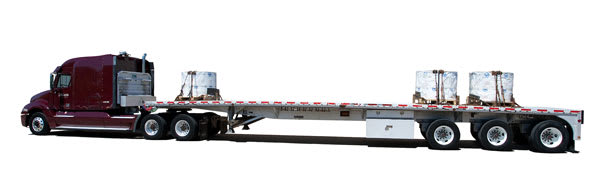
This mockup from Maverick shows how a proposed three-axle, 48-foot flatbed would carry 51,000 pounds on its tridem, plus the familiar 12,000 pounds on the tractor's steer axle and 34,000 on its tandem.
A bill to allow states to authorize heavier tractor-trailers has been introduced in Congress, and the idea might also be part of highway reauthorization legislation. But chances for passage are iffy, observers say
, because key senators and representatives are opposed to bigger, heavier trucks.
Backers include haulers of steel and building products, and timber and agricultural producers. The American Trucking Associations supports it, but others in trucking oppose it because they believe they'll gain nothing in revenue after spending money on equipment, and be faced with higher taxes besides.
House Bill 1799, introduced on March 30 by Reps. Michael Michaud (D-Maine) and Jean Schmidt (R-Ohio), would authorize states to allow a six-axle rig to gross up to 97,000 pounds on Interstates and other highways. But it would not require states to accept the heavier truck type, the representatives point out. The bill would impose an additional federal fee to raise money for road and bridge building, and states could also raise fees.
"This bill represents a step forward in my work with the Committee on Transportation and Infrastructure to provide an acceptable resolution to the truck weight problems throughout our country, especially in Maine," said Michaud in a statement. "Thoughtful implementation of a federal truck weight exemption for the remainder of Maine's Interstate, and changes like it in other states, would help our struggling economy."
Michaud also cited fuel savings, pollution reduction, and improved safety because trucks would be less likely to take secondary roads.
Productivity Meets Environment
The idea to boost vehicle productivity is not new, but formal backing by shippers and some truck operators has gelled as the promise of higher fuel economy and a lower carbon footprint have been added to arguments in favor. Heavier rigs now operate safely in many American states, mostly grandfathered in previous trucking legislation, as well as in Canada and Europe, proponents note.
The typical six-axle, 97,000-pound configuration would be a three-axle tractor pulling a three-axle semitrailer, industry sources say. The trailer is likely to be 48 to 53 feet long, and the sixth axle's two extra brakes will add stopping power to more than compensate for the higher gross weight. Such a rig would not meet the current federal bridge formula limits, but writing the configuration into law would give it a grand exemption.
Studies show the heavier rigs will be more safe than current five-axle, 80,000-pound tractor-trailers because of more braking power per pound and fewer trip-miles for cargo hauled. The heavier rigs will get lower fuel mileage, but would use 17 to 18 percent less fuel per ton-mile and emit fewer pollutants.
Pavement wear will be less because average weight carried on each of the 22 wheels will be less than what's on each of the 18 wheels now. But some bridges on secondary roads would have to be strengthened; a higher federal fee stipulated in the bill would pay for this. The bill would require states to file regular reports on where the heavier trucks operate and how they affect pavement wear.
Divided Industry
The bill, called the Safe and Efficient Transportation Act, is supported by manufacturing, agricultural and private truck interests. Although it's also backed by the ATA, it is opposed by many of its members and by the Truckload Carriers Association. Also opposed is the Owner-Operator Independent Drivers Association, whose executive vice president, Todd Spencer, recalls how previous productivity bills heaped higher taxes and fees on the industry.
"We remember the last time the changes came," Spencer said, referring to the 1982 Surface Transportation Assistance Act. It mandated 48-foot trailers (45s were then the longest used in interstate service), twin 28-foot doubles in all states (many still barred them) and 80,000 pounds on all Interstate and federal-aid highways (73,280 pounds was still the limit in some states). "Everybody paid higher fees. Federal fees virtually tripled and state fees doubled. Replace all your equipment and you make no more money," he says, because shippers came to expect more cargo to be hauled for the same rates.
"In '82, federal fuel taxes were only 5 cents a gallon," Spencer said. "They increased by 11 cents per gallon as a result of the legislation (STAA). The federal user fee went from $220 to $550; the FET (federal excise tax) used to be 10 percent of wholesale and it went to 12 percent of retail. And I can't think of a single state that didn't increase fees."
In the early '90s, ATA and shippers got states to individually authorize 53-foot trailers. To keep business from demanding customers, most truckload carriers had to sell their 48-foot vans and buy new 53s. Again, shippers resisted paying higher freight rates, even though many could ship more goods in the longer trailers. This helped ensure low prices for consumers, but carriers got little or no extra revenue.
Not until later economic booms, when driver and truck shortages gave carriers the upper hand, did they get higher rates.
Will History Repeat?
Spencer and most truckload carriers believe that history will repeat itself if they are pressured by shippers to switch to the heavier rigs. It would be expensive, generally requiring new vans, reefers and tankers because existing trailers are not strong enough to take a third axle and the extra 17,000 pounds of gross weight.
Some flatbed trailers might be strong enough. While modifications wouldn't be cheap, they might be worthwhile for haulers of steel, lumber and building supplies who feel their customers would be willing to pay more for shipping an extra 14,000 to 15,000 pounds of cargo per trip.
Maverick's Take
One of those flatbed haulers is Steve Williams, chairman and CEO of Arkansas-based Maverick USA. He was chairman of Americans for Safe and Efficient Transportation, and while ATA chairman, tried to get policy changed to back liberalization of size and weight laws. The efforts included heavier single semis as well as long combination vehicles, which now operate in a limited number of states.
Simply removing the 80,000-pound cap from the federal bridge law would result in a variety of configurations that would be more productive and efficient, he says.
"It's a key element in the strategy to move freight in a much more congested environment, while improving emissions and safety," he says. "When this economy turns around and when it doubles in size in the next 20 years, we're going to be woefully inadequate to deal with it."
For now he suggests a 48-foot flatbed trailer with a close-coupled tridem that could gross 51,000 pounds. The new configuration would be exempted from the current bridge formula law that limits tridem weight to 42,500 pounds.
Maverick's trailers now sit on spread tandems with slightly over 10 feet between axles. If HR 1799 passes, a third axle could be mounted between the two existing axles. Such retrofitting wouldn't be easy, so Williams would prefer buying new trailers. This would make his existing 1,500 trailers obsolete, "but we have to move ahead with more productive vehicles."
Giving Away Gains?
Williams says he's fully aware of the truckload van segment's memories of no revenue for increased shipping capacity, and knows that some of those operators would support the proposal if it were limited to flatbeds. However, "doing more with less" using all types of trailers is important to national transportation policy, he believes. And it's needed to make the U.S. competitive with other industrialized countries, all of which have more liberal truck size-and-weight rules than ours.
Van carriers' problem
More Equipment
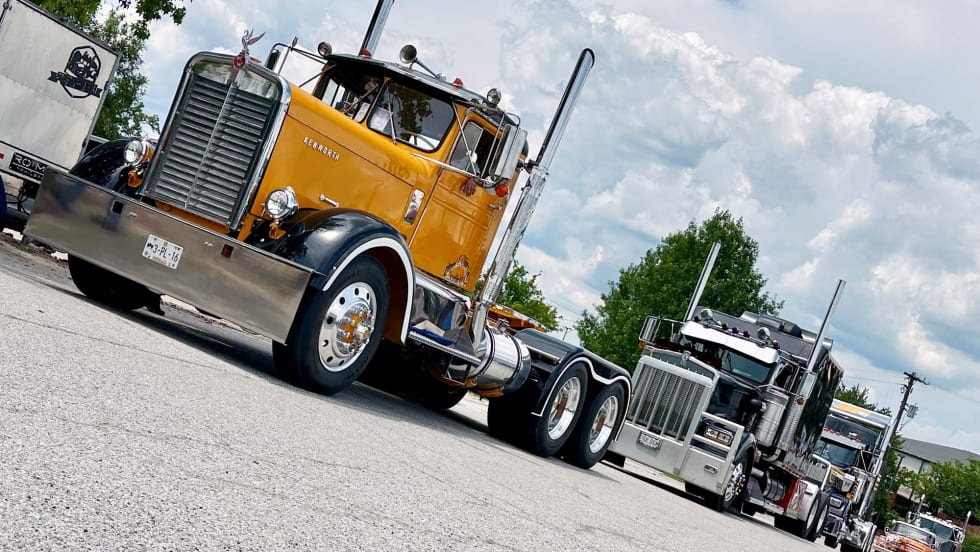
Historic, Vintage, and Antique Trucks at the 2026 ATHS Convention
More than 500 trucks were on display, indoors and out, at the 2026 American Historical Society annual convention in Springfield, Missouri.
Read More →
DTNA Software Update Gives Truckers More Time Before DEF Derates Take Effect
The changes reflect EPA guidance aimed at reducing downtime caused by emissions-system faults while maintaining compliance requirements.
Read More →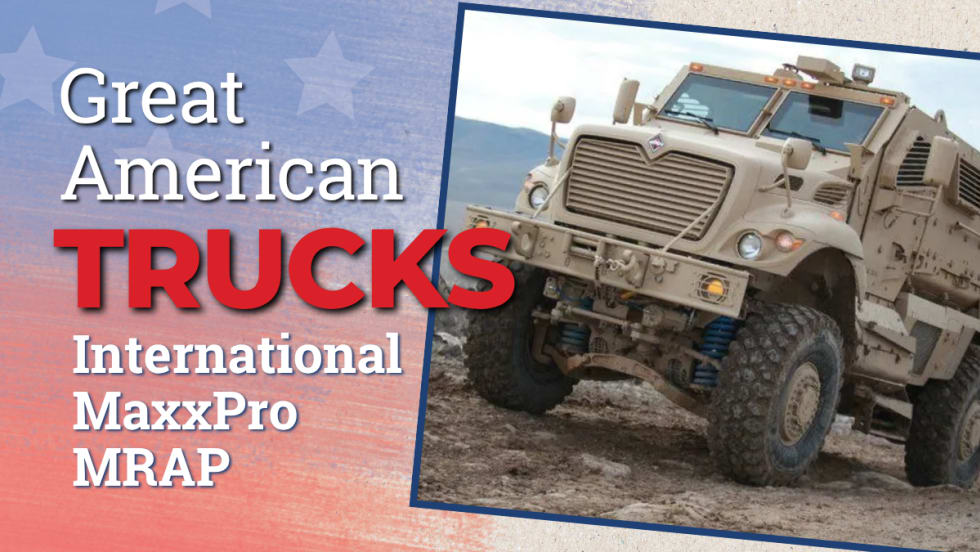
Great American Trucks: The International MaxxPro MRAP
Built from an International WorkStar chassis and powered by a MaxxForce diesel, the MaxxPro MRAP became one of the most important military trucks of the Iraq War era.
Read More →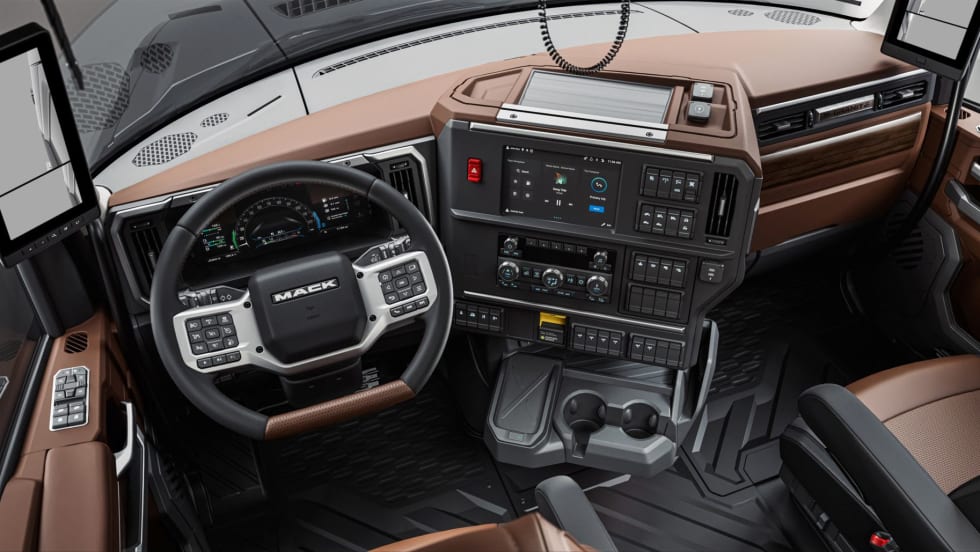
New Mack Granite Cab Puts Driver Comfort Front and Center
Mack’s next-generation vocational truck features a roomier cab, premium seating, advanced steering technology, and a driver-focused interior designed with direct input from professional operators.
Read More →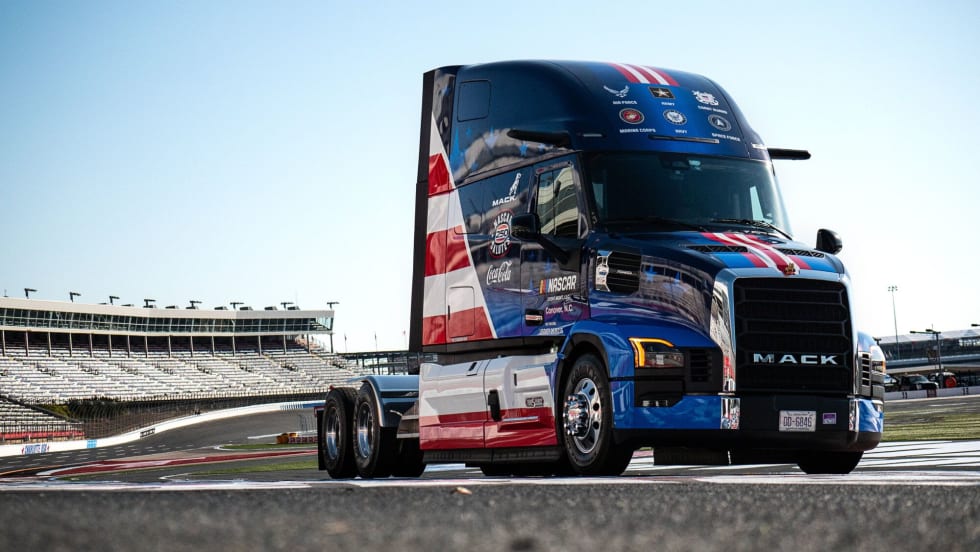
Mack Unveils Fan-Selected Patriotic NASCAR Pioneer Wraps
Racing fans picked the patriotic design now featured on three Mack Pioneer trucks hauling NASCAR equipment across the country during the 2026 season.
Read More →
Michelin Expands X Line Grip D Tire Line
Michelin is expanding its X Line Grip D drive tire lineup with a new pre-mold retread and additional sizes, building on what the company says is strong fleet adoption of the tire's traction, mileage, and fuel-efficiency benefits.
Read More →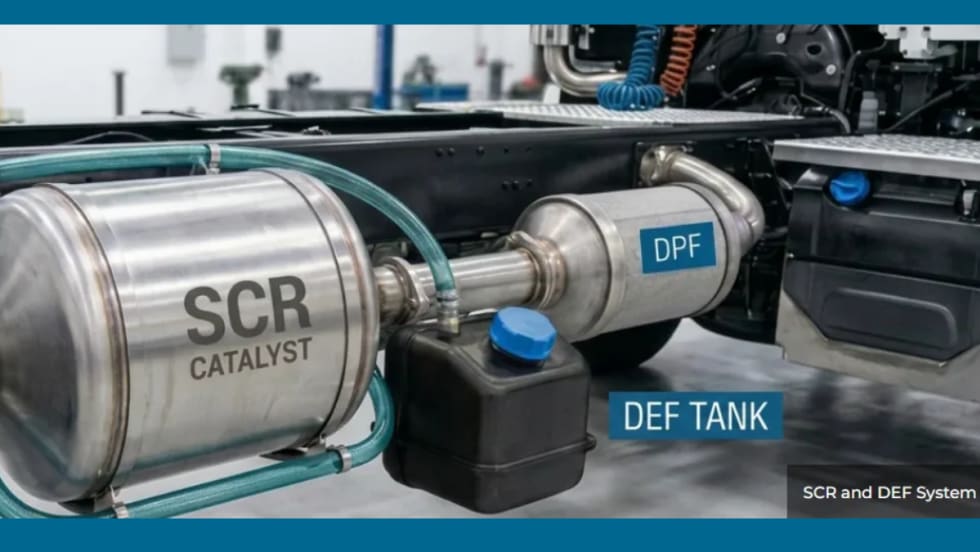
Engine Technology Forum Launches SCR, DEF Resource Center Amid Emissions Debate
The Engine Technology Forum’s new online hub aims to provide fleets, policymakers, and equipment owners with fact-based information about selective catalytic reduction technology, diesel exhaust fluid and emissions compliance.
Read More →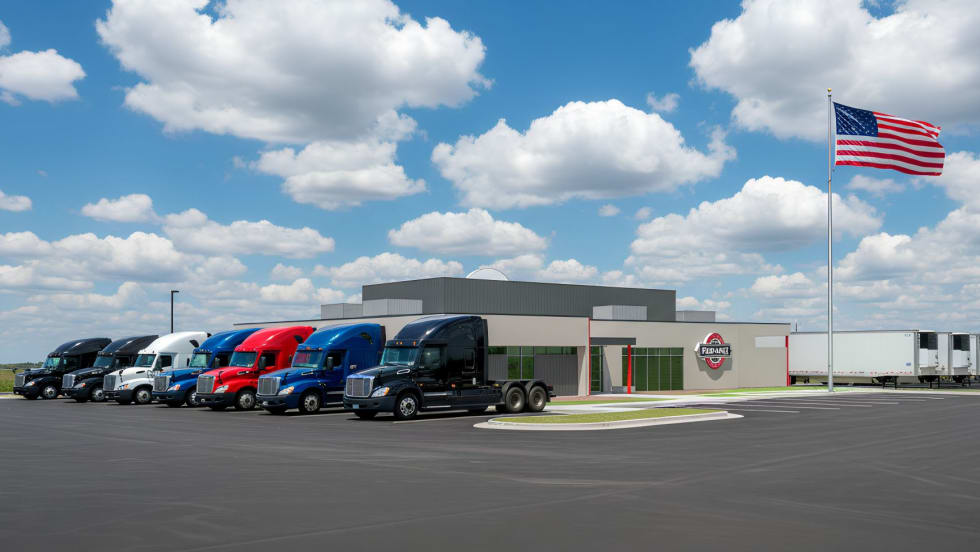
Prime Inc. to Open $7.9M Flagship Used-Truck Dealership
A new driver-focused facility to sell Prime Inc's used trucks and trailers will be the first purpose-built location in the company's history.
Read More →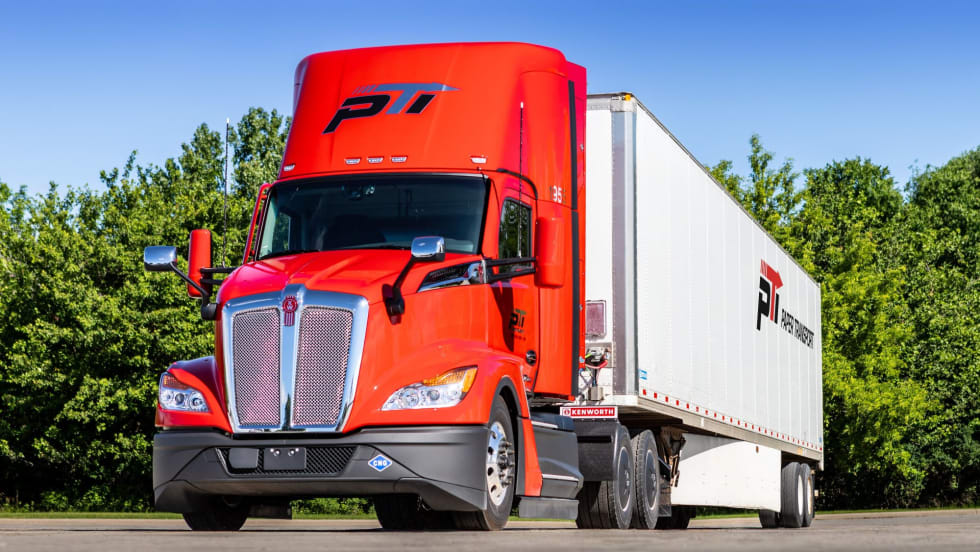
Lessons Learned About Alternative Fuels: Start Small, Stay Flexible
Practical advice on adopting alternative fuels and ZEVs from HDT's 2026 Top Green Fleets, from renewable diesel and natural gas to electric trucks.
Read More →
Kenworth Names Peter Ahrens General Manager
Leadership changes at Kenworth take effect July 1 as the OEM promotes two longtime Paccar executives to key management roles.
Read More →