




Hands-Free Cell Phone Options for Truckers
Last December, the Federal Motor Carrier Safety Administration introduced a proposed rulemaking that would prohibit commercial drivers from reaching for, holding or dialing a cell phone while operating a commercial vehicle
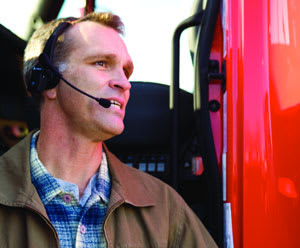
Last December, the Federal Motor Carrier Safety Administration introduced a proposed rulemaking that would prohibit commercial drivers from reaching for, holding or dialing a cell phone while operating a commercial vehicle.
The proposed rule includes penalties of $2,750 for each violation and disqualification of their commercial driver's license for repeat offenders. Carriers that allow their drivers to use hands-on devices would be subject to an $11,000 fine.
The regulation is currently winding its way through the rulemaking process, with a scheduled publication date in mid-October. Although it is likely that the final publication will get pushed back, the ban on handhelds is coming, and carriers should get prepared for compliance.
The good news is the market is already rife with off-the-shelf, hands-free solutions, and a few companies are offering truck-specific solutions. And in a world where an estimated 70% of drivers are already equipped with mobile devices (45% of them smartphones), expenses will mostly come down to buying accessories as opposed to brand new phones and other primary equipment.
Here are some of your options.
The most basic option for going hands-free is a wired headset plugged into the cell phone. Often the standard headset that comes with the device will keep drivers compliant.
For example, the standard headset for the iPhone works very well for hands-free communication. The familiar white earbuds come equipped with a small three-button switch along the wire. When getting an incoming call, the user needs only to press the middle button to answer, then press again to hang up. The other two buttons control volume. Most devices are similar to this layout, although some simpler headsets lack an on-wire button and require the user to touch the phone to answer.
The main drawback, obviously, is the wire. It may irritate some users, and in order to be compliant, drivers will have to wear the device continuously. Fumbling to get tiny earbuds into to your ears is clearly a distraction from the road.
Wireless headsets, mostly Bluetooth, will likely be more attractive to drivers. Worn on the ear, the small sets offer similar push-button answering, and can be set up for more convenient auto-answer. Also, Bluetooth is compatible with virtually all phones, save the odd throwback brick still in use by the technically challenged.
But although these devices may seem attractive, there are some serious drawbacks, cost being first.
"A nice Bluetooth headset with noise reduction is about $50," said Christian Schenk, vice president, product marketing with Xata. Multiply that by several hundred drivers at a large carrier and fleet managers might wince.
Second is battery life. In order to work, it always has to be on, and it might not last an entire 11-hour shift if your driver likes to yak. Battery life varies between devices, but is usually 6-8 hours of talk time. The devices are chargeable, but real estate on the dash is limited in most trucks. And if you're charging the device, reaching for it to take a call is defeating the point. According to Schenk, these negatives lead many companies to prefer the lower-tech wired headsets.
It's important to note that Bluetooth is a technology standard (named, by the way, after a 10th century Danish king remember for his affinity for blueberries), not a manufacturer of devices. Many companies manufacture devices with Bluetooth capability, and it's wise to do some shopping around to find the right one for your company. Big names include Jawbone, Plantronics and Motorola. Cobra recently introduced an ultralight Bluetooth headset advertising 20 hours of talk time.
An interesting third option is coming onto the market: Bluetooth-enabled radios built into the dash, available from companies such as Cobra and TRP Parts. They'll run over $100 per unit at the low end. However, OEMs are starting to offer them as an option. For instance, Western Star began offering them as an option in four truck models. Peterbilt and Kenworth offer an in-dash navigation/infotainment system that offers hands-free Bluetooth capability; it will be standard on trucks with premium interior trim packages.
The system has its benefits: hands-free auto answering, and sound piped in nice and loud through the truck's speakers. In newer, quieter cabs, the system works pretty well. But older, noisier ones can muffle the driver's voice, making for an irritating conversation.
Most options, both wired and wireless, offer some degree of voice recognition. For smartphones, including iPhone and Android, most headsets include a button that activates the standard software enabling voice dialing. Many Bluetooth devices have similar functionality.
Sometimes the feature works quite well, especially if you have a microphone very close to your mouth. But the farther away you get, the worse voice recognition performs, which makes Bluetooth-enabled radios particularly susceptible to mistakes. (Anecdotally, I can tell you that dialing my buddy John Smith works most of the time. Calling my casual acquaintance Jan Wojciechowski can take a few tries. )
"It depends on personal preference; people are going to complain no matter what they have," says Stacey Geipe, spokesperson at Sprint. "There are so many solutions out there... once you find that right one [for you], you are going to love it."
While all of these options are pro/con affairs, when the hands-free rule does finally drop, it will be fairly easy for drivers and carriers to comply. Cnet, a consumer electronics review website, lists more than 500 reviews for Bluetooth headsets alone.
Yet some carriers may opt against these devices because they have already moved on to bigger, better restrictions.
"What we have seen is fleets putting in cell phone policies that are very strict, like zero-tolerance," Schenk says. "They believe getting a dispatch late is better than taking the risk."
Many trucking communications companies are offering solutions that cut cell phones out of the picture entirely.
Xata Turnpike, Xata's mobile-based product, links the driver's cell phone via Bluetooth to the rest of the truck to offer streaming data and back-office connection. A few months ago, the company partnered with a company called ZoomSafer to extend control over the driver's mobile device via the Turnpike system. Simply put, if the wheels are turning, the device does not work (save emergency 9-1-1 calls).
What's more, when a driver receives a text message on the road, the application will automatically shoot a text back informing the sender of the driver's focus on the task at hand.
A company called Illume offers a similar product, iZup (pronounced "eyes up"). Like the Turnpike product, it shuts off the driver's mobile device when the vehicle is in motion. Because it uses GPS to track speed, the carrier can set the shut-off threshold anywhere from 2 to 10 mph.
Additionally, the device allows users to "white list" up three numbers, which bypass the block.
Finally, there is passenger option where a passenger can enter a password and gain access to phone and chat it up while the driver is still busy doing his primary job: driving safely. The iZup product is already in use in several large fleets, include Kellogg's fleet.
If enough carriers are going the extra mile to provoke product innovation, why is the proposed federal rule just hands-free?
Many carriers might balk at such a comprehensive ban right away, and the Owner-Operator Independent Drivers Association doesn't even support the hands-free proposal. But according to Dan Ross, president CEO of I
More Fleet Management

How Telematics Improves Visibility, Control, and Performance in Refrigerated Fleets
Explore how telematics help refrigerated fleets improve visibility, uptime, efficiency, compliance, and cargo protection across connected cold chain operations.
Read More →
What the U.S.-Canada Trade War Means for Trucking
Escalating U.S.-Canada tariffs could disrupt cross-border freight, reduce truck volumes, raise costs, and create new uncertainty for carriers on both sides of the border.
Read More →
What Are Trucking’s Top Concerns for 2026?
The American Transportation Research Institute wants to know what's worrying trucking fleet managers, drivers, and other stakeholders in its annual Industry Issues survey.
Read More →

American Trucking Associations Looks for a New Leader
ATA President and CEO Chris Spear abruptly left his job at the association on August 21, at a pivotal time for the trucking industry.
Read More →
Public Wi-Fi Cybersecurity Risks: How Truck Drivers and Fleets Can Protect Their Data
Public Wi-Fi can expose truck drivers and fleets to credential theft, malware, and other cyber threats. Here’s how to reduce the risk on the road.
Read More →
For Nicky Cupp, Fleet Innovation Starts With Frustration
HDT Truck Fleet Innovator Nicky Cupp turns everyday pain points at Fraley & Schilling into opportunities for better technology and smarter processes.
Read More →
Adam Buttgenbach’s Approach to Electric Trucks: Start With Where They Fit
HDT Truck Fleet Innovator Adam Buttgenbach helped PepsiCo build one of North America’s largest EV fleets by focusing on where electric trucks make operational sense.
Read More →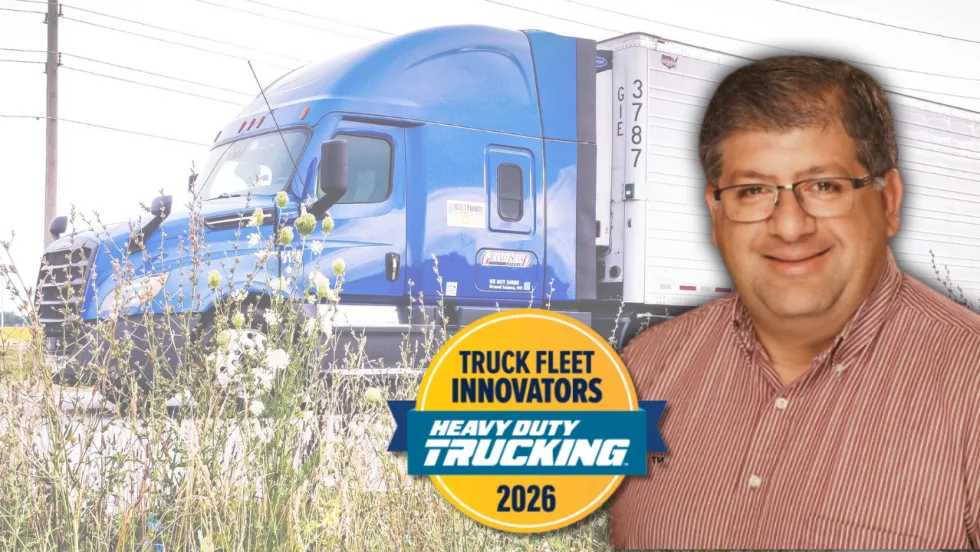
Deen Albert: Let Automation Do the Math, People Make the Decisions
HDT Truck Fleet Innovator Deen Albert makes sure people are still at the heart of operations at Grand Island Express, even while adopting artificial intelligence tools. AI-assisted dispatch helped boost revenue 25% with the same number of trucks.
Read More →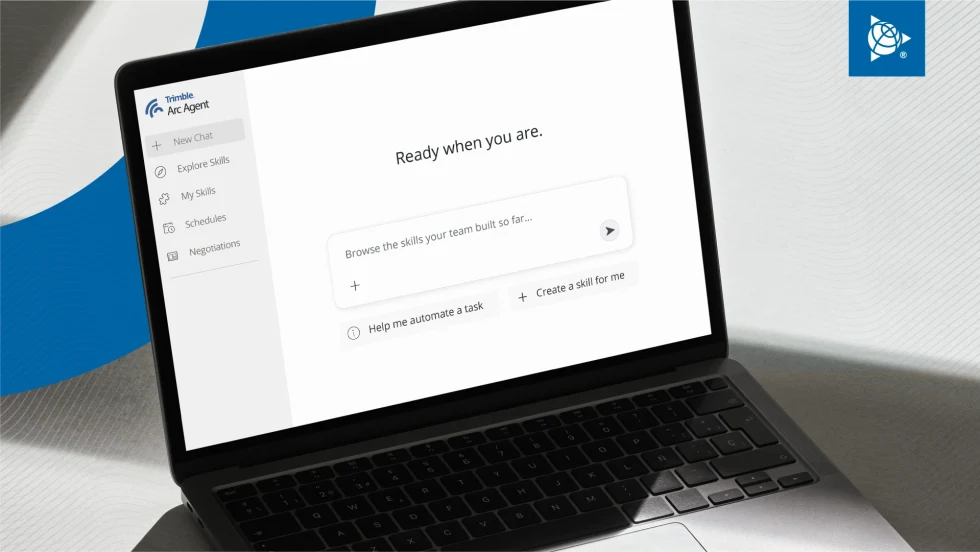
Trimble’s New AI Agent Takes Aim at Fleet Back-Office Busywork
Arc Agent works across Trimble TMS products to automate repetitive tasks such as freight orders, maintenance, invoices, fuel costs and more.
Read More →
How HDT’s 2026 Truck Fleet Innovators Are Rethinking Fleet Operations
Meet five trucking leaders who are challenging assumptions, solving operational problems, and putting innovative ideas to work.
Read More →