




Great American Trucks: Freightliner Cabovers
More than any other North American OEM, Freightliner created the modern, iconic template for Class 8, long-haul cabover trucks. It was a look and basic design that would dominate trucking from the late 1950s all the way into the early 1980s.

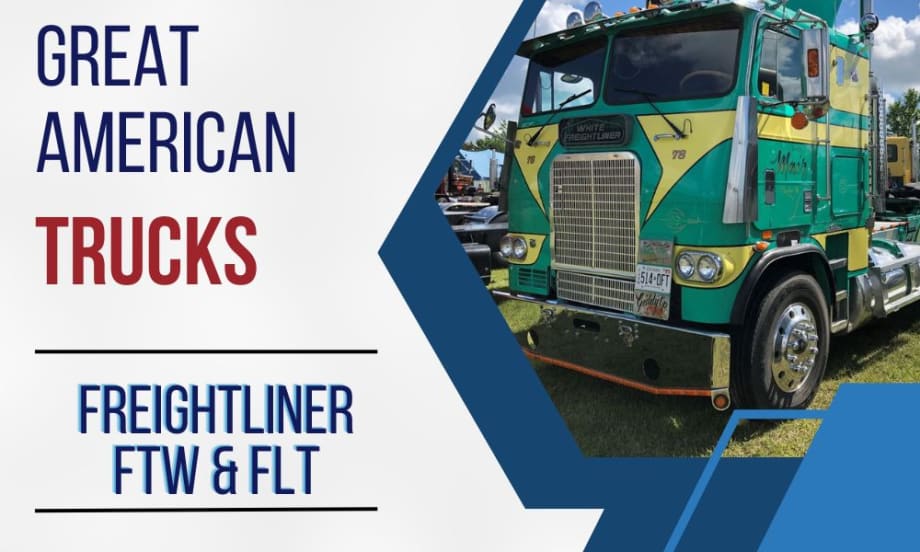
Great American Trucks: Freightliner Cabovers
Photo: Jim Park
Freightliner didn’t invent the cabover truck. In fact, the very earliest trucks were what we today would call a “cabover” design in that the engine was located directly under the driver’s seat.
But the drivers on those early powered trucks sat out in the open. There was no actual cab to put an engine under until Sternberg Motor Company, a Wisconsin-based truck builder, did so in 1907.
But it was Freightliner that created the modern, iconic template for Class 8, long-haul cabover trucks. It was a look and basic design that would dominate trucking in North America from the late 1950s all the way into the early 1980s.
A Purpose-Built Truck from the Beginning
Freightliner was an upstart OEM in many ways. Its origin story is a familiar one in North American trucking. In 1929, Leland James founded a long-haul freight company in Portland, Oregon, called Consolidated Freightways.
James was picky about the trucks he wanted to run and obsessive about saving weight in order to maximize payload. Dissatisfied with the various makes and models he tried out in his fleet, James decided to build his own tractors.
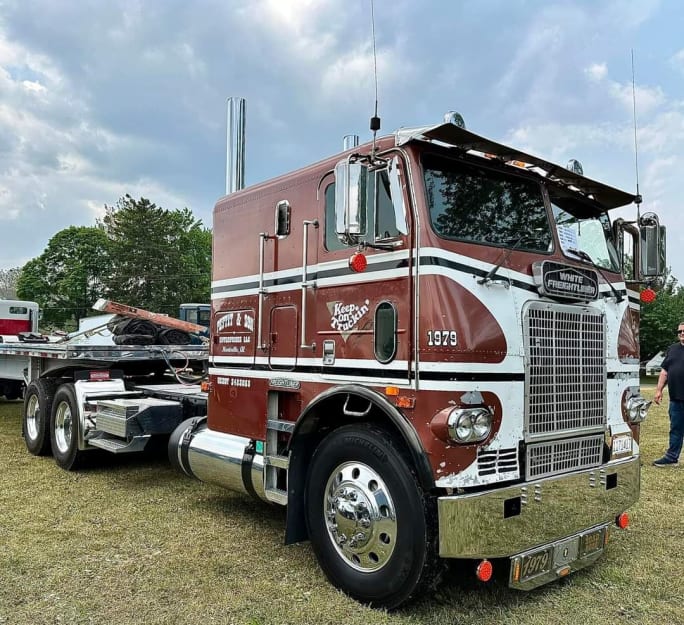
Bob Petite's 1979 Freightliner FLT began life as an owner-operator spec truck.
Photo: Bob Petite
Setting aside an unused maintenance shop, James purchased several used Fageol trucks to use as a basic platform and then set about redesigning the vehicles to meet his needs. The new truck-building division was dubbed Freightways Manufacturing. And the truck it began producing featured a lightweight cab set directly over the front axle. This arrangement allowed Consolidated Freight to use longer trailers and haul more cargo on each trip.
James also dictated extensive use of aluminum in the cab design. This was a pioneering move in trucking.
Aluminum was a relatively new metal at the time. Its use in manufacturing was closely associated with cutting-edge aircraft design. But James was drawn to its light weight and quick, easy, repairability. He reasoned this light, new, easily workable metal would give his trucks the maximum engine power drivers needed in the mountainous Northwestern terrain.
It also gave drivers a material they could easily repair by themselves out on the road – at a time when professional roadside service was virtually nonexistent.
Over time, Consolidated Freightways tractors gained a reputation for power, extreme lightweighting and durability. In the 1930s, the “Freightliner” name first appeared on the trucks as the company was renamed Freightliner Manufacturing. This eventually became the Freightliner Corporation in 1942.
World War II put long-haul truck production on pause. In 1947, Freightliner went back to producing cabovers. But it was still a captive manufacturing arm of Consolidated Freightways. All of the trucks produced went straight into the Consolidated Freightways fleet.
That changed two years later in 1949, when the first Freightliner was sold to an outside company. The Hyster forklift company bought one to use at its Portland manufacturing facility. That first outside truck is today in the automotive collection of the Smithsonian Institute – an indication of just how influential Leland James’ upstart truck-building company would soon become in North America.
Freightliner Goes Nationwide
As the popularity of Freightliner trucks grew, it soon became apparent to Consolidated’s management team that a dealer network was needed if the company wanted to boost production and while reducing manufacturing costs.
In 1951, Freightliner signed a deal with White Motor Company to rebrand its trucks as “White Freightliner” models. White was one of the largest and most influential truck OEMs in North America at the time. The deal gave Freightliner access national dealer network for the first time.
Under the terms of the agreement, White sold the trucks as “White Freightliners,” while trucks produced for Consolidated Freight were simply branded as “Freightliners.”
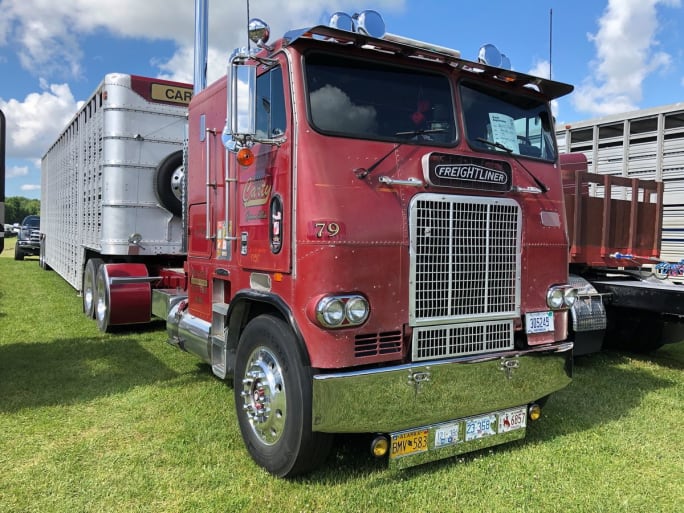
By the 1970s, Freightliner was established as one of the top truck OEMs in North America thanks to the stellar reputation of its cabover designs.
Photo: Jim Park
With a national presence came increased sales and more profits. Freightliner immediately set about innovating and refining its cabover designs. In 1953, the OEM introduced a cab with sleeper berth positioned directly above the driver and passenger seats. Much sought after by collectors today, these models gave the trucks an even shorter cab length for increased trailer lengths.
Up to this point, Freightliner had been building “shovelnose” designed trucks. These models featured some protrusions out of the front end of the truck to better accommodate the powertrain. But in 1954, Freightliner debuted the flat-nosed WTF model – the truck that would dictate North American cabover design for the next 40 years.
A tilt-cab model for easier engine bay access appeared in 1958. Freightliner’s obsession with weight also saw the introduction of the short-lived 5000 Series model, which featured an all-fiberglass cab.
Powerliner to Power Player
By the 1960s, White Freightliner was a major player in the North American long-haul truck market. The company continued to refine its designs, which included the introduction of a longer, 104-inch sleeper model in 1968.
Freightliner engine options were fairly standard for the times. These included Caterpillar, Cummins, and Detroit Diesel options. In 1973, Freightliner introduced the “Powerliner,” a high-horsepower model.
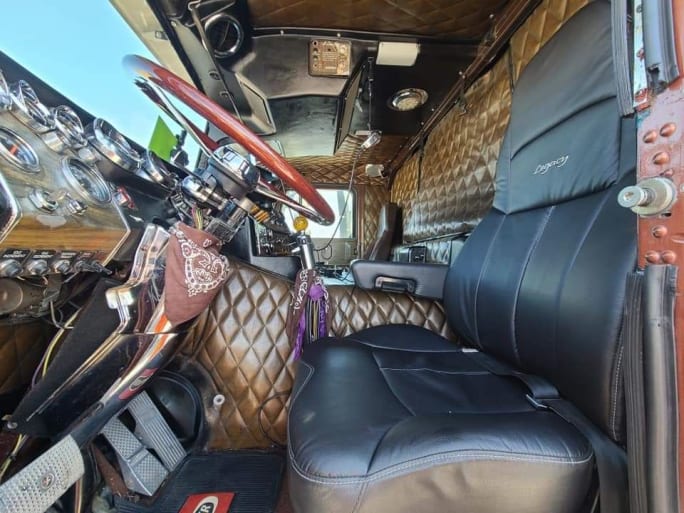
Although Bob Petite gives his 1979 Freightliner high marks for room and comfort, he says one interior weak point is the truck's decidedly 1970s style plastic dashboard.
Photo: Bob Petite
This taller, wider cabover model was designed to make use of higher-horsepower engines on the market at the time. The standard Powerliner engine was the 400-horsepower Detroit Diesel 12V71 V-12. A Cat 3408 was another option.
But the top-of-the-line spec was the 600-horsepower 1,150 cubic inch (19-liter) Cummins KTA diesel engine. Originally designed for agricultural equipment – and still used in marine applications today – the KTA gave Powerliner drivers the ability to pull heavy loads at 80 mph in even torturous mountain terrain.
However, its abysmal 3 to 4 mpg fuel economy performance couldn’t have come at worse time. The Powerliner was hit with a devastating one-two punch right out of the box. The OPEC Oil Embargo also began in 1973 and sent fuel prices skyrocketing and led to a new 55-mph national speed limit.
These two events basically made the fuel-hungry Powerliner an anachronism right off the bat and the truck was discontinued after just a few years of disappointing sales.
One FLT Owner's Experience with Freightliner's Classic Cabover Trucks
Bob Petite is an owner-operator and chrome shop owner based in Hartselle, Alabama. He runs his 1979 Freightliner FLT almost daily pulling flatbed trailers.
He used to own a 1972 Peterbilt Model 352 cabover, which he sold in order to buy the Freightliner. He says there’s a world of difference between the two trucks.
“It’s like night and day,” Petite says. “The Freightliner was a much more modern truck for the time. You can really tell they’d been designing cabovers for a long time when you climb in it. There’s a lot more room. And it’s much more comfortable.”
Petite’s FLT was an owner-operator spec, with a 104-inch cab and the top trim level available then.
“It’s got all the gauges and toggle switches,” he says. “It’s got the diamond-pattern stitching in the seats and all of the luxury upgrades Freightliner offered back then. One weak point is the very 1970s plastic dashboard. But all the trucks had those plastic dashes back then.”
Petite says his old Model 352 Peterbilt actually rode better on the highway than the Freightliner. But despite old truckers’ talking about how cold Freightliner cabovers could be in winter, he says the owner-operator-spec heater under the rear bunk practically runs him out of the cab, even on very cold nights.

Bob Petite still runs his '79 Freightliner almost daily hauling flatbed loads around the country.
Photo: Bob Petite
“Freightliner was really on top of their game in 1979 when it came to cabovers,” he says. “It’s a shame now, because that body style was almost at the end of its run. You just don’t see these trucks a lot anymore. So, I turn a lot of heads when I’m running mine down the highway.”
As Petite says, the reign of the cabover was almost over by the dawn of the 1980s. Class 8 tractor-trailer length laws gradually allowed conventional tractor sales to overtake cabovers. Conventional models simply offered drivers much more room and allowed for large sleeper berths that are common today.
But cabovers made Freightliner a major player in the North American trucking industry. It’s tough, reliable, iconic designs positioned Freightliner to move beyond cabovers and establish an equally stellar reputation after it was acquired by Daimler in 1981 and increasingly turned its attention to conventional Class 8 truck designs.
But Freightliner cabovers will forever be remembered as some of the most memorable trucks during the Golden Age of Trucking in North America.
More Equipment

How Volvo Updated Its D13 for EPA 2027 [Watch]
Volvo’s updated D13 promises lower emissions without sacrificing performance or fuel economy. Take a closer look at what changed inside the engine in this HDT Spotlight video.
Read More →
Michelin Tire Improves Efficiency and Durability for Regional Fleets
The Michelin X Multi Energy D2 is a regional haul drive tire engineered to help fleets improve fuel efficiency, durability and traction in demanding stop-and-go operations.
Read More →
ZF Expands Commercial Vehicle Push in North America
ZF is expanding its North American commercial-vehicle presence with new transmission applications, electrification, trailer technology and autonomous-driving systems.
Read More →
Tesla Wants a Self-Driving Semi. Are Cameras Enough?
Could Tesla’s camera-only autonomous driving technology work on an 80,000-pound Semi? In this commentary, HDT's Deborah Lockridge takes a look at Tesla, Cybercab, and how autonomous trucks see the road.
Read More →
Kodiak: Driverless Long-Haul Truck Launch on Track for 2026
Kodiak AI says its driverless long-haul safety case is 93% complete and it remains on track to begin commercial operations by year-end 2026.
Read More →
What DOT’s Automated Vehicle Strategy Means for Trucking
The U.S. Department of Transportation issued a new automated-vehicle strategy that outlines plans for driverless-truck regulations, cross-state freight corridors, and federal safety standards.
Read More →
East Coast Port Launches $45M Electric Truck Push
The Port Authority of New York and New Jersey announced millions in incentives for zero-emission drayage trucks, yard tractors, and new charging hubs near the port.
Read More →
PlusAI Going Public to Fund Autonomous Truck Launch
A SPAC deal could provide PlusAI with up to $300 million as it works toward a 2027 commercial launch of factory-built autonomous trucks.
Read More →
NHTSA Moves to Rewrite Truck Fuel-Economy Rules
The National Highway Traffic Safety Administration says it lacks authority to regulate medium- and heavy-duty truck engines separately from complete vehicles, but the existing standards have not yet been eliminated.
Read More →
Detroit Opens Orders for EPA 2027 Engines
Detroit isn’t starting from scratch to meet EPA 2027 diesel emissions standards. Its Gen 6 DD13 and DD15 engines keep much of today’s platform while updating the fuel and aftertreatment systems.
Read More →