




Frost & Sullivan: Medium-Duty Market Will Lead the Growth in Hybrid Trucks
Demand for hybrid trucks is expected to grow over the next six years across North America and Europe, and the medium-duty market will likely be the leader, with significant penetration into the hybrid secto
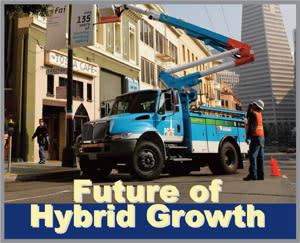
Medium-duty hybrid trucks, such as this one, are expected to gain even more traction in the years ahead. (Photo by Eaton)
Demand for hybrid trucks is expected to grow over the next six years across North America and Europe, and the medium-duty market will likely be the leader, with significant penetration into the hybrid sector
, according to Sandeep Kar, global program manager at Frost & Sullivan.
"Hybrid trucks in the future will have an expanded role to play," Kar said.
The medium-duty truck market is poised for hybrid growth because the vocations that use medium-duty vehicles and the duty cycles involved are more suitable for hybrids, Kar said. Stop and go applications, such as refuse trucks, pickup and delivery vehicles, and utility trucks, are ideal for hybrid technology. In addition, most OEMs that are building hybrid trucks are doing so in the medium-duty sector, he added.
This medium-duty penetration into the hybrid market is one topic Frost & Sullivan explores in its latest study, "Strategic Analysis of the North American and European Hybrid Truck, Bus and Van Markets."
According to the study, the number of hybrid trucks being manufactured in North America and Europe will grow from 4,100 units in 2009 to 222,000 in 2016.
The number of Class 6 to 8 hybrids manufactured is expected to grow from 600 in 2008 to 39,400 units by 2015. By 2015, hybrids will represent 8 percent of all Class 6 to 8 trucks manufactured, Kar said. Of these 39,400 units, approximately 20 percent is expected to be Class 8, while the rest will be medium-duty.
'Mega-City' Trends
Why the steady growth in hybrids? According to Frost & Sullivan's research, the growth in hybrid vehicles will be driven by "mega-city" trends. Urbanization will force governments to offer incentives to invest in hybrid technology. As urban centers become more polluted, noisy and congested, governments will likely implement more regulations on fuel efficiency, anti-idling, emissions and noise reduction.
Fleets, especially those running medium-duty vehicles, will have to adopt new technologies, such as hybrids, to meet these stricter requirements. These trends are a call to action for market participation in the hybrid sphere, Kar said.
Fleets' Willingness
Last year, Frost & Sullivan conducted a study of the top 100 fleet managers of the largest fleets in the U.S. When gauging fleet managers' willingness to jump into the hybrid market, 24 percent said they're actively considering hybrids, while 61 percent said they "might consider." When fleets were asked about the benefits they're looking to get out of technology, many of the key benefits indicated are those addressed by hybrids, including fuel efficiency, which was ranked the top benefit by 59 percent; anti-idling; and reduced maintenance.
So it's clear that hybrid technology is gaining some traction among fleets. However, much of the traction is coming from private fleets at the moment, Kar said. These fleets have deeper pockets, more of a willingness to test new technologies, and more incentives to present their company as a 'green' organization, he said.
"Organic growth won't happen that way," Kar said.
In order for hybrid technology to achieve the growth Frost & Sullivan predicts, there needs to be more buy-in from for-hire fleets. For this to happen, lifecycle costs of hybrid technology need to come down, Kar said. Frost & Sullivan predicts that after 2012, regulations, lower prices, demand and volatile energy prices will combine, creating greater adoption among for-hire fleets.
In addition, Frost & Sullivan expects upfront costs at the retail level to be reduced by 42 percent by 2016. This will be achieved through targeted price reduction strategies. The biggest area where prices will come down is in the vehicle's battery, where a significant amount of the cost lies, Kar said.
More Fuel Smarts

How Volvo Updated Its D13 for EPA 2027 [Watch]
Volvo’s updated D13 promises lower emissions without sacrificing performance or fuel economy. Take a closer look at what changed inside the engine in this HDT Spotlight video.
Read More →
Diesel Price Spike Shortens Payback for Natural Gas Trucks, Report Says
Energy Vision estimates fleets could recover the higher purchase price of an RNG-fueled Class 8 tractor in 1.3 to 2.8 years under current fuel-price scenarios.
Read More →
Calstart Becomes Catalyst Mobility, Reflecting Broader Focus
Calstart is now Catalyst Mobility, reflecting the nonprofit’s growing national role in clean transportation, including zero-emission trucks, infrastructure and incentive programs.
Read More →

Record Diesel Prices Squeeze Trucking Fleets
Average U.S. diesel prices have climbed to nearly $6 a gallon, surpassing the 2022 record as tight refinery capacity and Middle East disruptions keep fuel costs elevated.
Read More →
How Fuel Delivery Shapes Engine Performance
Fuel delivery depends on more than what happens at the injector. For fleet, maintenance and technical professionals, looking at the full path from pump to injector can provide useful context for understanding engine performance.
Read More →
East Coast Port Launches $45M Electric Truck Push
The Port Authority of New York and New Jersey announced millions in incentives for zero-emission drayage trucks, yard tractors, and new charging hubs near the port.
Read More →
California Bill Could Shed Light on Electric Truck Prices
Why do battery-electric Class 8 trucks remain so expensive? A California bill headed to Gov. Gavin Newsom would give fleets and state agencies more visibility into what manufacturers charge.
Read More →
Detroit Opens Orders for EPA 2027 Engines
Detroit isn’t starting from scratch to meet EPA 2027 diesel emissions standards. Its Gen 6 DD13 and DD15 engines keep much of today’s platform while updating the fuel and aftertreatment systems.
Read More →
Zero-Emission Truck Corridor Planned for West Coast
California, Oregon, Washington, British Columbia and Baja California are coordinating plans for truck charging and hydrogen fueling from Canada to Mexico.
Read More →
A Closer Look at Kenworth’s Electric T880E Vocational Truck [Video]
Learn more about Kenworth's T880E battery-electric vocational truck at the Paccar Technical Center, including its range, applications, upfitting considerations, and PTO options, in this HDT Spotlight video.
Read More →