




Five Easy Ways to Reduce Fuel Consumption
There are still legions of drivers who are not practicing even the most basic fuel-saving techniques. Just hang around an intersection with a lot of truck traffic and liste

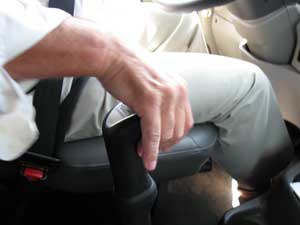
The basics of driving for better fuel economy include progressive shifting and taking advantage of downhill rides.
There are still legions of drivers who are not practicing even the most basic fuel-saving techniques. Just hang around an intersection with a lot of truck traffic and listen
to how drivers go through the gears coming away from a traffic light, or visit a truckstop on a mild spring or fall evening and listen for the idling engines.
Here are five easy ways to reduce fuel consumption without investing a penny in additional technology.
The idea is to use the lowest engine revs possible in each gear during an upshift sequence. Unfortunately, many drivers remain convinced that the fastest way to accelerate is to take every shift well into the high-teen range - 1,800 rpm and beyond. You can actually accelerate faster by getting into a higher gear sooner, and that's best accomplished by using minimum engine revs for each gear change. Besides, what's the rush? It's a big truck, not a drag racer.
Shifts from first to fourth can be accomplished between 800 and 1,000 rpm. Revs will need to go slightly higher in high range, between 1,200 and 1,400 rpm. In the top two gears, they could maybe go as high as 1,600 rpm, depending on the engine and how the truck is geared.
The bottom line is, keep the revs low for better fuel economy. It's quieter and smoother, too.
There are a surprising number of fleets that have yet to embrace some form of auxiliary climate control, and drivers continue to idle their trucks for extended periods. The need is understandable in extreme temperatures, but even in moderate weather, idling is surprisingly common. Fleets that idle a lot can see idle ime numbers in the 40% to 50% range. That means for half the time the engine is on, it's idling and producing no value at all for its owner.
By contrast, Josh Kaburick, CEO of Earl L. Henderson Trucking, reports his trucks, equipped with ComfortPro and TriPak APUs, are averaging just 7% idle time. Every hour of idle time in a long-haul operation can decrease fuel efficiency by 1%.
If cold is a problem, try warmer blankets or a plug-in electric blanket or mattress pad. In warmer weather, try fans, window screens and lighter covers. Anyone who can afford to idle a big diesel when it's 40 degrees outside is making way too much money.
With or without all the latest aerodynamic gizmology, the faster a truck goes, the more fuel it consumes. According to Cummins, at speeds above 55 mph, each 1 mph increase in vehicle speed decreases fuel economy by 0.1 mpg. Providing you have the latitude in your rear ends, reducing road speed can reduce fuel consumption substantially.
Traveling more slowly offers the added advantage of allowing other traffic to go screaming past your truck. That means you'll spend more time at optimum cruise speed and less time on the brake pedal adjusting to traffic flow. There's truth in the old adage that slow and steady wins the race. Be the tortoise, not the hare.
A downhill ride is a free ride. Forget for a moment that it took a little extra fuel to get up the hill. You want to use the momentum of the downhill ride to help you up the next hill. Applying brakes will rob the truck of some of that momentum, so it becomes a delicate balance for the driver to let the truck roll out on the hill without exceeding speed limits or running too fast for conditions.
The key is in cresting the hill at something less than full speed and using gravity on the downhill side to gain that speed back.
Cruise control has one purpose in life: to maintain the set speed. It will maintain speed over hill and dale, provided it's within the power of the engine, the gradeability of the powertrain, etc. Sometimes a downshift is required, at which point cruise is sometimes disengaged and sometimes not. Modern cruise systems have something called "droop" built into them that allows for a reduction in road speed without the system making a full-power stretch to gain that speed back.
A driver can also provide some droop by disengaging the cruise control near the crest of the hill and feathering the throttle pedal as the truck goes over the top. It's OK to give up a few mpg at the top because you'll regain it going down.
From the June 2012 issue of HDT
More Fuel Smarts

How Volvo Updated Its D13 for EPA 2027 [Watch]
Volvo’s updated D13 promises lower emissions without sacrificing performance or fuel economy. Take a closer look at what changed inside the engine in this HDT Spotlight video.
Read More →
Diesel Price Spike Shortens Payback for Natural Gas Trucks, Report Says
Energy Vision estimates fleets could recover the higher purchase price of an RNG-fueled Class 8 tractor in 1.3 to 2.8 years under current fuel-price scenarios.
Read More →
Calstart Becomes Catalyst Mobility, Reflecting Broader Focus
Calstart is now Catalyst Mobility, reflecting the nonprofit’s growing national role in clean transportation, including zero-emission trucks, infrastructure and incentive programs.
Read More →

Record Diesel Prices Squeeze Trucking Fleets
Average U.S. diesel prices have climbed to nearly $6 a gallon, surpassing the 2022 record as tight refinery capacity and Middle East disruptions keep fuel costs elevated.
Read More →
How Fuel Delivery Shapes Engine Performance
Fuel delivery depends on more than what happens at the injector. For fleet, maintenance and technical professionals, looking at the full path from pump to injector can provide useful context for understanding engine performance.
Read More →
East Coast Port Launches $45M Electric Truck Push
The Port Authority of New York and New Jersey announced millions in incentives for zero-emission drayage trucks, yard tractors, and new charging hubs near the port.
Read More →
California Bill Could Shed Light on Electric Truck Prices
Why do battery-electric Class 8 trucks remain so expensive? A California bill headed to Gov. Gavin Newsom would give fleets and state agencies more visibility into what manufacturers charge.
Read More →
Detroit Opens Orders for EPA 2027 Engines
Detroit isn’t starting from scratch to meet EPA 2027 diesel emissions standards. Its Gen 6 DD13 and DD15 engines keep much of today’s platform while updating the fuel and aftertreatment systems.
Read More →
Zero-Emission Truck Corridor Planned for West Coast
California, Oregon, Washington, British Columbia and Baja California are coordinating plans for truck charging and hydrogen fueling from Canada to Mexico.
Read More →
A Closer Look at Kenworth’s Electric T880E Vocational Truck [Video]
Learn more about Kenworth's T880E battery-electric vocational truck at the Paccar Technical Center, including its range, applications, upfitting considerations, and PTO options, in this HDT Spotlight video.
Read More →