




5 Ways to Turn a Driver From Recruiting Lead into Employee
How can your fleet look at the driver recruiting spectrum and explore best practices that can help turn candidate leads into full-fledged employees?
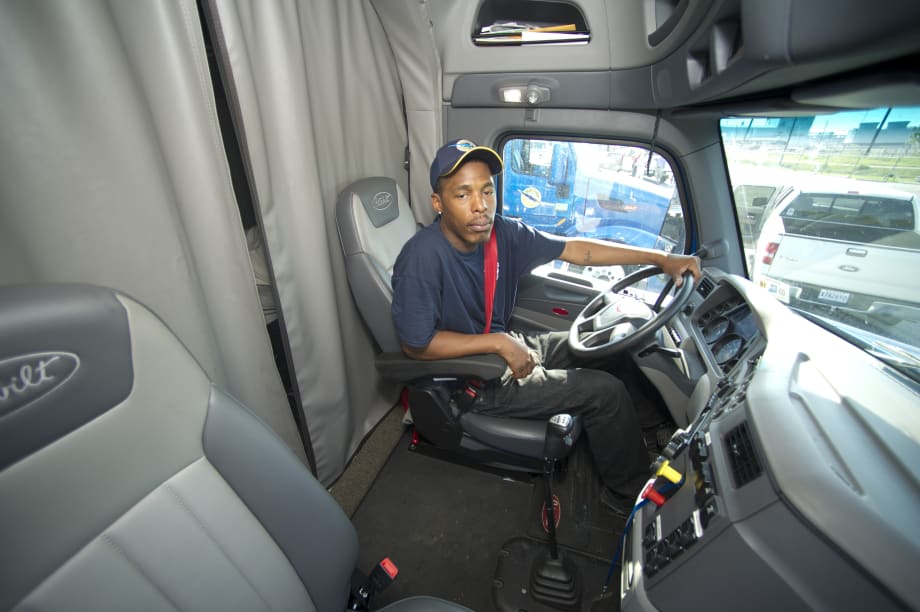
The easier and faster your hiring process, the higher your company’s chances for bringing on new drivers.
Photo: Paccar Financial
In the world of driver recruiting – and in the world of recruiting in general – there is usually an area or two that seems to move along smoothly, and other areas that face constant challenges. Perhaps your team is great at getting drivers to fill out online applications, but then they can’t seem to get drivers on the phone for follow-up conversations. No matter what the problem is, there is usually a technology solution that can help alleviate the pain points to achieve the goal: attract the best drivers and convert them into long-term, fulfilled employees and move the right people up at the best possible time for your company.
1. Target leads where they spend the most time
When it comes to targeting leads, this is really marketing 101 – as your team is looking for new names that are qualified to fill out applications, go directly to where your audience spends a majority of their time. Truck drivers, like just about every professional these days, spend most of their time on their smartphones.
This means innovative recruiters should leverage mobile-optimized web pages, social media pages, and even text message campaigns to capitalize on the smartphone opportunity. It may seem strange to post Facebook or Twitter updates about career opportunities, but in today’s world of modern recruiting, this is the new normal.
2. Be faster than your competition
When drivers are looking for new opportunities, they’re likely not only applying to your company. Due to the notoriously slow verification of employment process, drivers know that the more companies they apply to, the chances of getting into a new job faster are improved – and in many cases, the first to respond wins them over.
Recruiters can move more leads through the application process to fill empty trucks faster simply by working more efficiently than their competitors. If a new candidate form fill is received, don’t wait – call that candidate immediately. If your team is stuck leaving a voicemail for a candidate, use text messages to follow up before they have a chance to talk to another company. And once the recruiter does get them on the phone, remember to relax, have an open and honest conversation, and even fill out the application form for the driver so they can simply review and sign the document electronically after the call ends.
Remember: The easier and faster the process, the higher your company’s chances for bringing on new drivers.
3. Have a network of ambassadors
When drivers ask your recruiters (and trust us, they’ll ask) about driver satisfaction, refrain from reciting stats that sound impersonal and suspicious. Instead, use an engaged group of driver ambassadors from your company to speak with prospects one-on-one or provide interviews that your marketing team can capture in videos or with case studies.
Every company has a group of loyal, engaged drivers who are true advocates of the organization. Candidates who ask about driver satisfaction and company culture are obviously weighing the merits of a position with your company very closely, and this unique take on a common question can cement your reputation as a value-focused, employee-driven organization. Ambassadors and first-person testimonials are also a great way to be transparent upfront with new candidates and remove any chance of the usual skepticism they have when talking to a driver recruiter.
4. Visualize the recruitment process through the driver’s eyes
Thinking about the recruitment process from the driver’s standpoint is critical – especially for candidate leads further along in the application process. No matter how transparent, easy-to-use, and intuitive a process may be to a recruiter, it’s always necessary to think about the application process from a driver’s perspective.
Often, it’s small things that simply slip through the cracks. For instance, if a candidate is on the road all day, how will they be able to print a PDF, sign it, and scan it back? What if the only two time slots available for an interview happen to be during critically important sleeping hours? Recruiters must weigh every aspect of the application process to ensure it’s tailored to truck drivers and their unique lifestyles. Consider how your team would respond to these two questions:
• “How would a driver explain their first impression of our recruiting process?”
• “Are we providing them a better applicant experience than our competitor?”
Mulling over these questions as a team and then responding with actionable, proactive answers is a great way to keep on top of candidate expectations and to keep moving candidates through the pipeline.
5. Don’t shy away from technology
When it comes to moving candidates through from leads to new hires, technology plays a pivotal role in delivering continuous engagement without being overbearing. From automated emails through a CRM to real-time employment verification through an ATS, technology helps recruiters get more done without wasting tons of manual time or resources.
Jeremy Reymer is CEO of DriverReach, developers of the Driver Recruiting Management System and other software that helps recruiters convert driver leads faster to place drivers quicker and build better professional relationships. This article was authored under the guidance and editorial standards of HDT’s editors to provide useful information to our readers.
More Fleet Management

Why Private Fleets Are Taking More Freight
Private fleets are putting their own trucks on demanding customers and high-cost lanes as companies seek greater control over service, costs, and capacity.
Read More →
Color Match Smarter: Tools That Restore & Perform
For fleet managers and collision repair professionals keeping heavy-duty trucks on the road, getting the color right the first time isn't just about appearance — it's about efficiency, turnaround time, and bottom-line results. Discover how today's digital color tools are transforming the repair process from guesswork to precision.
Read More →
FMCSA Pauses Biennial-Update Enforcement Amid Motus Transition
Carriers whose updates were due on or after June 1 have more time, while FMCSA works to stabilize its new registration system and warns of phishing sites impersonating its new carrier registration system, Motus.
Read More →


2026 Blueprint for Countering Smarter Supply Chain Theft
Cargo theft is no longer just the cost of doing business. It's a multi-billion-dollar criminal enterprise exploiting vulnerabilities across your fleet, drivers, and supply chain.
Read More →
How Telematics Improves Visibility, Control, and Performance in Refrigerated Fleets
Explore how telematics help refrigerated fleets improve visibility, uptime, efficiency, compliance, and cargo protection across connected cold chain operations.
Read More →
What the U.S.-Canada Trade War Means for Trucking
Escalating U.S.-Canada tariffs could disrupt cross-border freight, reduce truck volumes, raise costs, and create new uncertainty for carriers on both sides of the border.
Read More →
What Are Trucking’s Top Concerns for 2026?
The American Transportation Research Institute wants to know what's worrying trucking fleet managers, drivers, and other stakeholders in its annual Industry Issues survey.
Read More →
American Trucking Associations Looks for a New Leader
ATA President and CEO Chris Spear abruptly left his job at the association on August 21, at a pivotal time for the trucking industry.
Read More →
Public Wi-Fi Cybersecurity Risks: How Truck Drivers and Fleets Can Protect Their Data
Public Wi-Fi can expose truck drivers and fleets to credential theft, malware, and other cyber threats. Here’s how to reduce the risk on the road.
Read More →
For Nicky Cupp, Fleet Innovation Starts With Frustration
HDT Truck Fleet Innovator Nicky Cupp turns everyday pain points at Fraley & Schilling into opportunities for better technology and smarter processes.
Read More →