




Engine Smarts: SuperTurbo Project Could Increase Fuel Economy 5-7%
An easily-missed announcement of a joint development program between Cummins and a start-up, VanDyne SuperTurbo, points the way to a future technology that could result in as much as 7 percent fuel savings for heavy trucks
An easily-missed announcement of a joint development program between Cummins and a start-up, VanDyne SuperTurbo, points the way to a future technology that could result in as much as 7 percent fuel savings for heavy trucks.
The agreement is part of the Super Truck program, a cost-sharing initiative between the Department of Energy and the private sector.
The key is the combination of the turbocharger, not only as a conventional inlet air charger, but also as a power-driven charger device -- hence the name SuperTurbocharger. It is also turbocompounded, combining a turbocharger and transmission. The key to its uniqueness and success is the constantly variable ratio for the gearing between the turbo and the power input/output shaft.
At low engine speeds the turbocharger is powered by the engine through the CVT, effectively acting as a supercharger and resulting in instant throttle response and enhanced torque. As the engine speeds up and the turbo spools up, it extracts power from the exhaust to both charge the inlet air and also to power the output shaft of the CVT to add to the crankshaft power.
This latter is turbocompounding, a technique used with great success on the latest Detroit Diesel engines, where it is responsible for some of the fuel economy gains of the new engines and is also in part for the fast response of the DD15 and DD16 to demands at the throttle pedal.
Cummins was awarded $39 million under the DOE Super Truck program to develop more fuel-efficient heavy-duty Class 8 trucks. The goal is to improve vehicle freight efficiency by 50 percent through advanced and highly efficient engine systems and vehicle technologies that meet prevailing emissions and safety requirements.
According to VanDyne SuperTurbo President and CEO Ed VanDyne, the Cummins development is timed for spring 2011 and will be on an existing engine platform that already meets 2010 emissions.
"We are anticipating a 5-7 percent efficiency gain when using the technology in association with a heavy-duty diesel engine," Van Dyne said in an interview. "This is nothing like the 36 percdent efficiency gain when used with a normally aspirated gasoline engine, but in commercial transportation a 5-7 percent gain represents savings of many thousands of dollars every year," he said.
So far there are two prototypes of the SuperTurbocharger running, one in the laboratory at Colorado State University and another with a passenger-car OEM in Europe. There, the dual attributes of the new SuperTurbocharger allow for a downsizing of the car engine by 50 percent with no loss of torque or performance.
In the announcement of the joint development, Don Stanton, principal investigator for Cummins' Super Truck program, is quoted: "Exploration of the VanDyne technology is an exciting complement to Cummins technologies portfolio to provide greater vehicle fuel economy and improved driveability." He added, "Our collaboration with VanDyne SuperTurbo exemplifies Cummins commitment to provide innovative engine technologies to meet fuel efficiency demands of the trucking industry."
More Equipment

Michelin Tire Improves Efficiency and Durability for Regional Fleets
The Michelin X Multi Energy D2 is a regional haul drive tire engineered to help fleets improve fuel efficiency, durability and traction in demanding stop-and-go operations.
Read More →
ZF Expands Commercial Vehicle Push in North America
ZF is expanding its North American commercial-vehicle presence with new transmission applications, electrification, trailer technology and autonomous-driving systems.
Read More →
Tesla Wants a Self-Driving Semi. Are Cameras Enough?
Could Tesla’s camera-only autonomous driving technology work on an 80,000-pound Semi? In this commentary, HDT's Deborah Lockridge takes a look at Tesla, Cybercab, and how autonomous trucks see the road.
Read More →
Kodiak: Driverless Long-Haul Truck Launch on Track for 2026
Kodiak AI says its driverless long-haul safety case is 93% complete and it remains on track to begin commercial operations by year-end 2026.
Read More →
What DOT’s Automated Vehicle Strategy Means for Trucking
The U.S. Department of Transportation issued a new automated-vehicle strategy that outlines plans for driverless-truck regulations, cross-state freight corridors, and federal safety standards.
Read More →
East Coast Port Launches $45M Electric Truck Push
The Port Authority of New York and New Jersey announced millions in incentives for zero-emission drayage trucks, yard tractors, and new charging hubs near the port.
Read More →
PlusAI Going Public to Fund Autonomous Truck Launch
A SPAC deal could provide PlusAI with up to $300 million as it works toward a 2027 commercial launch of factory-built autonomous trucks.
Read More →
NHTSA Moves to Rewrite Truck Fuel-Economy Rules
The National Highway Traffic Safety Administration says it lacks authority to regulate medium- and heavy-duty truck engines separately from complete vehicles, but the existing standards have not yet been eliminated.
Read More →
Detroit Opens Orders for EPA 2027 Engines
Detroit isn’t starting from scratch to meet EPA 2027 diesel emissions standards. Its Gen 6 DD13 and DD15 engines keep much of today’s platform while updating the fuel and aftertreatment systems.
Read More →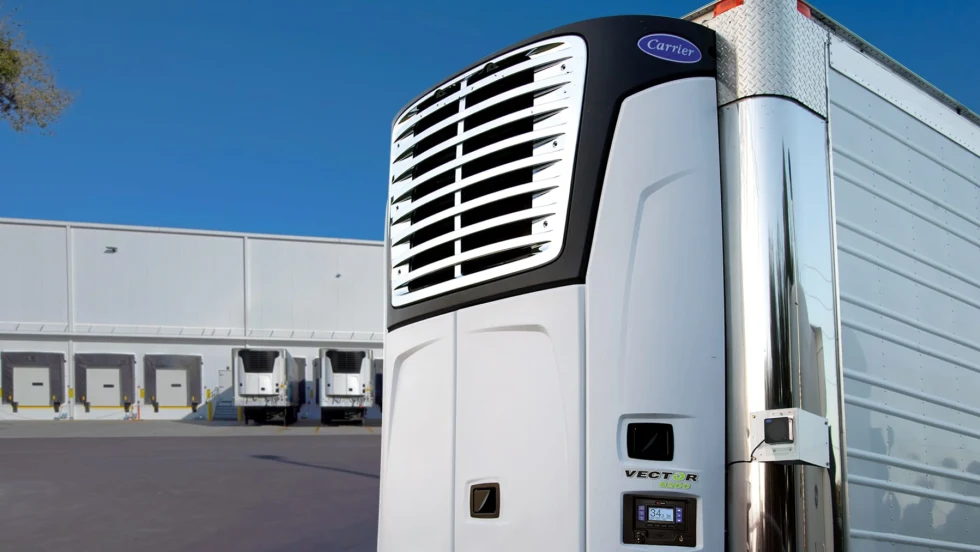
Carrier Transicold Adds All-Electric TRU for Stationary Cold Storage
Carrier Transicold’s new Vector 8200 all-electric transport refrigeration unit gives fleets a diesel-free option for temporary refrigerated and frozen trailer storage.
Read More →