




Engine Smarts: An Injector Discovery in Germany
At the recent bi-annual Hannover, Germany, trucking show -- more specifically, the 63rd IAA -- there were so many show exhibits that a dedicated journalist could spend the entire 10 days hunting for meaningful news
At the recent bi-annual Hannover, Germany, trucking show -- more specifically, the 63rd IAA -- there were so many show exhibits that a dedicated journalist could spend the entire 10 days hunting for meaningful news.
For most of the formal press conferences had less real news than truck and component management talking about the return of business and the fact that they have been spending R&D money all the while. But that didn't result in much new for the show this time around.
But one neat discovery that fortunately didn't take 10 days to find was on the Delphi booth, just across from the DAF trucks exhibit.
This was a unique development of a fuel system that bolts up in place of a unit pump injector system, but provides the exact same performance of the common-rail system that has become the de facto standard, at least on bigger displacement truck diesels.
I hope the DAF engineers took the trouble to cross the aisle and visited with Delphi folks, for this could be just the technology they could be looking for.
That's because unit pump injection systems are the halfway-house between the old pump-line-nozzle and the electronic unit injector, which may be pressurized directly from the camshaft - almost always in-head - or receive fuel pumped up to very high pressure in the common fuel rail that supplies all injectors equally.
Unit injectors get their pressurized fuel usually from individual fuel pumps, usually mounted to the side of the block and pumped by plungers actuated by a low-mounted, in-block camshaft. The pressurized fuel is conducted to the injectors via individual steel pipes similar to those that used to run from in-line pumps to injectors.
Such a unit-pump system is used very satisfactorily on the Paccar MX, 12.9-liter engine, where suitably high pressure is generated to meet current emissions standards and fuel economy targets, all without the complexity of a common rail injection system. Initially, the system was capable of 2,000 bar (29,000 psi) and it is a great tribute to the MX designers that this in-line six that debuted at the IAA four years ago is now meeting EPA2010 emissions regulations. It is also being enthusiastically received by Peterbilt and Kenworth customers, just as DAF customers have taken to it on the other side of the pond.
The Delphi introduction at this IAA shows that there is a development path for the MX engine to soldier on with its block-mounted camshaft and unit pumps and still attain ever-higher "rail" pressures. This new Delphi solution ports the pumps' outputs into a rail that then feeds all the injectors from a common source. According to the Delphi information, the new system is capable of 3,000 bar (43,500 psi) and will be available for Euro VI, due to hit in 2013.
Given the number of engine makers in emerging markets that likely have "older" design engines, this represents a brilliant move by Delphi as those markets begin to embrace their own emissions regulations based on Euro or EPA standards.
And that's not bad news for the rest of the world that ultimately has to share the same atmosphere.
More Equipment

ZF Expands Commercial Vehicle Push in North America
ZF is expanding its North American commercial-vehicle presence with new transmission applications, electrification, trailer technology and autonomous-driving systems.
Read More →
Tesla Wants a Self-Driving Semi. Are Cameras Enough?
Could Tesla’s camera-only autonomous driving technology work on an 80,000-pound Semi? In this commentary, HDT's Deborah Lockridge takes a look at Tesla, Cybercab, and how autonomous trucks see the road.
Read More →
Kodiak: Driverless Long-Haul Truck Launch on Track for 2026
Kodiak AI says its driverless long-haul safety case is 93% complete and it remains on track to begin commercial operations by year-end 2026.
Read More →
What DOT’s Automated Vehicle Strategy Means for Trucking
The U.S. Department of Transportation issued a new automated-vehicle strategy that outlines plans for driverless-truck regulations, cross-state freight corridors, and federal safety standards.
Read More →
East Coast Port Launches $45M Electric Truck Push
The Port Authority of New York and New Jersey announced millions in incentives for zero-emission drayage trucks, yard tractors, and new charging hubs near the port.
Read More →
PlusAI Going Public to Fund Autonomous Truck Launch
A SPAC deal could provide PlusAI with up to $300 million as it works toward a 2027 commercial launch of factory-built autonomous trucks.
Read More →
NHTSA Moves to Rewrite Truck Fuel-Economy Rules
The National Highway Traffic Safety Administration says it lacks authority to regulate medium- and heavy-duty truck engines separately from complete vehicles, but the existing standards have not yet been eliminated.
Read More →
Detroit Opens Orders for EPA 2027 Engines
Detroit isn’t starting from scratch to meet EPA 2027 diesel emissions standards. Its Gen 6 DD13 and DD15 engines keep much of today’s platform while updating the fuel and aftertreatment systems.
Read More →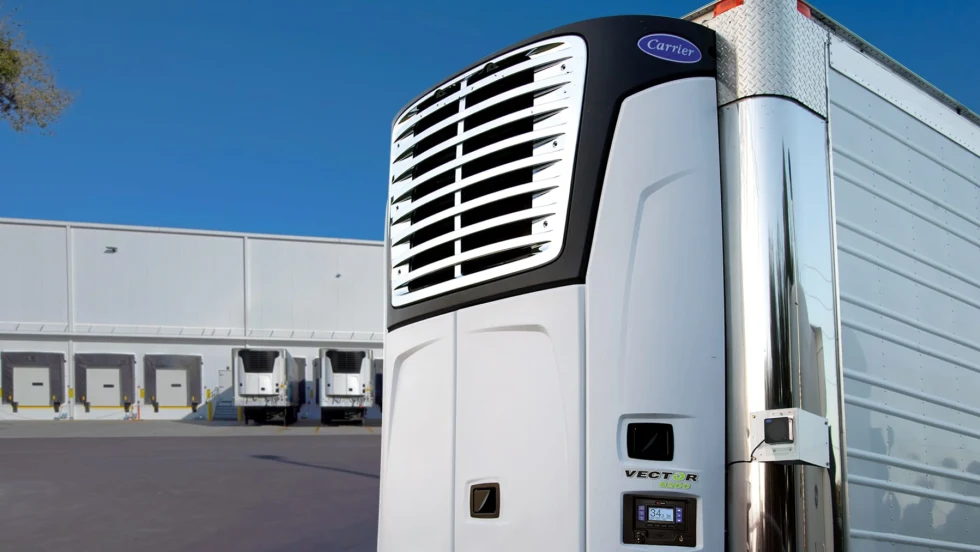
Carrier Transicold Adds All-Electric TRU for Stationary Cold Storage
Carrier Transicold’s new Vector 8200 all-electric transport refrigeration unit gives fleets a diesel-free option for temporary refrigerated and frozen trailer storage.
Read More →
A Closer Look at Kenworth’s Electric T880E Vocational Truck [Video]
Learn more about Kenworth's T880E battery-electric vocational truck at the Paccar Technical Center, including its range, applications, upfitting considerations, and PTO options, in this HDT Spotlight video.
Read More →