





Related: ELD Compliance Enters New Phase
ELD Lessons Learned
Two compliance experts weigh in on key enforcement issues for electronic logs.
November 16, 2018

ELD challenges at roadside start with the lingering confusion between what exactly is an electronic logging device and what is an automatic on-board recording device, which was the previous standard for e-logs.
Credit:
iStockphoto.com/Saklakova
3 min to read
With active enforcement of the electronic logging device rule under way now for several months, “there are some things you really want to focus on and make sure your drivers can communicate when they have a roadside enforcement,” advised Tom Cuthbertson, Omnitracs’ vice president of regulatory compliance, during a recent HDT webinar on the ELD mandate that was presented by Omnitracs.
“There are some challenges [at roadside],” he continued, starting with some confusion between what’s an ELD and what’s an automatic on-board recording device, or AOBRD, the previous standard for e-logs.
“Make sure that the driver communicates if they’re on an AOBRD or an ELD,” he said. “They have to make sure that enforcement understands that, because some devices are registered as ELD-certified, but you can still run as AOBRD-based with the [ELD rule’s] grandfather clause.”
He recommended that fleets make sure their drivers have the correct cab card –which is required – and present it to enforcement officers. And the cab card is different for ELDs and AOBRDs.
Annette Sandberg, CEO of TransSafe Consulting and former administrator of the Federal Motor Carrier Safety Administration, pointed out that the clock on the two-year grandfather clause started ticking on Dec. 18, 2017, when the ELD mandate officially took effect. Fleets should not start counting the extension from when full enforcement began in April of this year.
Bad ELDs & back office issues
A pretty big ongoing issue, Sandberg said, is that “there are quite a few bad ELD vendors out there. Not all ELD manufacturers are equal,” she continued, noting that “we saw a lot of manufacturers rush into this space. It is fairly significant that we’re seeing a lot of vendors come in that may not necessarily be well-versed in the U.S. trucking industry space.”
She also observed that “numerous manufacturers had devices fail; at the beginning of the year, we saw quite a few failures of devices. And some of those vendors had to ask for additional time from FMCSA to get their systems fixed. I’ve talked to quite a few fleets that have had their systems fail as well.
“It’s frustrating to drivers to continue to have their system fail when probably they didn’t want to have the device in the first place,” Sandberg added. “There have been a lot of growing pains in the first months of this process.”
Turning to back office issues, Omnitracs’ Cuthbertson pointed out that timing for audits should be a concern for fleet managers.
“An auditor could come in and ask you several days ahead of time to have ELD driver log data available and send it to them prior to the audit. That’s a little different than what may be usual with an AOBRD. So, you need to be prepared to review your edits and look at how your edits are being done during the audit, and [any] malfunction of devices. Realize that if a malfunction happens in a device and it doesn’t recover, then there’s only eight days to have that unit repaired and back into the truck. So, those are the kind of things you need to worry about with an internal audit.”
Sandberg advised that the “last thing you want is to have FMCSA or a state investigator show up to do a compliance review and nobody knows how to pull driver logs and the various reports that they ask for. It will make them clearly question your system and your ability to manage that system.”
Subscribe to Our Newsletter
More Safety & Compliance

FMCSA Pauses Biennial-Update Enforcement Amid Motus Transition
Carriers whose updates were due on or after June 1 have more time, while FMCSA works to stabilize its new registration system and warns of phishing sites impersonating its new carrier registration system, Motus.
Read More →
ZF Expands Commercial Vehicle Push in North America
ZF is expanding its North American commercial-vehicle presence with new transmission applications, electrification, trailer technology and autonomous-driving systems.
Read More →
Truck Drivers Need More Than Another Alert
Fleets have more visibility into truck health, safety events, and driver activity than ever. The next challenge is turning all that information into useful guidance for the person who has to decide what to do next.
Read More →
Tesla Wants a Self-Driving Semi. Are Cameras Enough?
Could Tesla’s camera-only autonomous driving technology work on an 80,000-pound Semi? In this commentary, HDT's Deborah Lockridge takes a look at Tesla, Cybercab, and how autonomous trucks see the road.
Read More →
What DOT’s Automated Vehicle Strategy Means for Trucking
The U.S. Department of Transportation issued a new automated-vehicle strategy that outlines plans for driverless-truck regulations, cross-state freight corridors, and federal safety standards.
Read More →
NYC Expands Speed, Pedestrian Safety Tech Across Fleet
New York City is expanding intelligent speed assistance and pedestrian-alert systems across its municipal fleet, moving the technologies from pilot programs into vehicle procurement and retrofit requirements.
Read More →
FMCSA Removes 110 Truck Driver Training Schools from Certified ELDT List
Federal regulators also are targeting more than 160 additional training providers and launching a nationwide audit of third-party CDL skills testers as part of a broader crackdown on trucking fraud.
Read More →
Beyond DOT Compliance: What Makes a Trucking Fleet Truly Safe?
A trucking fleet can follow every rule and still make unsafe decisions. The real test comes when safety conflicts with freight, productivity, or cost.
Read More →
Hours of Service Pilot Programs: FMCSA Readies for 2027 Rollout
Two pilot programs could eventually reshape hours-of-service rules, giving truck drivers options to pause their 14-hour clock or use longer split sleeper rest periods.
Read More →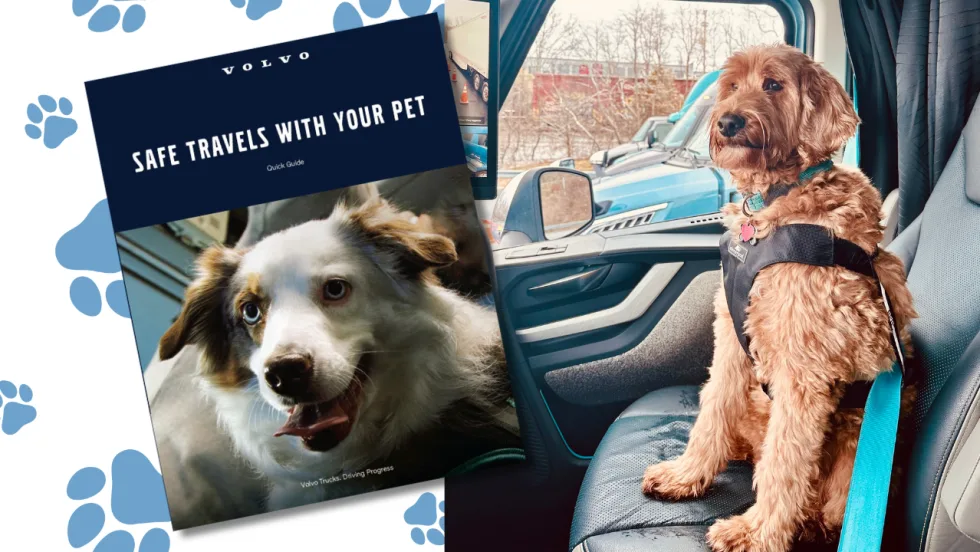
New Guide Offers Pet Safety Tips for Truck Drivers
Hundreds of thousands of pets travel in truck cabs. A new safety guide from Volvo Trucks and the Center for Pet Safety offers practical advice for truck drivers who bring dogs and cats along for the ride.
Read More →