




Driver Orientation: How Much is Retained?
In my seven years with Strategic Programs Inc., I have yet to come across a transportation organization that does not have an orientation for their newly hired Professional Drivers
In my seven years with Strategic Programs Inc., I have yet to come across a transportation organization that does not have an orientation for their newly hired Professional Drivers.
The length of orientation varies from company to company, but the general idea is the same: classroom-style learning on a variety of subjects, usually taught by employees from different departments such as maintenance, benefits, settlements, etc.
Throughout the orientation process, your new drivers are being pummeled with information: how to enroll in the benefits program, how to get paid, who to contact for what, how to run the EOBR, etc. All this important information is critical for drivers to know at some point during their career. How much of this orientation training, however, are your Drivers retaining? Furthermore, what kind of impact could it have on their engagement if a driver can't remember what to do or how to do it when they're on the road?
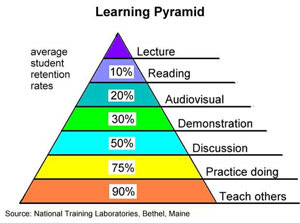
The National Training Laboratories' Learning Pyramid shows us the average student retention rates for different types of teaching methodologies:
Where does the majority of your orientation fall on this pyramid? How much of the important information are your new Drivers retaining?
Some of our clients administer a post-orientation survey, which usually asks drivers which parts they liked about orientation, which parts were most helpful, and what could be done differently. One change I suggest in order to quantify and improve information retention is to give your new drivers a different, more specific post-orientation survey. It might resemble a quiz, with questions like "Who should you go to if you have a question about your settlement sheet?", or "List three ways you can make the most of your fuel." Questions should be unique to your company and should target specific items that you would expect drivers to know when they walk out of orientation.
Communication around this survey is imperative - drivers must know that they're not being graded and that this survey has no impact on their employment with the company (and you've got to mean it). Let people know that this is just one more part of the orientation process in order to make sure orientation is set up in the best way for the success of the drivers.
If you have the manpower, have someone follow up with drivers individually on questions they missed to ensure everyone has the proper information, or knows where to get it. If you don't have the manpower for individual follow up, you can at least make adjustments to your orientation process based on the results of the surveys.
Once you have data on what information is or is not being retained, here are some suggestions to assist with information retention:
- Based on survey results, find out what information drivers need most often and give that to them on a cheat sheet; tell them where to put it so that it's easily accessible.
- Have the students teach a concept back to the trainer. Einstein said, "If you can't explain it simply, you don't understand it well enough." Find out if your drivers understand something well enough by having them explain or teach it back to you.
-Have some real-life scenarios on hand that drivers will face on the road. Practice by role-playing or trying some other hands-on learning techniques.
Strategic Programs has found that how well a driver feels set up for success can have a tremendous impact on their engagement and likelihood to stay with a company. Using all of the tools you can to make orientation successful and beneficial can have a direct impact on your company's bottom line.
Megan Younkin is a consultant for Strategic Programs Inc., which designs client-specific assessments to help companies understand how employees feel about the company and what fleets can do to improve recruiting and retention. http://truckdriverretention.com.
More Fleet Management

How Telematics Improves Visibility, Control, and Performance in Refrigerated Fleets
Explore how telematics help refrigerated fleets improve visibility, uptime, efficiency, compliance, and cargo protection across connected cold chain operations.
Read More →
What the U.S.-Canada Trade War Means for Trucking
Escalating U.S.-Canada tariffs could disrupt cross-border freight, reduce truck volumes, raise costs, and create new uncertainty for carriers on both sides of the border.
Read More →
What Are Trucking’s Top Concerns for 2026?
The American Transportation Research Institute wants to know what's worrying trucking fleet managers, drivers, and other stakeholders in its annual Industry Issues survey.
Read More →

American Trucking Associations Looks for a New Leader
ATA President and CEO Chris Spear abruptly left his job at the association on August 21, at a pivotal time for the trucking industry.
Read More →
Public Wi-Fi Cybersecurity Risks: How Truck Drivers and Fleets Can Protect Their Data
Public Wi-Fi can expose truck drivers and fleets to credential theft, malware, and other cyber threats. Here’s how to reduce the risk on the road.
Read More →
For Nicky Cupp, Fleet Innovation Starts With Frustration
HDT Truck Fleet Innovator Nicky Cupp turns everyday pain points at Fraley & Schilling into opportunities for better technology and smarter processes.
Read More →
Adam Buttgenbach’s Approach to Electric Trucks: Start With Where They Fit
HDT Truck Fleet Innovator Adam Buttgenbach helped PepsiCo build one of North America’s largest EV fleets by focusing on where electric trucks make operational sense.
Read More →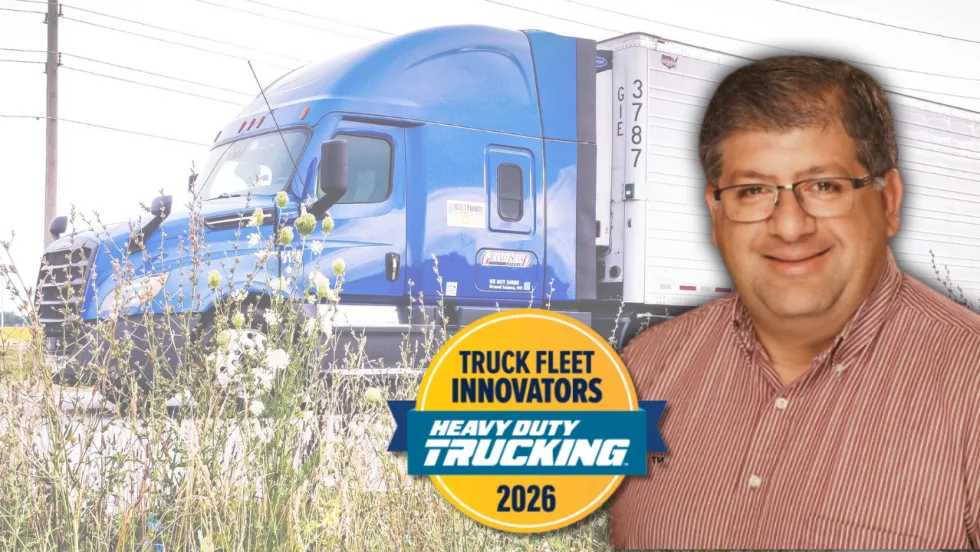
Deen Albert: Let Automation Do the Math, People Make the Decisions
HDT Truck Fleet Innovator Deen Albert makes sure people are still at the heart of operations at Grand Island Express, even while adopting artificial intelligence tools. AI-assisted dispatch helped boost revenue 25% with the same number of trucks.
Read More →
Trimble’s New AI Agent Takes Aim at Fleet Back-Office Busywork
Arc Agent works across Trimble TMS products to automate repetitive tasks such as freight orders, maintenance, invoices, fuel costs and more.
Read More →
How HDT’s 2026 Truck Fleet Innovators Are Rethinking Fleet Operations
Meet five trucking leaders who are challenging assumptions, solving operational problems, and putting innovative ideas to work.
Read More →