




Does the MIL Lamp Spell Aftermarket Opportunity?
Your customers are going to be seeing a lot more of that ubiquitous yellow engine-shaped icon on their dashboard with the latest model trucks.

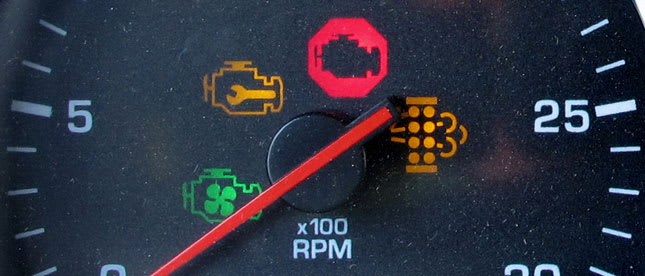
Your customers are going to be seeing a lot more of that ubiquitous yellow engine-shaped icon on their dashboard with the latest model trucks.
The malfunction indicator light warns of an emissions system malfunction -- and because of the way the emissions regulations are written, it could mean some opportunities for independent shops.
As of Jan. 1, the final stage of the the Environmental Protection Agency's 2002, 2007 and 2010 emissions reduction mandate kicked in -- on-board diagnostics, or OBD.
OBD has been part of the emissions systems since 2002, but until this year, there was no reporting function. That's the big change, and for the end user it's going to mean more time in the shop.
"The customer is going to see the MIL lamp come on more often," says Brad Williamson, manager of engine and component marketing for Daimler Trucks North America. "There are now 38 systems being monitored by OBD, up from about 30. Also, the frequency of the self-inspection of the system has increased, and the reporting thresholds have been tightened."
Earlier versions of OBD were required to report when the system was allowing emissions to exceed the acceptable level by a factor of five. That has been progressively ratcheted down to 2013's factor of two.
Williamson says if there are deficiencies in the system, they are an OE issue and that they will have to address them. But if the system reports an error, the customer still has to have it repaired.
The regulation has forced truck makers to open up their diagnostic information to third parties so other, non-OE facilities can service the emissions system faults.
"If one of our trucks goes into a third-party location, they can service the vehicle," says Frank Bio, product manager, trucks with Volvo Trucks. "That opens up more service opportunities to the customer.
"But we're only providing enough information to do the emissions part of the requirement."
In 2010, OEs used a proprietary protocol to track and monitor all that information. For 2013, we now have an industry-standard J-1939 reporting function. Fault codes are reported in a common, standard format so a single scan tool can get diagnostic codes from all engines.
All the system fault codes and all the performance criteria on the emissions system are stored in the OBD memory, and it cannot be erased.
In some cases, faults could trigger the light to come on, but the system could self-heal, like in the case with a cold-temperature start-up with the DEF frozen, says Navistar spokesman Steve Schrier.
"The light would go out after the fault was resolved, but the event would remain in the memory."
As far as diagnosing an emissions system fault code, however, if the light comes on, your customers will have to head for the shop. And it could be yours.
"The only two lights that indicate an OBD issue are the malfunction indicator light and check engine light, but they won't give any indication of what the issue is," says Williamson.
There is a provision in OBD regulations that requires certain emission-related components and software systems to have internal coding called CAL-ID/CVN, says Judy McTigue, Kenworth director of marketing planning and research.
"The intention is to prevent the installation of unapproved parts or tampering with the system," she says. "If incorrect parts or software are installed, engine performance could be affected. Also, California will be checking vehicles to ensure that only OEM-approved CAL-ID/CVN data is on a vehicle."
More Aftermarket
What Three Fleets Are Doing Differently When Buying Truck Parts in 2026
With freight improving but costs still climbing, fleet maintenance executives explain how they're balancing price, quality, and supplier relationships.
Read More →
ConMet Expands Aftermarket Brake Drum Lineup With TruCast
A new heavy-duty truck brake drum option in the aftermarket gives customers more flexibility within the ConMet product family.
Read More →
Phillips Opens High-Tech Distribution Center for Faster Parts Delivery
Phillips Industries’ new Cincinnati-area distribution center is now shipping aftermarket trucking parts nationwide, aiming to speed up delivery times for customers.
Read More →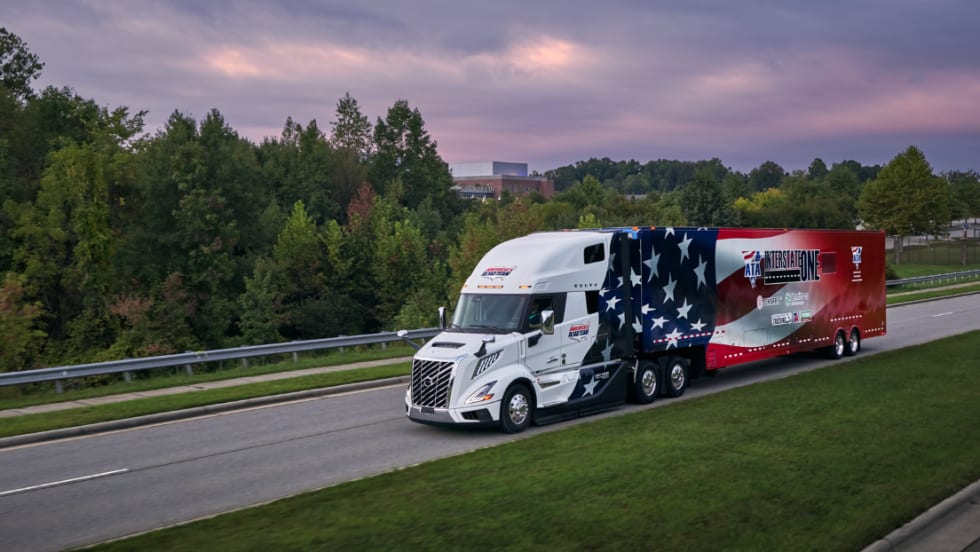
Volvo to Sponsor America’s Road Team for 2025
Volvo Trucks announced that it is extending its exclusive sponsorship of America’s Road Team for 2025.
Read More →
Webb to Start Taking Orders for UltraSet Pre-Adjusted Wheel Hubs
Webb, which recently acquired the Stemco Trifecta pre-adjusted hub program, will soon start taking orders for its replacement pre-assembled hub, the UltraSet.
Read More →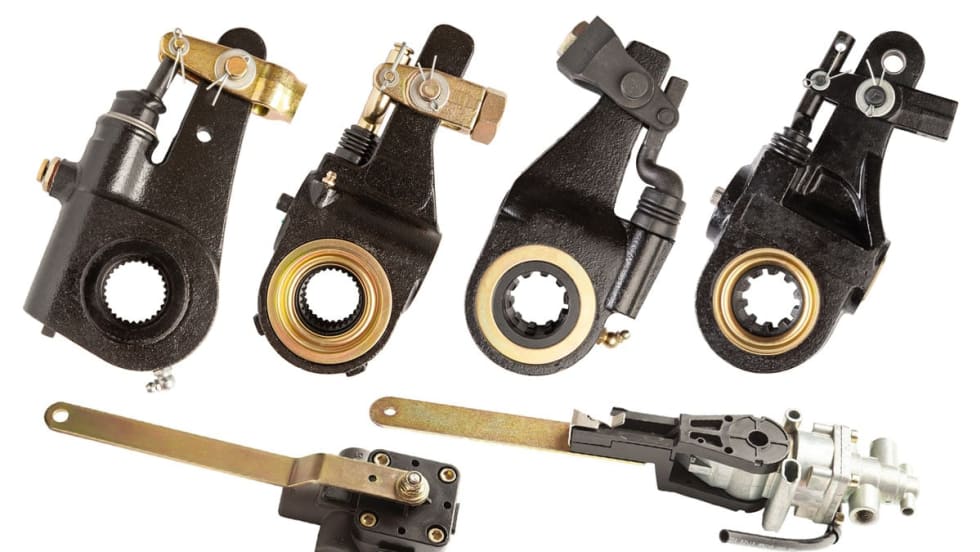
All-Makes Automatic Brake Adjusters, Ride Height Control Valves from Midland
SAF-Holland has added automatic brake adjusters and ride height control valves to its Midland All-Makes Program.
Read More →
ZF Aftermarket Expands [pro]Academy Training
ZF Aftermarket said it is expanding its ZF [pro]Academy training and will be adding 40 new modules this year.
Read More →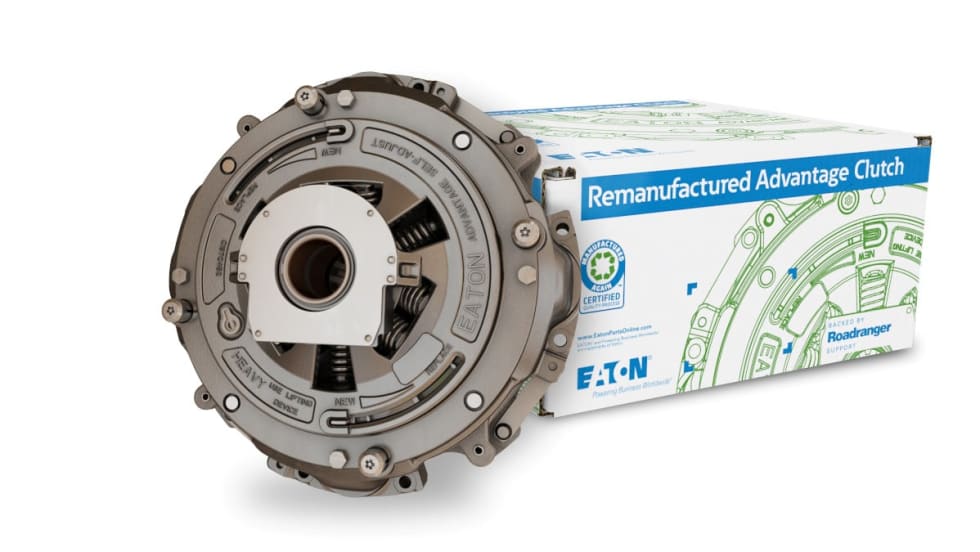
Eaton Adds Remanufactured Advantage Line of Clutches
Eaton has added its Advantage clutches to its remanufactured product line. The clutches feature a unique strap drive intermediate plate designed to allow customers to choose the latest OE specification
Read More →
ConMet Acquires TruckLabs, the Creator of TruckWings
Commercial truck and trailer parts provider ConMet acquired TruckLabs, the company that created TruckWings, an aerodynamic device that attaches to truck cabs and deploys to close the gap between truck and trailer. TruckLabs now operates as a subsidiary of ConMet.
Read More →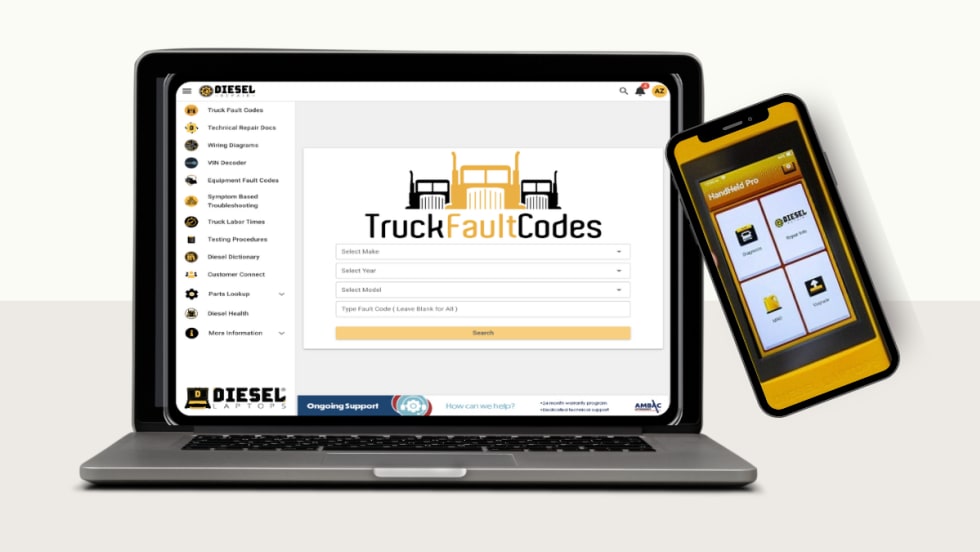
Diesel Laptops Releases Fault-Code-to-Part-Number Tool
Diesel Laptops said its Truck Fault Codes allows users to input a fault code and immediately identify and order the parts needed to complete repair work.
Read More →