




Does Being Data-Driven Remove the Human Element from Fleet Management?
Even though the increased emphasis on technology use in trucking could seem to skip over the human element, used right, it can do the opposite.

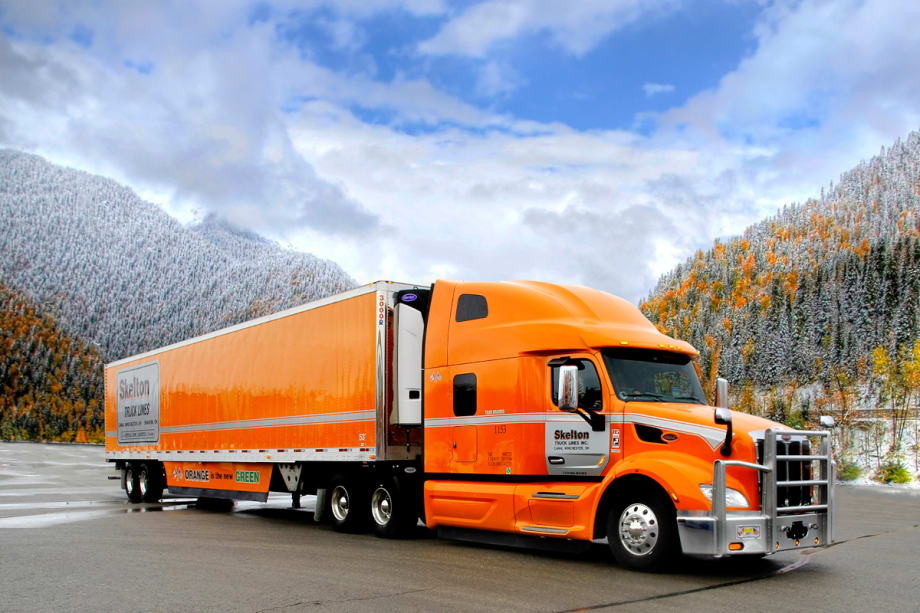
Fleets can use data to better understand drivers, spot trends in behavior, and even know when to ask a driver “What’s going on?”
Photo: Skelton
As fleets turn increasingly to the use of real-time data, telematics, and artificial intelligence to run their businesses more efficiently and safely, does all this focus on technology and data remove the human element?
In fact, if used properly, it can be the exact opposite, says Michael Lasko, vice president of safety for Boyle Transportation and sister company Skelton.
“When you have a driver who's normally outstanding, leading the fleet in every category, and then all of a sudden you see their numbers fall off a cliff, you call that driver and ask what’s going on.”
Often managers discover that a driver has a personal challenge of some sort – a sick child, a death in the family, health issues.
“We had a driver whose house was severely damaged by a tornado,” Lasko says. “This gentleman didn't tell anybody and wasn't looking for sympathy.”
But the data showed something was amiss, so Lasko’s team reached out to talk to the driver, and once they discovered the problem they were able to help.
“We want to make sure all of our professional drivers are successful. Part of that is getting to know each driver individually,” he says.
In larger fleets, that can be more difficult than in smaller fleets. But Lasko says having this data at your fingertips makes it easier to meet that challenge.
“I guarantee at the end of the day, your driver walks away feeling like they work for a company that cares and values them,” he says.
Responding to a Driver’s Needs
“I absolutely hate a cookie-cutter approach to a driver interaction,” Lasko says. “Drivers don't like it, either. And when I was a driver, I hated it.
“All this data enables us to have a more meaningful personal interaction with professional drivers about issues that they have.”
For instance, without this kind of data, fleets have been known to decide that because one driver had a backing accident, the whole fleet needs refresher training on backing. But the other drivers who don’t have any problems with their backing skills may not be too happy about having to take extra training.
“Now you can get very specific on training, and the coaching and the mentoring that you need to do with a professional driver, because of all this data,” Lasko says.
At Sun Logistics, which handles first- and last-mile freight for major less-than-truckload customers New York and Miami, the payback in becoming more data-driven has been measured not only in cutting waste, but also in employee morale.
“Our team’s morale went through the roof,” says COO Nathaniel Klein. “Now everyone is measured, and they know they’re being measured. They know what those results are and how they can affect it and how they’re part of the team and their purpose — and they’re incentivized on it. Every person here can make a bonus every single month.”
More Fleet Management

Color Match Smarter: Tools That Restore & Perform
For fleet managers and collision repair professionals keeping heavy-duty trucks on the road, getting the color right the first time isn't just about appearance — it's about efficiency, turnaround time, and bottom-line results. Discover how today's digital color tools are transforming the repair process from guesswork to precision.
Read More →
FMCSA Pauses Biennial-Update Enforcement Amid Motus Transition
Carriers whose updates were due on or after June 1 have more time, while FMCSA works to stabilize its new registration system and warns of phishing sites impersonating its new carrier registration system, Motus.
Read More →
2026 Blueprint for Countering Smarter Supply Chain Theft
Cargo theft is no longer just the cost of doing business. It's a multi-billion-dollar criminal enterprise exploiting vulnerabilities across your fleet, drivers, and supply chain.
Read More →


How Telematics Improves Visibility, Control, and Performance in Refrigerated Fleets
Explore how telematics help refrigerated fleets improve visibility, uptime, efficiency, compliance, and cargo protection across connected cold chain operations.
Read More →
What the U.S.-Canada Trade War Means for Trucking
Escalating U.S.-Canada tariffs could disrupt cross-border freight, reduce truck volumes, raise costs, and create new uncertainty for carriers on both sides of the border.
Read More →
What Are Trucking’s Top Concerns for 2026?
The American Transportation Research Institute wants to know what's worrying trucking fleet managers, drivers, and other stakeholders in its annual Industry Issues survey.
Read More →
American Trucking Associations Looks for a New Leader
ATA President and CEO Chris Spear abruptly left his job at the association on August 21, at a pivotal time for the trucking industry.
Read More →
Public Wi-Fi Cybersecurity Risks: How Truck Drivers and Fleets Can Protect Their Data
Public Wi-Fi can expose truck drivers and fleets to credential theft, malware, and other cyber threats. Here’s how to reduce the risk on the road.
Read More →
For Nicky Cupp, Fleet Innovation Starts With Frustration
HDT Truck Fleet Innovator Nicky Cupp turns everyday pain points at Fraley & Schilling into opportunities for better technology and smarter processes.
Read More →
Adam Buttgenbach’s Approach to Electric Trucks: Start With Where They Fit
HDT Truck Fleet Innovator Adam Buttgenbach helped PepsiCo build one of North America’s largest EV fleets by focusing on where electric trucks make operational sense.
Read More →