





Related:Study: Diesel Vehicle Particulate Matter Small, Declining
Diesel Particulate Filters: Blessing and Curse
Diesel particulate filters help cleanse exhaust and give us cleaner air to breathe, but they cause frequent grief and expense.
January 23, 2015
Diesel particulate filters help cleanse exhaust and give us cleaner air to breathe, but they cause frequent grief and expense.
4 min to read
Diesel particulate filters help cleanse exhaust and give us cleaner air to breathe, but they cause frequent grief and expense.
Diesel particulate filters are one of the major additions to exhaust systems in recent years, and they are a blessing and a curse. Used since 2007 to meet EPA regulations, DPFs strip soot and ash from the exhaust stream. Added to exhaust-gas recirculation already used to reduce nitrogen oxides, DPFs greatly cleansed exhaust and eliminated the characteristic diesel smell. Addition of urea injection in 2010 and advancements in combustion efficiency along the way result in exhaust so clean that it can barely be measured.
That’s the blessing. The curse comes from the extra maintenance and repairs required to keep the systems operating, along with unscheduled downtime, stranded drivers and missed deliveries, fleet managers say.
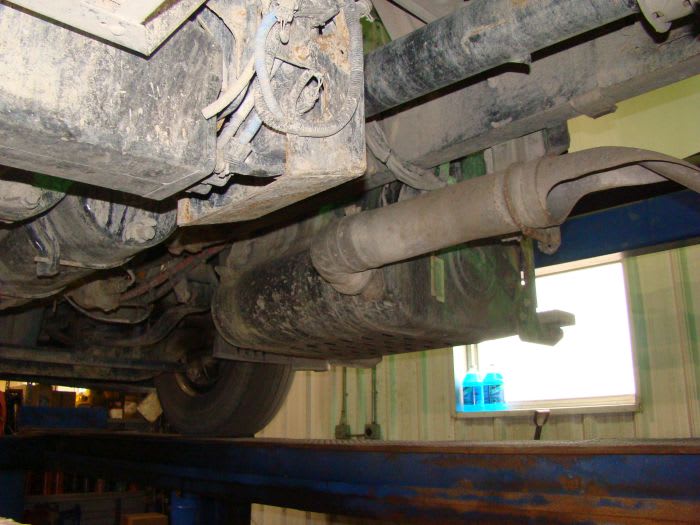
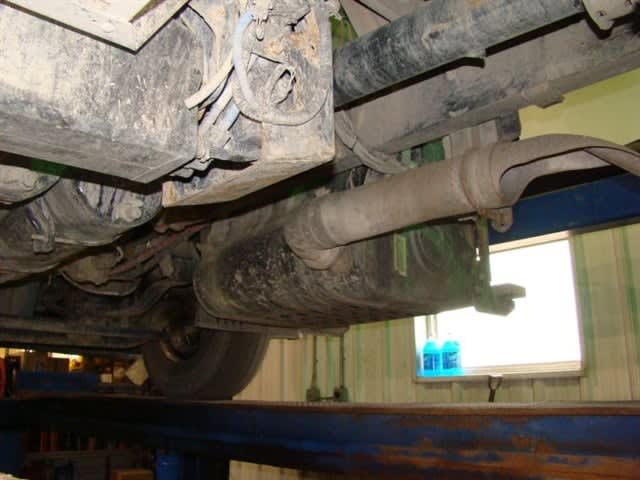
DPFs replaced simple mufflers, and are rather complex and expensive pieces of equipment. A DPF consists of a stainless steel cylinder holding the ceramic honeycomb filter, which snatches particulates — soot — produced by engine combustion and stores them until cleaning takes place. Heat and pressure sensors tell an engine’s electronic controls if the DPF is working properly, and warn when it’s not. Cleaning with exhaust heat alone is called a passive regeneration; if that’s not sufficient, active or forced regenerations occur periodically.
Heat for an active regen is created by adding fuel to exhaust gasses, and the fuel — sometimes called “hydrocarbons” — is ignited just ahead of the DPF. Temperatures of up to 1,100 degrees Fahrenheit result, burning out the soot. When a dash light warns a driver that a regen is needed, he must pull over soon and let it happen. If he doesn’t, electronic controls, which know via sensors that the DPF is plugged up, will cut engine power and eventually shut it down. The engine fast-idles during an active regen, so the truck must remain parked. Heat from the tail pipe can ignite grass below or overhead tree branches, so drivers need to park the truck away from such flammable objects.
A new DPF costs about $5,000, and a reconditioned one about half that. A recon unit works almost as well as a new one, and suppliers have exchange programs where a dirty DPF plus a service charge is traded for a cleaned one. Or the truck’s owner can wait for his own DPF to be serviced so it stays with the truck. A damaged DPF has almost no value and the owner must buy another. The ceramic honeycomb structure can suffer cracks from road shock or accidental dropping, or melted by excessive heat. If neglected, it can get so badly plugged up with soot that it can’t be cleaned.
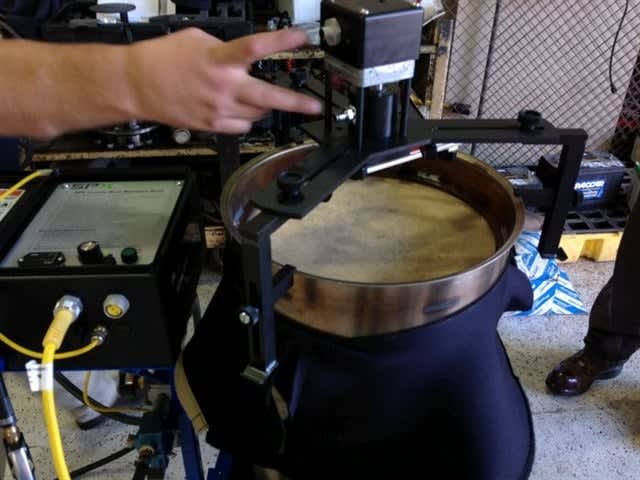
Reliable Carriers bought an SPX portable DPF cleaner for about $10,000, and it’s paid for itself in saved cleaning fees.
Sometimes DPFs are affected by other systems on the truck. Kevin Tomlinson, maintenance director at South Shore Transportation in Sandusky, Ohio, shared such an experience in a recent HDT webinar: “The DPF on a truck I had just changed out last week with an exchange unit is regening, and went into shutdown this morning… 60 miles from the closest dealer. We had to have it towed in to the dealer. It turns out that fuel pressure wasn’t enough to support regening.” A forced regen shouldn’t be needed for hundreds of miles after a fresh DPF has been installed, and in this case the faulty fuel system added to the problem.
A DPF also collects ash from combusted motor oil, and it remains in the filter until it’s serviced. Ash is blown out by high-pressure air for most DPFs, or rinsed out with de-ionized water in the case of one engine builder’s DPFs. Special machines accomplish this, and require the DPF, which weighs about a hundred pounds, to be removed and placed on or in the machine for cleaning. Some fleets have bought their own machines.
Many fleet managers now schedule DPF cleaning as part of regular preventive maintenance procedures.
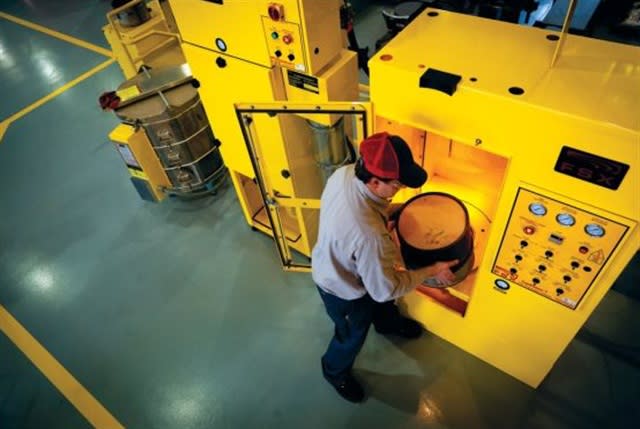
Larger console-type cleaners are sold by manufacturers, such as the one from FSX at right.
John Sullivan, director of maintenance at Reliable Carriers in Canton, Mich., bought a portable device that can be moved close to the truck being serviced.
“You have to pull the DPF and insert it into the cleaner,” he explains. “It uses shop air and runs automatically. It’s pretty easy. I paid $10,000 for it. It has paid for itself. [Removal to reinstallation] of the DPF is four hours or less.”
Jamin Woody, service manager at Motor Trucks, a Navistar dealer in Everett, Washington, prefers the more complex and expensive system his facility has used since 2010. He tested it against a portable one and found that based on restriction readings, his system removed much more ash.
“From our experience, the cleaner that filter gets when you clean it, the longer it will last in filter lifetime, and the fewer issues you will have upon reinstallation.”
– Editor In Chief Deborah Lockridge contributed to this article.
Subscribe to Our Newsletter
More Fuel Smarts

How Volvo Updated Its D13 for EPA 2027 [Watch]
Volvo’s updated D13 promises lower emissions without sacrificing performance or fuel economy. Take a closer look at what changed inside the engine in this HDT Spotlight video.
Read More →
Diesel Price Spike Shortens Payback for Natural Gas Trucks, Report Says
Energy Vision estimates fleets could recover the higher purchase price of an RNG-fueled Class 8 tractor in 1.3 to 2.8 years under current fuel-price scenarios.
Read More →
Calstart Becomes Catalyst Mobility, Reflecting Broader Focus
Calstart is now Catalyst Mobility, reflecting the nonprofit’s growing national role in clean transportation, including zero-emission trucks, infrastructure and incentive programs.
Read More →

Record Diesel Prices Squeeze Trucking Fleets
Average U.S. diesel prices have climbed to nearly $6 a gallon, surpassing the 2022 record as tight refinery capacity and Middle East disruptions keep fuel costs elevated.
Read More →
Sponsored•September 9, 2026
How Fuel Delivery Shapes Engine Performance
Fuel delivery depends on more than what happens at the injector. For fleet, maintenance and technical professionals, looking at the full path from pump to injector can provide useful context for understanding engine performance.
Read More →
East Coast Port Launches $45M Electric Truck Push
The Port Authority of New York and New Jersey announced millions in incentives for zero-emission drayage trucks, yard tractors, and new charging hubs near the port.
Read More →
California Bill Could Shed Light on Electric Truck Prices
Why do battery-electric Class 8 trucks remain so expensive? A California bill headed to Gov. Gavin Newsom would give fleets and state agencies more visibility into what manufacturers charge.
Read More →
Detroit Opens Orders for EPA 2027 Engines
Detroit isn’t starting from scratch to meet EPA 2027 diesel emissions standards. Its Gen 6 DD13 and DD15 engines keep much of today’s platform while updating the fuel and aftertreatment systems.
Read More →
Zero-Emission Truck Corridor Planned for West Coast
California, Oregon, Washington, British Columbia and Baja California are coordinating plans for truck charging and hydrogen fueling from Canada to Mexico.
Read More →
A Closer Look at Kenworth’s Electric T880E Vocational Truck [Video]
Learn more about Kenworth's T880E battery-electric vocational truck at the Paccar Technical Center, including its range, applications, upfitting considerations, and PTO options, in this HDT Spotlight video.
Read More →