




Dec. 1 OSHA Training Deadline Looms
OSHA wants you to train your workers in Hazard Communication, and wants you to do it by Dec. 1 of this year. The trick? It’s a totally new curriculum. Hazard Communication — more commonly known as the “Right to Know” rule about hazardous chemicals in the workplace — is the most frequently cited rule in OSHA.
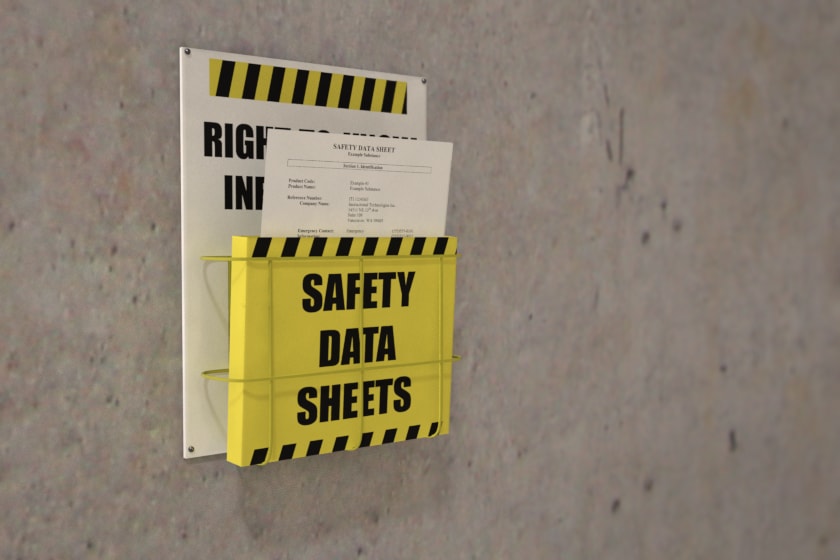

OSHA wants you to train your workers in Hazard Communication, and wants you to do it by Dec. 1 of this year. The trick? It’s a totally new curriculum. Hazard Communication — more commonly known as the “Right to Know” rule about hazardous chemicals in the workplace — is the most frequently cited rule in OSHA. And this new curriculum brings the U.S. in line with what the rest of the world is doing with chemicals: new labels, new placards, new material data safety sheets, new ways of classifying chemicals.
The world of chemicals is global. In fact, you’ll often hear this new Hazard Communication training requirement referred to as GHS: the Globally Harmonized System for the Classification and Labeling of Chemicals.
GHS training is required to ensure that employees understand workplace chemical hazards and know the protective steps to take to avoid exposure, illness, and injury. In addition, over the next few years, the labels on hazardous materials will start to change. The Material Data Safety Sheets will yield to a new (and slightly different) Safety Data Sheet. Big changes are coming, which is why OSHA made training the first step.

If this is the first you’ve heard about all this, it’s understandable. At the end of March of this year, federal regulators gave employers just 8 short months (Dec. 1) to train employees in the 13 areas identified by OSHA.
Who Needs to Take HazCom GHS Training?
The first question many safety people ask is: “Who needs to take this training by Dec. 1?” The final rule states that any worker where hazardous materials are in the workplace must be trained. That means all your current workers, as well as new employees you bring on. (There is a 90-day training window after the date of hire for new employees.)
Diesel fuel is a hazardous material. So as it applies to fleets, that means every driver in a truck with diesel fuel needs to be trained. Shops and warehouses with propane-fued forklifts are also covered (the benzene in propane is a hazardous material). Technically, white-out correcting fluid and laser-printer cartridges are hazardous materials, too.
What are the Chances We’ll Get Inspected?
There are two sides to the reality of this new ruling. The first is that there are only so many OSHA inspectors, and they can inspect only so many companies.
The flip side is that if your company is inspected and caught having not trained people in hazard communication? It’s a $5,000 minimum fine for each employee not trained. That can add up very quickly.
Many OSHA inspections happen based on whistleblower calls, many of which are triggered by unhappy former employees. With trucking’s enormous turnover, this increases the likelihood of an inspection.
“This new regulation affects a surprisingly large number of workers in transportation and warehousing,” said Greg Pattison, Vice President of GLP Systems, with whom Instructional Technologies, Inc. partnered to create their GHS/HazCom lesson for PRO-TREAD online training.
When considering how much weight to give the new regulation, companies should consider OSHA’s recent regulatory aggressiveness:
The average proposed penalty for “serious” violations more than doubled in 2012.
“Significant” cases (investigations producing fines totaling at least $100,000) are up 30% Year On Year.
Some “mega-penalty” citations have exceeded $1 million.
OSHA is more aggressively issuing “repeat” citations, at up at a cost of up to $70,000 for each infraction.
There has been a 100% increase in fine imposed per cited violation.
When it comes to enforcement, employers can expect to see a continued increase in OSHA activity. OSHA director Dr. David Michaels stated: “the higher penalties are still too low when compared to other regulatory agencies”.
What’s Covered in the New Training?
The new training covers much of the same material: what’s a chemical, what are your rights as a worker, how do you read the labels and hazard statements, and what can you find on the Safety Data Sheets. The differences between the old labels and the old Material Safety Data Sheets are explained in the training as well.
Dec. 1 is Around the Corner: What Do I Do?
Many of the safety, training and compliance companies serving the transportation industry have training modules updated and ready to go. Many are online, and all cover the mandated curriculum. Most classroom training exercises take anywhere from 2-4 hours, while most online training programs take less than an hour.
At this late date, your best option may be a turn-key training solution that lets you track who has taken the course, and provides evidence of mastery.
“Some of our smaller clients have come to us, and are frustrated because they don’t have GHS training in their budget for 2013. How could they? They didn’t know when it was going to hit until earlier this year!” said Dr. Jim Voorhees of Instructional Technologies Inc. “We’ve been working with them to find a way to get the training done as soon as possible. The only upside to the government laying this fast Dec. 1 deadline on companies is that 2014 training plans start just a month later.”
More Drivers

Truck Drivers Need More Than Another Alert
Fleets have more visibility into truck health, safety events, and driver activity than ever. The next challenge is turning all that information into useful guidance for the person who has to decide what to do next.
Read More →
FMCSA Removes 110 Truck Driver Training Schools from Certified ELDT List
Federal regulators also are targeting more than 160 additional training providers and launching a nationwide audit of third-party CDL skills testers as part of a broader crackdown on trucking fraud.
Read More →
Hours of Service Pilot Programs: FMCSA Readies for 2027 Rollout
Two pilot programs could eventually reshape hours-of-service rules, giving truck drivers options to pause their 14-hour clock or use longer split sleeper rest periods.
Read More →
Medical Cards, English Proficiency Reshape Roadcheck Violations
Medical-card violations jumped to the top of the driver out-of-service list during CVSA’s 2026 International Roadcheck, while English-language proficiency violations appeared among the leading violations for the first time.
Read More →
Driver Trust Can Make or Break the Success of Fleet Safety Technology
New Teletrac Navman research suggests that onboarding, transparency about driver data, and positive feedback can play a significant role in how commercial drivers respond to safety and coaching technology.
Read More →
EEOC Sues KLLM Over Alleged Sex Discrimination in Driver Training
KLLM is facing a federal sex-discrimination lawsuit over policies the EEOC alleges put female truck driver trainees at a disadvantage.
Read More →
FMCSA Moves to Codify English Language Requirements for Commercial Drivers
By changing regulations on English-language proficiency requirements for commercial drivers, rather than relying on a guidance memo, the FMCSA said future administrations won't be able to walk back the Trump administration's stricter enforcement with just a memo.
Read More →
Drivers Put Western Star Trucks to the Test at Star Nation Experience
Watch to get an inside look at the Western Star trucks, technology, and community behind the Star Nation Experience 2026!
Read More →
Trump Administration Looks to Put More Veterans Behind the Wheel
The Freedom Haulers program pulls together existing and expanded programs at several federal agencies to recruit veterans to drive commercial heavy-duty trucks and cut the red tape for them to get a CDL, training, and employment.
Read More →
Putting Mack’s Command Steer to the Test
A test drive of Mack’s Command Steer active steering system evaluates how it can make truck driving easier and less tiring.
Read More →