





Related: How One Fleet Discovered Holes in Its Fuel-Economy Strategy
Covenant Goes Electric to Reduce Idling
When the fuel crisis of 2007-2008 hit, Covenant Transport, like virtually every other large carrier in North America, realized it needed to get its fuel consumption and costs under control. As with many fleets at the time, diesel-powered auxiliary power units were part of that solution.
January 24, 2020
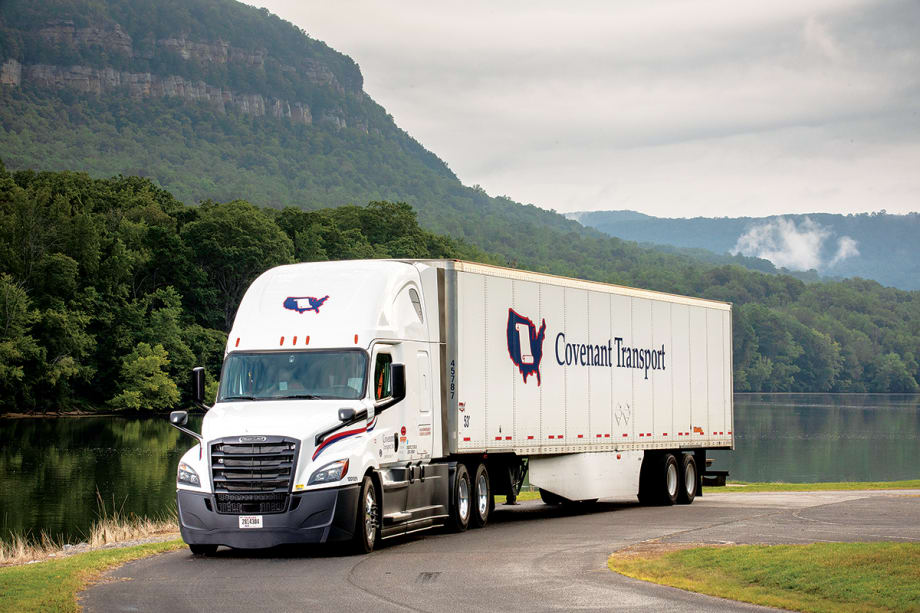
The fleet is currently testing three different electric APUs in long-haul service during both summer heat and winter cold.
Photo: Covenant
3 min to read
When the fuel crisis of 2007-2008 hit, Covenant Transport, like virtually every other large carrier in North America, realized it needed to get its fuel consumption and costs under control. As with many fleets at the time, diesel-powered auxiliary power units were part of that solution.
APUs are small generator units that mount on long-haul truck chassis to provide power, heat and air conditioning to the sleeper and cab to keep drivers comfortable during rest periods.
But the initial diesel-powered units the fleet experimented with weren’t the solution the carrier needed, says Dan Porterfield, senior vice president of maintenance. “There’s always been a certain amount of friction between the desire of fleet management to control costs by reducing idle times and driver comfort on the road,” he says. “Diesel-powered APUs were invented to address those goals, but – if we’re being honest – haven’t always achieved the results we’d like to see.”
During the initial evaluation of APUs more than a decade ago, Covenant discovered that while the units did a fine job providing in-cab power and comfort to drivers, the fuel savings they delivered were “zeroed out” by increased maintenance costs. Early electric-powered APUs, however, often didn’t last for the full rest period, especially in the worst heat of summer.
In the years since, something of a revolution has taken place in electrification technologies, including considerable improvements in battery size, weight and power densities. Moreover – and significantly for Covenant and its idling challenge – these advances include sophisticated power management software that allows battery systems to dispense electricity in “intelligent” ways that manage energy use to provide optimum effectiveness and the longest possible use of a battery charge.
Unlike their diesel predecessors, electric APUs draw power from a truck’s batteries while parked, and rely on power management systems to nurse that load throughout an entire off-duty time period to keep a cab and sleeper powered up and comfortable.
“We were skeptical at first,” Porterfield admits. “We had questions about the run times these systems would be able to achieve. The initial data looked promising – but if you can’t get the battery to last through the driver’s rest cycle, you’re not really achieving anything.”
In addition, Porterfield had reservations about how electric APUs would affect the life of the truck batteries. “It’s sort of the same thing we ran into with the diesel-powered units,” he says. “If we end up saving money on fuel, but spending those savings on new batteries because our battery consumption rates double, we’re not really coming out ahead.”
Porterfield felt the data warranted test trials. So last summer, Covenant fitted out six long-haul tractors with three of what he felt were the most promising units available (two test units per manufacturer) and sent them out on the road. Installing the units takes about the same amount of time as putting in diesel-powered APUs, he says. And their size and weight requirements are right in line as well.
So far, he says, the results have been encouraging. “We didn’t get started until late summer,” Porterfield says. “So we didn’t get a full warm season in. However, we did learn that the units were more than capable of keeping a truck cab cool and comfortable during an entire off-duty cycle in Phoenix, Arizona, at the height of summer. And that was a major milestone for me.”
As winter winds down, Porterfield says the electric APUs are handling the cold season without any major hiccups. He’s looking forward to getting a full year’s worth of data in so the fleet can make some purchasing decisions going forward.
“The drivers tell me they love the systems,” he says. “And we’re looking forward to seeing how they do this year in a full range of changing seasons and temperatures. But I think there’s some real potential here. It’s just going to take some more time — and data — to prove the concept out.”
Subscribe to Our Newsletter
More Fuel Smarts

How Volvo Updated Its D13 for EPA 2027 [Watch]
Volvo’s updated D13 promises lower emissions without sacrificing performance or fuel economy. Take a closer look at what changed inside the engine in this HDT Spotlight video.
Read More →
Diesel Price Spike Shortens Payback for Natural Gas Trucks, Report Says
Energy Vision estimates fleets could recover the higher purchase price of an RNG-fueled Class 8 tractor in 1.3 to 2.8 years under current fuel-price scenarios.
Read More →
Calstart Becomes Catalyst Mobility, Reflecting Broader Focus
Calstart is now Catalyst Mobility, reflecting the nonprofit’s growing national role in clean transportation, including zero-emission trucks, infrastructure and incentive programs.
Read More →

Record Diesel Prices Squeeze Trucking Fleets
Average U.S. diesel prices have climbed to nearly $6 a gallon, surpassing the 2022 record as tight refinery capacity and Middle East disruptions keep fuel costs elevated.
Read More →
Sponsored•September 9, 2026
How Fuel Delivery Shapes Engine Performance
Fuel delivery depends on more than what happens at the injector. For fleet, maintenance and technical professionals, looking at the full path from pump to injector can provide useful context for understanding engine performance.
Read More →
East Coast Port Launches $45M Electric Truck Push
The Port Authority of New York and New Jersey announced millions in incentives for zero-emission drayage trucks, yard tractors, and new charging hubs near the port.
Read More →
California Bill Could Shed Light on Electric Truck Prices
Why do battery-electric Class 8 trucks remain so expensive? A California bill headed to Gov. Gavin Newsom would give fleets and state agencies more visibility into what manufacturers charge.
Read More →
Detroit Opens Orders for EPA 2027 Engines
Detroit isn’t starting from scratch to meet EPA 2027 diesel emissions standards. Its Gen 6 DD13 and DD15 engines keep much of today’s platform while updating the fuel and aftertreatment systems.
Read More →
Zero-Emission Truck Corridor Planned for West Coast
California, Oregon, Washington, British Columbia and Baja California are coordinating plans for truck charging and hydrogen fueling from Canada to Mexico.
Read More →
A Closer Look at Kenworth’s Electric T880E Vocational Truck [Video]
Learn more about Kenworth's T880E battery-electric vocational truck at the Paccar Technical Center, including its range, applications, upfitting considerations, and PTO options, in this HDT Spotlight video.
Read More →