




Con-way Communicates Safety
With the advent of the Federal Motor Carrier Safety Administration’s flagship Compliance, Safety, Accountability program, a new premium was put on safety. This required a number of fleets to focus on the issue like never before.

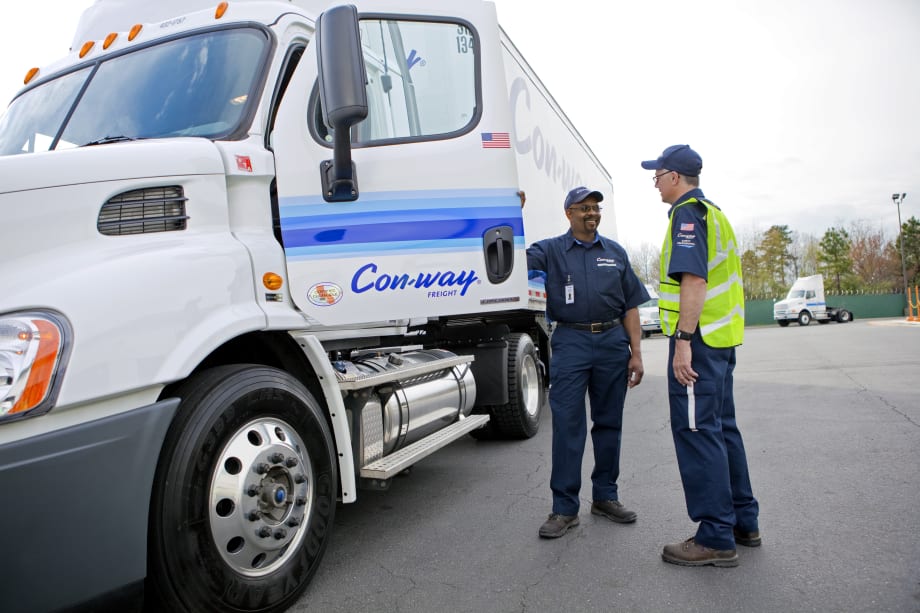
Con-way Freight works to stress safety to its employees in a variety of ways.

With the advent of the Federal Motor Carrier Safety Administration’s flagship Compliance, Safety, Accountability program, a new premium was put on safety. This required a number of fleets to focus on the issue like never before.
But according to Con-way Freight Vice President of Safety Robert “Bob” Petrancosta, the company has long held safety as a primary concern.
Petrancosta has been able to experience the company's dedication to safety first-hand, not only from behind his desk as the vice president of safety, but also behind the wheel.
He began his career in the trucking industry more than four decades ago as a driver. He came to work for Con-way Freight 25 years ago, and after driving for a few years, he went back to school to earn his degree in safety management. After that, “it was a stair step approach to where I am now,” Petrancosta says.
Although he no longer earns his living as a driver, Petrancosta keeps his commercial driver's license.
“I try to get as much time behind the wheel as I can. It's a tough environment, and it really works better if you can show others that you can walk the talk,” he says.
Petrancosta has not only demonstrated his dedication to safety at his own company, but also is involved in the national discussion as a member of the Motor Carrier Safety Advisory Committee, a group of experts in the industry that advise the FMCSA on a number of regulatory matters. He also serves on a number of American Trucking Associations committees.
To recognize his efforts, ATA named Petrancosta Safety Director of the Year in 2012.
But he emphasizes that safety is not just a top-down effort. He believes that to successfully make safety one of the top priorities in any company, you have to have your ears open to ideas from everyone in the organization.

Safety communication
“There is no substitute for good communications with our employees,” Petrancosta says.
He makes it quite clear that good communication is only effective when it goes both ways. Con-way works to get its messages about safety to its employees in a variety of ways, including a daily verbal morning report to approximately 300 truck terminals.
“We know that we have a voice every day that speaks to safety. We share best practices and learning lessons. The pipeline is wide open. If something good happens in Portland, Maine, they can hear about it in Portland, Ore.,” he explains.
Other methods of communication include television announcements, videos, simulations and training.
But the second step to communication is listening, he stresses.
“You have to listen to your employees. It is incumbent on an organization trying to foster a safety culture that it can take those 14,000 drivers on the street and believe that they offer 14,000 opportunities to learn things every day.”
Petrancosta says Con-way Freight makes a concerted effort to incorporate the feedback from employees into its business decisions.
From the classroom to technology
Another way Con-way works at fostering a culture of safety is in its in-house driving school, which offers free tuition and pays students while they learn. According to Petrancosta, safety is emphasized in both the classroom curriculum and the behind-the-wheel training.
Con-way Freight also has implemented a wellness program. A well-ness professional has been added at many of the larger service centers in Con-way Freight s network so they are readily available to employees.
In addition, Con-way has invested in technologies to increase safety, such as collision warning systems, adaptive cruise control, lane departure warning systems, roll stabilizers and electronic onboard recorders. The company also is piloting in-truck camera systems that can look both forward and into the cab during an event. The cameras are activated only by a driving event such as hard braking, unusual acceleration or a collision.
“These cameras give us the ability to help coach our drivers after near misses or events that don't result in an accident. Up until today, we could only really address driving behaviors after a crash had occurred,” Petrancosta says.
Drivers are often leery of technologies they see as “Big Brother,” but Petrancosta says once drivers realize that they cameras only record during an event, they feel more positive about the technology's opportunity to improve safety, and bring more clarity to incident analysis.
With all this, Petrancosta is hardly resting on his laurels. He says Con-way Freight will continue searching for new ways to improve its safety culture.
More Fleet Management

How Innovative Trucking Leaders Turn Change Into an Advantage
As the pace of change accelerates in trucking, the fleets that adapt best have more than the latest technology. They have cultures that embrace improvement.
Read More →
Freight Broker Bonds Just Got Harder to Get. Here's What That Means for Your Fleet.
When it gets harder for a freight broker to prove they are financially sound, the ones who cannot clear that bar get pushed out of the market. And those are exactly the brokers who used to leave motor carriers holding the bag.
Read More →
Long-Awaited Canadian Border Bridge to Open in Detroit
For trucking, the bridge opening should offer immediate improvements in efficiency and reliability, with new customs facilities, expanded inspection capacity, and direct freeway-to-freeway connections.
Read More →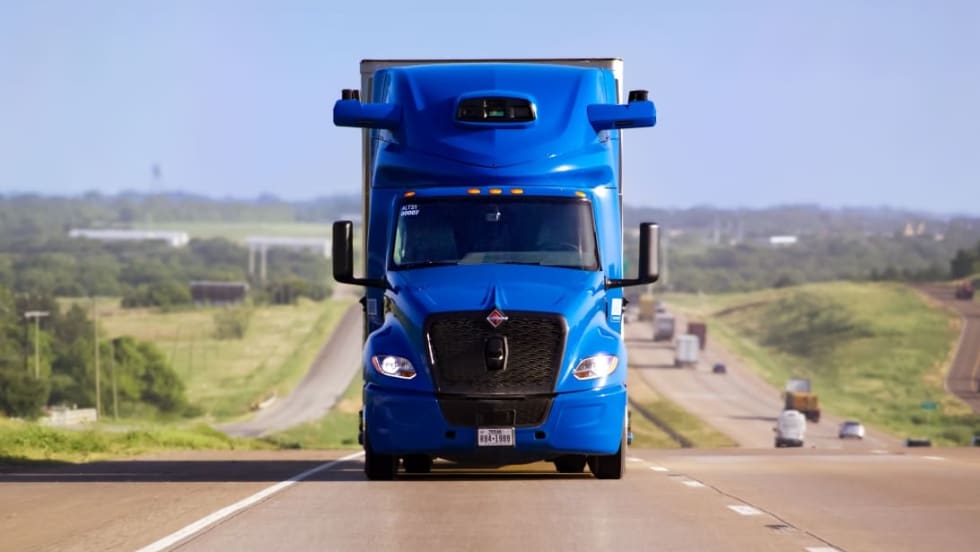
Aurora Rolls Out Next Generation of Driverless Trucks for Commercial Freight
Aurora's latest autonomous trucks it's rolling out with International feature lower-cost hardware designed for a million miles as the company expands commercial driverless freight operations across the U.S. Sun Belt.
Read More →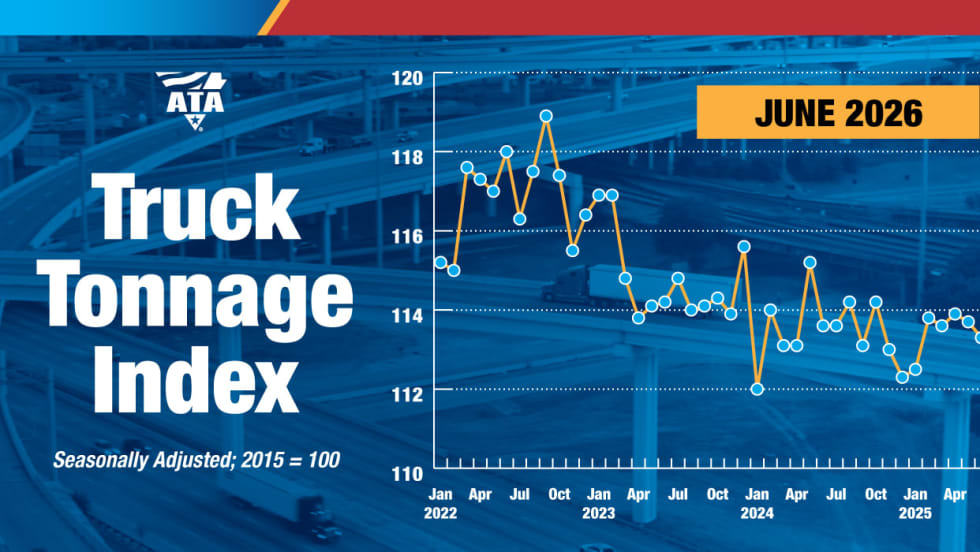
Freight Tonnage Down, Rates up, as Lower Capacity Powers Trucking Recovery
The recovery from the freight recession continues to be driven by reduction in capacity rather than by increased demand.
Read More →
Think Your Trucking Fleet Isn't Using Much AI? Think Again
Shadow AI — the use of unauthorized artificial intelligence tools at work — is becoming increasingly common, putting sensitive company data at risk. Learn how trucking fleets can protect sensitive data while embracing AI.
Read More →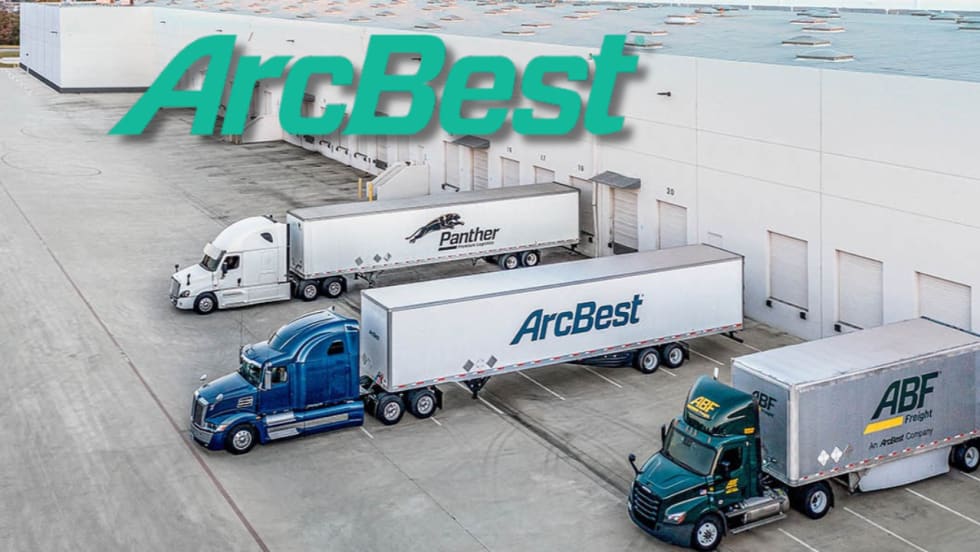
ArcBest Consolidates Brands, Cuts Workforce
The company will bring three business units under the ArcBest brand, eliminate about 2% of positions, and expects the changes to generate $40 million in annual savings.
Read More →
Trucking Fleets Faced Record Operating Costs During Third Year of Freight Recession
ATRI's annual operational cost report shows carriers trimmed fleets, delayed equipment purchases, and ran older trucks as expenses continued to outpace freight rates.
Read More →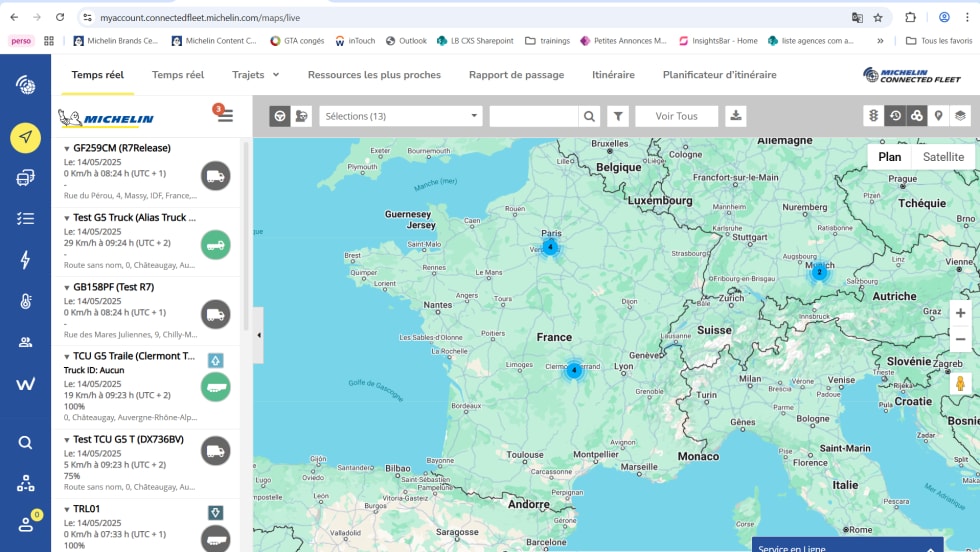
Michelin Adds AI Assistant to MyConnectedFleet Platform
Michelin’s new generative AI tool delivers instant fleet insights, helping managers analyze fuel use, tire maintenance, vehicle status, and operational performance without manually creating reports.
Read More →
LytxOne Platform Now Features AI, Compliance, and Asset Tracking Tools
New enhancements add AI-powered insights, asset tracking, compliance automation, and configurable privacy controls to Lytx's all-in-one fleet management platform.
Read More →