





Related: The Modern Maintenance Manager: Managing Today's Technicians
Commentary: Today’s Kids, Tomorrow’s Technicians and Drivers
Do we have a technician shortage, or are we not taking care of the resources we are provided? Editor in Chief Deborah Lockridge looks at this question in this editorial.
April 18, 2016

Deborah Lockridge
3 min to read

Deborah Lockridge
If you’re not part of the solution, you’re part of the problem.
It may be a trite cliche, but it’s very relevant to the issue of finding enough young people to be drivers and technicians in the future.
Time after time, whether we’re talking about filling trucks or shops, we hear that today’s young people just don’t see these occupations as attractive career options, that their parents and guidance counselors are pushing them toward college, even if kids aren’t really cut out for it.
You may throw up your hands and wonder what possible impact you could have on the situation.
At last month’s meeting of the ATA’s Technology & Maintenance Council, attendees packed a large ballroom for a panel discussion on the technician shortage.
The message in large part was that trucking needs to do more to get the technicians of tomorrow educated and into truck shops.
George Arrants with Wheeltime noted that the Department of Labor projects that between 2014 and 2024, 76,900 bus and truck mechanics and diesel engine specialists will be needed for both growth and replacement.
“If you’re looking for experienced techs, that number is telling us they don’t exist,” Arrants said. “Stop looking for them.”
However, he said, looking at private and public schools, “We graduate 10,738 medium and heavy truck technicians every year in this country. Where are they going?”
There are three reasons these technicians aren’t ending up in our shops, he said:
1. These schools aren’t teaching what our industry needs. “And this is our fault,” he said. “If you’re not involved with your local schools, you’re part of the problem.”
2. We expect these graduates to be productive on the first day. That’s unrealistic, Arrants said. “We need to mentor this generation.”
3. Someone else is stealing them from us. Arrants contends we need to get schools to stop marketing these programs as “diesel technicians” and focus on medium/heavy trucks. “Industries like wind [power] generation are grabbing our technicians,” he said.
In short, he asked, “Do we have a technician shortage, or are we not taking care of the resources we are provided?”
Also on the panel was Kenneth Calhoun of Truck Centers of Arkansas. He recently spoke to two classes of eighth graders as part of a program called Career Connect, a joint effort with the North Little Rock school district and the local Chamber of Commerce. When he gave them a salary range (that happened to be that of technicians) and asked them what kind of careers they thought could earn that kind of money, the answers were doctor, lawyer, engineer.
“There is no concept that there are such lucrative opportunities in our world,” said Calhoun.
Much the same can be said of getting young people into driving and other trucking-industry jobs. We need to get involved in local schools. Sponsor a shop program. Bring trucks to driver’s ed classes to teach about blind spots. Reach out to elementary schools, to Boy Scouts and Girl Scouts. Offer to bring a truck or have them tour your shop. Encourage drivers to join the Trucker Buddy pen-pal program with elementary school students. Get involved with — or start — a local “touch a truck” charity event.
Much is made these days of getting kids interested in STEM (science, technology, engineering and math). But why should these areas have to be limited to college careers? There’s plenty of STEM involved in spec’ing and maintaining equipment.
Trucking should take advantage of this and expose students to the engines and technology used in today’s trucks. Maybe some of these students will grow up to be engineers who design new engines. And maybe some will grow up to work on them.
Subscribe to Our Newsletter
More Fleet Management

Sponsored•September 1, 2026
How Telematics Improves Visibility, Control, and Performance in Refrigerated Fleets
Explore how telematics help refrigerated fleets improve visibility, uptime, efficiency, compliance, and cargo protection across connected cold chain operations.
Read More →
What the U.S.-Canada Trade War Means for Trucking
Escalating U.S.-Canada tariffs could disrupt cross-border freight, reduce truck volumes, raise costs, and create new uncertainty for carriers on both sides of the border.
Read More →
What Are Trucking’s Top Concerns for 2026?
The American Transportation Research Institute wants to know what's worrying trucking fleet managers, drivers, and other stakeholders in its annual Industry Issues survey.
Read More →

American Trucking Associations Looks for a New Leader
ATA President and CEO Chris Spear abruptly left his job at the association on August 21, at a pivotal time for the trucking industry.
Read More →
Public Wi-Fi Cybersecurity Risks: How Truck Drivers and Fleets Can Protect Their Data
Public Wi-Fi can expose truck drivers and fleets to credential theft, malware, and other cyber threats. Here’s how to reduce the risk on the road.
Read More →
For Nicky Cupp, Fleet Innovation Starts With Frustration
HDT Truck Fleet Innovator Nicky Cupp turns everyday pain points at Fraley & Schilling into opportunities for better technology and smarter processes.
Read More →
Adam Buttgenbach’s Approach to Electric Trucks: Start With Where They Fit
HDT Truck Fleet Innovator Adam Buttgenbach helped PepsiCo build one of North America’s largest EV fleets by focusing on where electric trucks make operational sense.
Read More →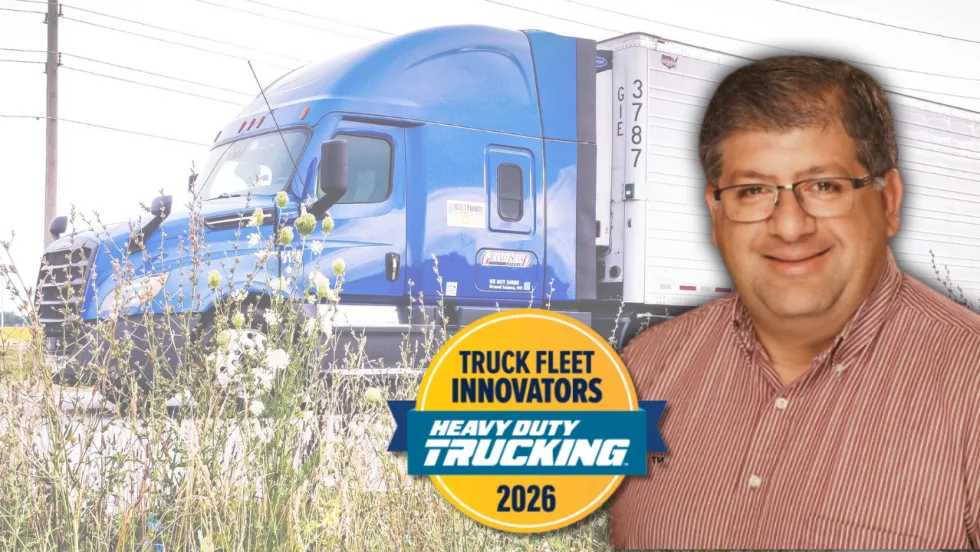
Deen Albert: Let Automation Do the Math, People Make the Decisions
HDT Truck Fleet Innovator Deen Albert makes sure people are still at the heart of operations at Grand Island Express, even while adopting artificial intelligence tools. AI-assisted dispatch helped boost revenue 25% with the same number of trucks.
Read More →
Trimble’s New AI Agent Takes Aim at Fleet Back-Office Busywork
Arc Agent works across Trimble TMS products to automate repetitive tasks such as freight orders, maintenance, invoices, fuel costs and more.
Read More →
How HDT’s 2026 Truck Fleet Innovators Are Rethinking Fleet Operations
Meet five trucking leaders who are challenging assumptions, solving operational problems, and putting innovative ideas to work.
Read More →