




Related: Driving Into the Future
Commentary: Bridging the Extremes
How do we make the latest technologies attractive to folks who don’t pull white vans down smooth highways?
by Rolf Lockwood
February 22, 2016
Rolf Lockwood
3 min to read

Rolf Lockwood
Here I sit, fingers hovering over the keyboard. It’s early January and I’ve resolved to write about the technological innovations that impressed me in 2015. There were many.
But the more I think about it, the more I realize that for me the most interesting thing about last year is a moment, one particular week. It’s about the contrast between two events I experienced in that seven-day stretch. I was transported from one technological extreme to its opposite, from one trucking culture to a comprehensively different one. It was both fascinating and instructive.
The week started with a flight to luxurious digs in California’s Napa Valley. A few days later I was in Notre-Dame-du-Nord, a very little town in northwestern Quebec. From extreme sophistication to no sophistication at all.
In Napa I was with the Daimler Trucks North America aftermarket crew, three prominent dealers, one fleet customer, and the brass from telematics company Zonar. I was in very good, very civilized company, mixing with big minds, and the conversation was about things that interest me greatly, among them the highest of high technologies like predictive diagnostics. Like the “connected” truck.
Predictive diagnostics is closer than you might think, by the way.
“I don’t think we’re further than five or 10 years away,” said Friedrich Baumann, senior vice president, aftermarket at DTNA.
The idea is that the moment of a turbocharger’s failure, for instance, will be predictable, and with some accuracy. That’s mighty compelling. Just think what that could mean to you in practice.
So there was that.
In Quebec there was the roar of trucks in drag-race competition, some of them purpose-built for racing alone with maybe 2,500 hp under the hood, pulling loaded 140,000-pound B-trains up a 12% grade in the middle of that little French town. It’s called the Rodeo du Camion and it’s legendary. Thousands of people whooping and hollering for their favorites, all the more so when a driver throws torque at the matter in such a way as to lift the left front wheel a foot or even two off the ground when the lights turn green. Some especially strong trucks are still lifting that wheel on their second shift. Impressive.
All of this is fueled — not by fine Napa wine, heaven forbid — but by thin beer carried in six-packs hanging from almost every guy’s belt.
There hasn’t been this much fun since somebody invented laughter.
I had good conversations up there in the north, too. I met a few faithful readers, and I ran across a couple of southern fleet managers who had made the trip because at heart they’re gearheads like me. We had good chats, one common theme being the shrinking ranks of true truck people.
Up there telematics isn’t a thing. Up there trucks are sold to loggers, owner-operators, and independents. Maybe small farm fleets. Old-school guys, not highway people.
And I’m left wondering, how do we make the latest technologies attractive — or even just comprehensible — to folks who don’t pull white vans down smooth highways? Predictive diagnostics could mean a lot to them, after all.
Subscribe to Our Newsletter
More Fleet Management

Nomination Deadline Extended for HDT Emerging Leaders
Just a few more days to nominate accomplished trucking fleet professionals under 40 who are making an impact and helping lead the industry forward for the HDT Emerging Leaders award. Deadline extended to October 20!
Read More →
What Will ATA’s New Leader Bring to Trucking's Table?
Incoming President and CEO Mark Colson’s record in Alabama offers clues about his priorities and approach following Chris Spear’s abrupt departure as the head of the American Trucking Associations.
Read More →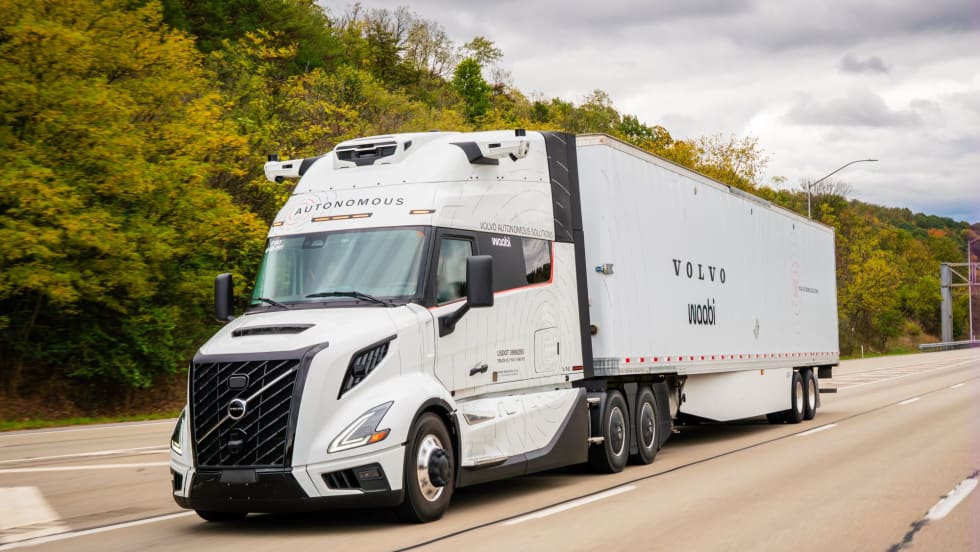
Volvo, Waabi Start Commercial Autonomous Operations in Texas
Volvo VNL Autonomous trucks, powered by the Waabi Driver, are hauling freight directly to third-party facilities for a customer in Texas.
Read More →
Samsara Launches Custom AI Agent Builder
Agent Studio lets fleets create AI tools for hours-of-service monitoring, reporting and driver support, including agents that communicate by phone.
Read More →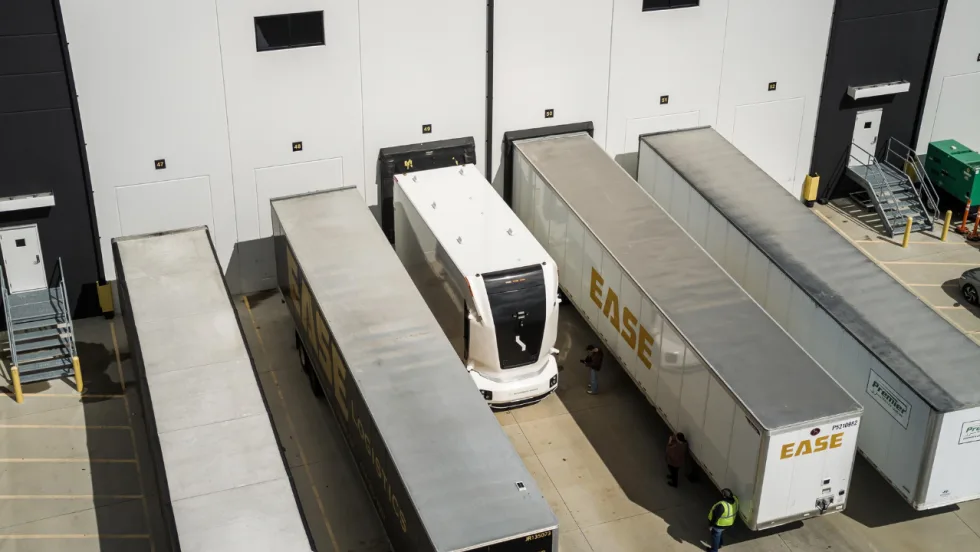
Einride Driverless Electric Trucks Begin Daily Freight Operations in Ohio
Two cabless electric trucks are hauling freight between EASE Logistics facilities in Marysville, Ohio, as part of a multi-state truck automation project.
Read More →
Geotab Links Fleet Card to Vehicle Data
The new card combines fuel discounts with telematics-based purchase controls. Geotab’s analysis also points to potential savings from choosing lower-priced fuel stops.
Read More →
How MFA Helps Protect Trucking Fleets
Multi-factor authentication adds protection when passwords are stolen. Here’s how it works and where fleets should start.
Read More →
How Better Freight Data Helps Trucking Teams Get Ahead of Disruption
Trucking and logistics teams have plenty of data. The problem is getting the right information in front of the right people soon enough to act. Better-connected data can help teams spot trouble earlier and make smarter decisions before small problems become big ones.
Read More →
Trimble: Taking Artificial Intelligence in Trucking Beyond Faster Tasks
At Insight 2026, Trimble executives argued that fleets may need to redesign workflows to get more from AI as it introduced new products and enhancements. AI’s value will depend on how fleets combine automation with their people's knowledge.
Read More →
Sponsored•September 28, 2026
Build a bulletproof fleet: Uniting ELDs and dash cams for total compliance
An ELD can prove compliance, but it cannot always prove what happened on the road. Discover how uniting accurate ELD data with AI-powered dash cam video can help your fleet strengthen compliance, defend against liability, protect drivers and reduce operational costs.
Read More →