Choosing a Telematics Service Provider for the ELD Mandate
The December 2017 deadline for the ELD mandate is looming and fleets are feeling the pressure to select a telematics service provider to electronically log hours-of-service records. Unfortunately, there is no one-size-fits-all solution and fleets must examine what they need from their newly-required technology.
by Ben Osborne
March 8, 2017
4 min to read
The December 2017 deadline for the ELD mandate is looming and fleets are feeling the pressure to sort through the confusing process of selecting a telematics service provider (TSP) to electronically log hours-of-service records. Unfortunately, there is no one-size-fits-all solution and fleets must examine what they wish to accomplish with their newly required technology.
Ad Loading...
The simplest, yet least recommended, solution is to only partner with a TSP for meeting mandate requirements by electronically logging hours of service. Price, installation time, availability, and reliability are the top factors for fleets making this choice. This meets the minimum requirements for the ELD mandate, but not taking advantage of the full range of opportunities TSPs are offering would be a mistake for most fleets.
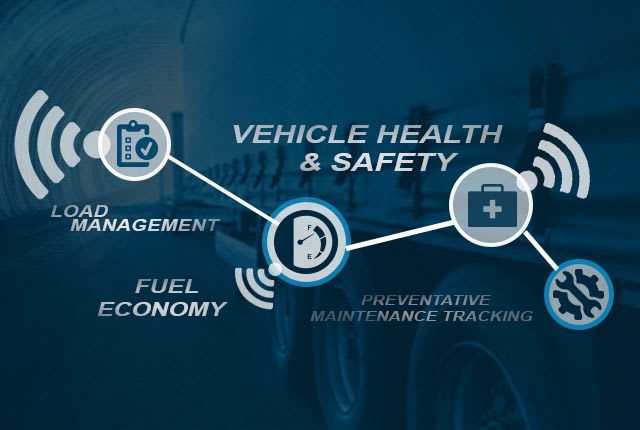
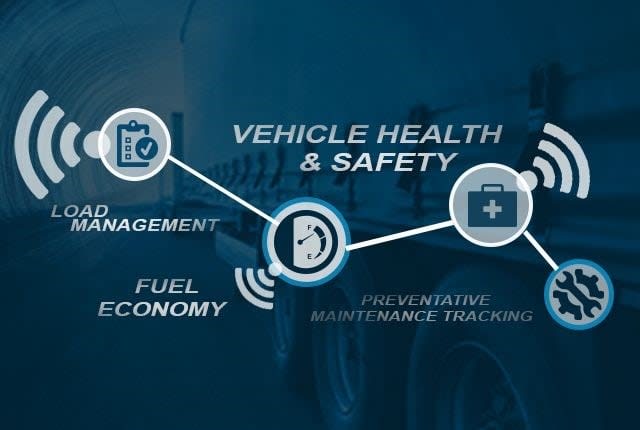
Vehicles equipped with the hardware to communicate with TSPs are now capable of enhancing their operations through a variety of valuable services and solutions. Load management, fuel consumption, driver behavior monitoring, and comprehensive vehicle health and safety management are just a few of the advanced solutions now readily available to fleets.
Ad Loading...
Fleets should take advantage of the services that can optimize their operations and ease the process for making critical business decisions. Chris Spear, ATA president and CEO, was quoted in a November release saying “Monitoring a vehicle’s health status in order to make informed decisions on servicing and maintaining a company’s fleet of trucks is a vital tool in today’s competitive transportation market.”
Fleets concerned with the costs of new regulations should take solace in the fact that many services offered by TSPs actually present fleets with an opportunity to achieve a positive return on their investment. Through reduced maintenance costs, improved fuel economy, or an increase in driver retention, many of these solutions present savings that are greater than the cost of the services.
To ease the stress of implementation it is recommended to begin your search by locating a TSP that can integrate with your current technological infrastructure. There is no need to purchase, learn, or adapt to proprietary or dedicated devices for TSP services when many will work with your existing laptops, tablets, and mobile devices.
When evaluating TSPs, many fleets will want to work with a provider offering an open source platform. Think of the services offered by TSPs as applications, or apps, like you find on a smartphone or tablet and you will see a clear benefit for why you want knowledgeable third parties creating the applications you purchase. You will want these services to be as efficient and accurate as possible, so it is best to purchase the applications created by the companies that specialize in particular fields.
Once you discover TSPs offering open source solutions compatible with your devices, create a list of what you want to monitor or enhance by partnering with a telematics service. View the items below in the Features List and rank their importance to your operations. Highlight the most significant features you are looking for and ask prospective TSPs for demonstrations of their services.
Ad Loading...
Features List
Vehicle Health and Safety Management
Fuel Economy Monitoring
Driver Safety
Driver Communication
Driver Behavior
Accident Detection
GPS Tracking
Preventive Maintenance Tracking
Security
Turn-By-Turn Navigation and Weather/Traffic Alerts
Load Management
Choose a TSP whose strengths align with your needs; features or applications that benefit one fleet could be unnecessary for a different fleet. Noregon’s founder and CEO, Bill Hathaway, said “We partner with telematics providers who offer a wide range of solutions to their customers. They rely on us for our expertise in vehicle health and safety monitoring, but also offer an all-encompassing suite of services to benefit a wide range of fleets.”
Perhaps the most critical advice when selecting a TSP is to start the process now and not wait until the end of 2017. “We anticipate a large swell in the demand for TSP services beginning in the second quarter and, given the potential for lengthy installation and training periods, procrastinating could be a costly mistake,” said Hathaway. Not complying to the ELD mandate can result in fines exceeding $8,000 per instance, which highlights the need to be fully compliant including having all necessary staff members trained and adapted when the mandate goes into effect.
Even fleets that manage to meet the deadline could severely limit their options by prolonging the implementation process. Fleets that delay this process may consequently be forced to settle for a less-than-ideal solution to meet ELD requirements. By acting now, fleets will have the benefit of narrowing down TSPs based on their needs, but with many telematics providers already supporting more than 400,000 vehicles, demand will soon outweigh the supply and there will be a scramble to simply find a service that keeps fleets in compliance with the mandate.
It’s time to ease the burden of the ELD mandate and embrace it for the opportunities created for fleets. By choosing to take advantage of services and applications offered by telematics providers, you are now on the road to in-depth insights about critical operational factors that have never been available before. Use these questions to consider when meeting with prospective TSPs and feel confident you are well on the way to optimizing your fleet:
Questions to Consider
What is the monthly cost?
How long will the hardware installation process keep my vehicle out of service?
How soon can we have all vehicles connected to your service?
Is your platform open source?
How can your service improve my drivers?
How can you service prolong the life of my vehicles?
How can your service increase our overall safety?
Ben Osborne is the marketing communications coordinator for Noregon Systems, a provider of diagnostic, repair, and monitoring applications for the commercial vehicle industry. This article was authored under the guidance and editorial standards of HDT’s editors to provide useful, non-promotional information to our readers.
For fleet managers and collision repair professionals keeping heavy-duty trucks on the road, getting the color right the first time isn't just about appearance — it's about efficiency, turnaround time, and bottom-line results. Discover how today's digital color tools are transforming the repair process from guesswork to precision.
Carriers whose updates were due on or after June 1 have more time, while FMCSA works to stabilize its new registration system and warns of phishing sites impersonating its new carrier registration system, Motus.
Cargo theft is no longer just the cost of doing business. It's a multi-billion-dollar criminal enterprise exploiting vulnerabilities across your fleet, drivers, and supply chain.
Explore how telematics help refrigerated fleets improve visibility, uptime, efficiency, compliance, and cargo protection across connected cold chain operations.
Escalating U.S.-Canada tariffs could disrupt cross-border freight, reduce truck volumes, raise costs, and create new uncertainty for carriers on both sides of the border.
The American Transportation Research Institute wants to know what's worrying trucking fleet managers, drivers, and other stakeholders in its annual Industry Issues survey.
HDT Truck Fleet Innovator Adam Buttgenbach helped PepsiCo build one of North America’s largest EV fleets by focusing on where electric trucks make operational sense.