




California Gets Tough on Idling
California will kick it up several notches with a new anti-idling regulation come Jan. 1, 2008.


It's not widely known, and enforcement hasn't been especially arduous, but California has had anti-idling rules in place since July 16, 2003, when school buses were prohibited from idling excessively. The anti-idling rules were extended to vehicles weighing more than 10,000 pounds on Feb. 1, 2005, with a maximum of five minutes idling. Fines were a minimum $100, and trucks with sleeper berths were exempted.
As you will see from Oliver Patton's story on page 14, California will kick it up several notches with a new anti-idling regulation come Jan. 1, 2008, that applies to all heavy trucks - the target being sleepers. And the rules apply to the operator. Drivers will have to shut down their engines after 5 minutes. Fines jump to $1,000 a day, with potential for criminal charges.
The regulation, along with some advice, is available at the California Air Resources Board web site - a good place to find out more detail ( www.arb.ca.gov/msprog/truck-idling/truck-idling.htm ). Information available suggests that as the 2008 deadline approaches, it will be necessary for many sleeper-truck operators to select idle reduction equipment suitable for drivers' cab comfort needs - heating, lighting, air conditioning, running appliances and so on. And there's a comprehensive list to be found there.
CARB goes on to note that if auxiliary power units are used as anti-idling devices, today's APUs can only be used on trucks with 2006 and earlier model year engines. A change to the anti-idling regs means that auxiliary exhaust aftertreatment will have to be used on APUs beginning in January 2008 and applies to trucks built with 2007-compliant main engines. There are currently no diesel-fueled APUs approved for use on trucks with 2007 and newer model year engines, but several manufacturers have announced compliance with this new rule.
Fuel-fired heaters are another anti-idle technology that provide heat to the cab or cab and engine, and they use only a fraction of the fuel that would be consumed by idling the vehicle's primary engine. They can be paired with cooling technologies such as Peterbilt's Comfort Class and Kenworth's Clean Power systems for a more complete heating and cooling package. Again, though, for trucks with 2007 and newer model year engines, additional emissions certifications apply.
CARB has basically brought these technologies in line with emissions from 2007 and newer engines, controlling particulate matter (PM) emissions. The guidelines suggest either routing the APU exhaust through the PM trap of the truck engine or fitting the diesel APU with a verified California level 3 PM control device that reduces PM emissions by at least 85 percent. Since, in most cases, the DPF is certified along with the truck engine, tapping in to this by a third party is not possible - unless the APU manufacturer happens to be a heavy-duty engine maker. At present, only Cummins with its ComfortGuard system qualifies.
So on the issue of APUs, do your homework before spec'ing.
California is also taking aim at transportation refrigeration emissions control. It's not just trucks, but containers and railcars as well. And it applies to any equipment that is used in California, no matter where it is domiciled.
The acronym that will be found at the starter web site ( http://www.arb.ca.gov/diesel/tru.htm ) is TRU for Truck Refrigeration Unit and the requirement is referred to as the Airborne Toxic Control Measure, or ATCM.
It applies to operators of diesel-fueled reefer units and those reefer gen sets that are used for electrical reefers on containers. The measure requires in-use refrigeration units from 2009 onwards to meet in-use performance standards that vary by horsepower range. They can be met by: a) Using a repower engine that meets the required engine certification value, or b) retrofitting the engine with the required level of verified diesel emission control, or; c) using some other specified alternative technology.
The performance standards have two levels of stringency that will be phased in over time but, basically, if you have a 2001 or earlier reefer, you'll need to upgrade by December 2008. For subsequent years, you'll have seven years from the model year to upgrade.
If this were not bad enough, the recordkeeping requirements are also quite burdensome. But as Patton points out in his article, there are challenges to the legislation that may see some relief.
This California initiative on idling and reefers will not be the last you'll hear on the subject. While the state has a special dispensation to formulate its own clean air rules more stringent than EPA's, once promulgated, they can be picked up by any or all other states. Pennsylvania already has anti-idling legislation in the works.
Be assured, others will follow.
More Fleet Management
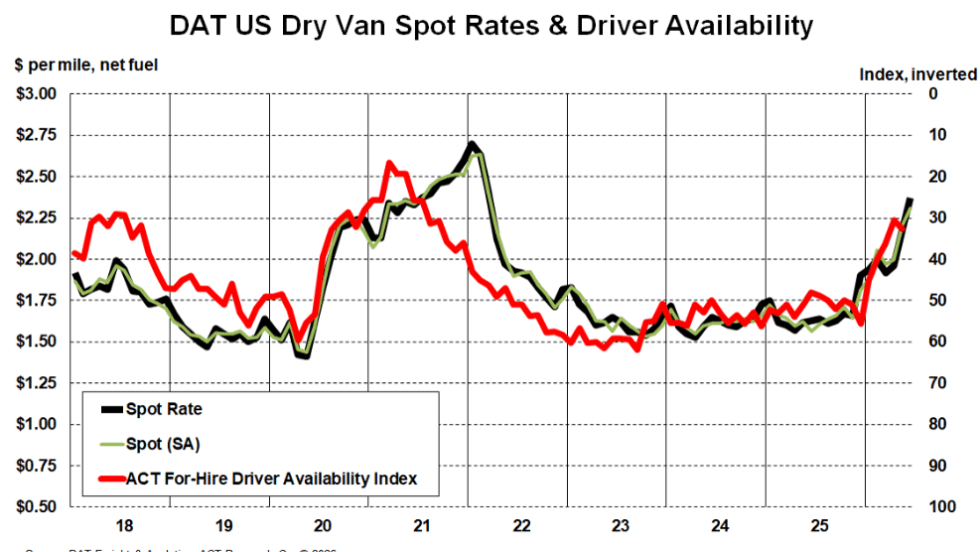
Truckload Rates Keep Rising as Tight Capacity Fuels Freight Market Recovery
Spot and contract rates continued climbing in May and June, not because freight demand is surging, but because fewer trucks and drivers are available.
Read More →
What Geotab's New AI Connector Means for Fleets
Fleets can now ask their usual AI assistants questions about maintenance, safety, fuel use, and vehicle performance, using their live Geotab data, and take action on the answers without leaving their preferred AI tool.
Read More →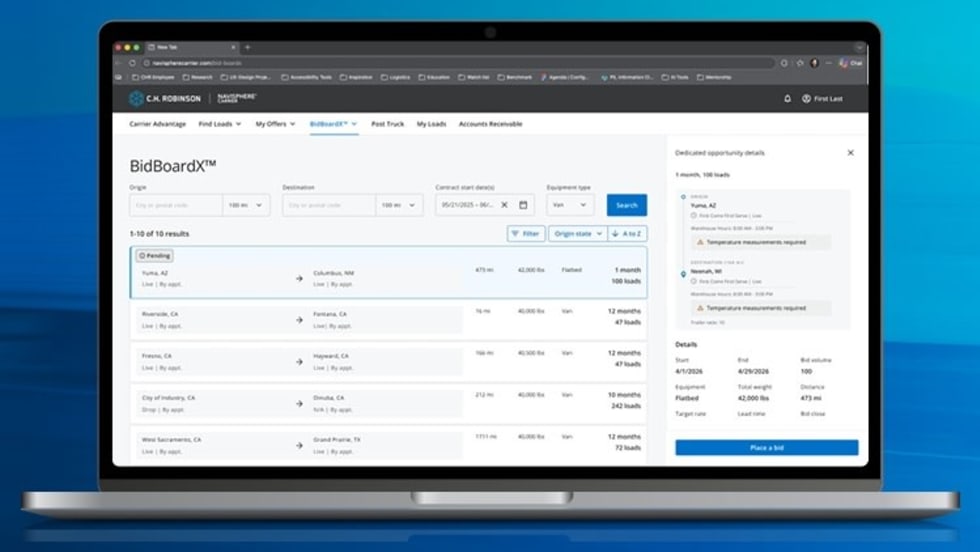
New C.H. Robinson Tool Opens Door to More Predictable Freight
BidBoardX lets carriers search, bid on, and secure committed freight opportunities through a single digital marketplace.
Read More →

New York City's Microhub Project is Delivering Results
Trucking, last-mile delivery companies, and environmental advocates like what they are seeing so far with New York's microhub program.
Read More →
Why Truck Detention Keeps Costing Fleets Time and Money
A 2024 ATRI study found detention affects nearly 40% of truckload stops and costs the industry more than $15 billion annually. Despite the toll on drivers, fleets, and supply chains, the problem remains stubbornly persistent.
Read More →
Time is Running Out to Apply for Exclusive HDT Event
Heavy Duty Trucking Exchange brings fleet managers and suppliers together for the deeper conversations that lead to ideas, partnerships, and solutions. Time is running out to apply for the September event.
Read More →
Amazon Launches Less-Than-Truckload Freight Offering for All Businesses
This launch is the latest addition to Amazon Supply Chain Services, a portfolio of supply chain capabilities from Amazon, including freight, distribution, fulfillment, and parcel shipping.
Read More →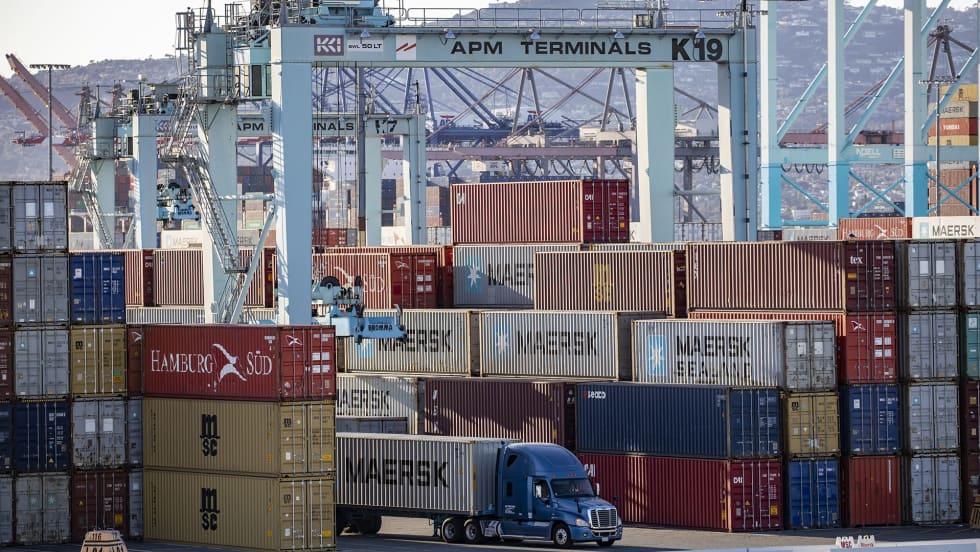
Import Cargo Volume to See Year-Over-Year Gain Again in June, Then Remain Below 2025 Levels Into Fall
After July, the report predicts a weakening in import volume as consumer uncertainty remains high and the impact of increasing inflation takes its toll.
Read More →
AUCTION OF EQUITY INTEREST IN HEAVY HAUL TRUCKING COMPANY!!
Mark your calendar: June 30, 2026 (10:00 a.m. PDT). A 37.5% ownership interest in MagnaTrans, LLC, a California limited liability company doing business as Magna Transportation Group, will be sold in an in-person and online auction to the highest bidder or bidders under Article 9 of the Uniform Commercial Code. The Rancho Cucamonga-based heavy haul and over-dimensional trucking company operates across California, Oregon, and Arizona.
Read More →
Volvo Trucks Adds Unattended Over-the-Air Software Update Capabilities
The latest evolution of Volvo’s over-the-air update technology allows software updates to run while trucks are parked, helping fleets keep vehicles current without disrupting operations.
Read More →