




Automating Fuel Purchases at the Pump
Touchless fueling options gain appeal In the time of COVID-19.

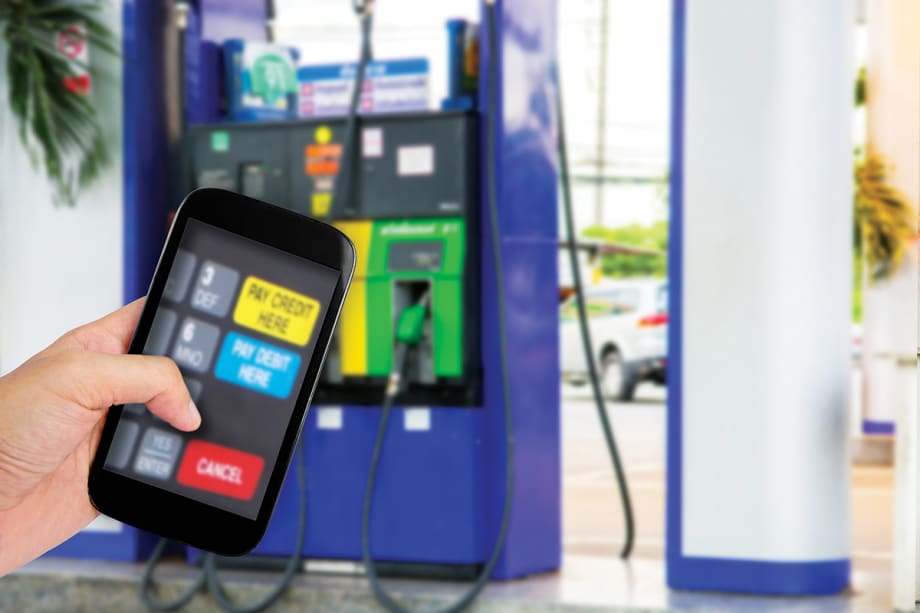
Contactless options have become increasingly important at the fuel pump, not just to make transactions quicker, but also to helpminimize the spread of COVID-19.
Photo: Gettyimages.com/BlindTurtle
Being a germaphobe is nothing new to many people, whether you’re on the road or in a back office. But in the current COVID-19 environment, being wary of touching surfaces has been bumped up to panic-attack status for many. For truck drivers, fuel purchasing is one area where experts advise touching as few surfaces as possible.
“We’ve implemented many additional protocols and procedures for our drivers while they are in the field,” says Greg Price, president and CEO of United Petroleum Transports (UPT). “Whether fueling at our own facilities or at public stations, all our drivers are required to use gloves and masks, and sanitize the card readers.”
The Oklahoma City-based carrier of motor fuels, aviation fuels and chemicals is very familiar with the situation, as its drivers transport gasoline and diesel to truck stops and convenience stores.
“This pandemic has brought a heightened awareness to the health of all our associates, and I’m sure these new protocols and procedures will remain in place long after this pandemic subsides,” Price says.
Technology Goes ‘Touchless’
Truck stops have taken steps to help protect drivers at the fuel islands and beyond.
At the more than 500 Love’s locations, employees are frequently cleaning and disinfecting to help limit exposure and spread of the virus, and the company is requiring all employees to wear face masks.
“These initiatives are to help protect our employees and customers and to abide by various government mandates across the country,” says Caitlin Campbell, media relations specialist at Love’s Travel Stops & Country Stores.
Love’s also gives drivers a way to have a “touchless” experience at the pumps. The Love’s Connect app gives commercial truck drivers contactless features, including Mobile Pay, which allows drivers to answer prompts and arm the pump using only their mobile phone. Drivers can also keep track of their receipts on the app for any transaction they make.
“As professional truck drivers navigate this pandemic, contactless options have become increasingly important, not just to make transactions quick and easy, but to help minimize the spread of COVID-19,” says Campbell.
Obviously drivers still have to actually handle the pump, but avoiding touching keypads and interacting face-to-face with truck stop employees can help limit virus transmission — and offers potential efficiencies and advantages that will go beyond the pandemic.
Pilot Company notes on its website that it is focused on sanitation of its fuel pumps, kiosks, and pin pads, and also has a mobile app that allows drivers to practice social distancing and healthy hygiene by using the mobile pay feature to reduce pin pad touches, as well as share receipts to reduce use of the in-store driver kiosk.
TravelCenters of America is also working hard to keep the coronavirus at bay, with similarly strict protocols at all of its locations, including at the fuel pumps.
The company’s TruckSmart app, which gives loyalty members the ability to purchase showers and unlock shower doors, reserve parking, and submit work order requests for TA Truck Service by only touching their phones, will soon have another touchless feature.
“We look forward to soon unveiling our PumpSmart feature, where drivers can start the fuel pump from the app,” says Tina Shaerban Arundel, manager of corporate communications for TravelCenters of America, adding that the pandemic could lead to an accelerated shift to RFID or cell phone activation of dispensers.
Data at the Pump
The use of RFID (radio frequency identification) is not a new feature at the fuel island, with QuikQ offering nationwide cardless fueling through this technology. Similar to a driver’s toll tag, the SmartQ RFID sticker is read by an antenna in the fuel lane. The truck is authenticated and is then ready to fuel.
“This authentication eliminates the need to enter prompts at the pump, but maintains the security fleets are looking for,” says Rich Taute, vice president of sales at QuikQ, adding that while the process of fueling hasn’t changed, the need to keep drivers and truck stop staff safe has changed. “In my conversations with our truck stop partners, they are tirelessly cleaning card readers and fuel nozzles as drivers complete their fueling. Now is a great time for a fleet to look at their drivers’ fueling process.”
Taute says fleets should look at how data is collected at the pump, such as truck number, trailer number, odometer, and so on. With each of these data points requiring a driver to touch the keypad at the pump, it might be time to re-evaluate the procedure.
“Times have changed, and the response of, ‘we have always done it this way,’ has spun up some great conversations, with fleets leading to reducing data inputs by drivers at the pump,” says Taute.
Like Venmo for Truckers
With cell phones evolving to the point where you rarely need to pull out your wallet anymore, apps such as Venmo and Paypal are making it even easier to transfer money and make payments in seconds. Companies such as Comdata are taking a page from that book and have changed the way drivers get paid and have access to funds. Comdata’s OnRoad card allows fleets to make digital payments and money transfers via the OnRoad mobile app.
“It’s a lot like the Venmo for truck drivers, and this is crucial right now in helping prevent the spread of COVID-19,” says Justin King, senior vice president of product and innovation at Comdata. “The mobile app also has the ability to transfer funds between other drivers, so it’s a convenient way to exchange money without actually having to meet in-person or touch surfaces that could spread the virus.”
The OnRoad Card serves the dual purpose of a fuel card and a personal fund card for drivers to receive payroll and settlements. Drivers can use the card and the Comchek mobile app to make payments by entering the user ID of the person or vendor, giving drivers access to funds to make fuel purchases without ever having to risk the possibility of infection.
“Everything’s going mobile and contactless, and the fleet business has been headed in that direction for many years, even if it’s been slower to adopt these technologies,” says King. “The more companies start adopting mobile payment solutions to run their fleet operations, the less dependent drivers and operators will be on credit card kiosks, ATMs, paper checks and documents. Given the great advances in vehicle and fueling technology, and how these are increasingly becoming tied to functions available in a mobile format, going to contactless technology is inevitable.”
King even sees the industry moving toward using artificial intelligence, mobile payments, and facial recognition to prevent drivers from having to touch surfaces that could spread infectious diseases.
“We also are already headed in that direction, and COVID has only increased the need for more virtual options in the marketplace,” he adds. “The present circumstances are enticing motor carriers to digitize the remaining parts of their businesses to facilitate working from home but maintaining social distancing between their drivers and customers. The long-term effects of this thing are going to be sustained.”
More Fleet Management

Color Match Smarter: Tools That Restore & Perform
For fleet managers and collision repair professionals keeping heavy-duty trucks on the road, getting the color right the first time isn't just about appearance — it's about efficiency, turnaround time, and bottom-line results. Discover how today's digital color tools are transforming the repair process from guesswork to precision.
Read More →
FMCSA Pauses Biennial-Update Enforcement Amid Motus Transition
Carriers whose updates were due on or after June 1 have more time, while FMCSA works to stabilize its new registration system and warns of phishing sites impersonating its new carrier registration system, Motus.
Read More →
2026 Blueprint for Countering Smarter Supply Chain Theft
Cargo theft is no longer just the cost of doing business. It's a multi-billion-dollar criminal enterprise exploiting vulnerabilities across your fleet, drivers, and supply chain.
Read More →


How Telematics Improves Visibility, Control, and Performance in Refrigerated Fleets
Explore how telematics help refrigerated fleets improve visibility, uptime, efficiency, compliance, and cargo protection across connected cold chain operations.
Read More →
What the U.S.-Canada Trade War Means for Trucking
Escalating U.S.-Canada tariffs could disrupt cross-border freight, reduce truck volumes, raise costs, and create new uncertainty for carriers on both sides of the border.
Read More →
What Are Trucking’s Top Concerns for 2026?
The American Transportation Research Institute wants to know what's worrying trucking fleet managers, drivers, and other stakeholders in its annual Industry Issues survey.
Read More →
American Trucking Associations Looks for a New Leader
ATA President and CEO Chris Spear abruptly left his job at the association on August 21, at a pivotal time for the trucking industry.
Read More →
Public Wi-Fi Cybersecurity Risks: How Truck Drivers and Fleets Can Protect Their Data
Public Wi-Fi can expose truck drivers and fleets to credential theft, malware, and other cyber threats. Here’s how to reduce the risk on the road.
Read More →
For Nicky Cupp, Fleet Innovation Starts With Frustration
HDT Truck Fleet Innovator Nicky Cupp turns everyday pain points at Fraley & Schilling into opportunities for better technology and smarter processes.
Read More →
Adam Buttgenbach’s Approach to Electric Trucks: Start With Where They Fit
HDT Truck Fleet Innovator Adam Buttgenbach helped PepsiCo build one of North America’s largest EV fleets by focusing on where electric trucks make operational sense.
Read More →