




ATA Adopts New Position on Sleep Disorder Screening and Testing
LAS VEGAS - Seeing disturbing indications that the Federal Motor Carrier Safety Administration may plan to address the issue of sleep apnea among truck drivers with a "guidance" rather than a rulemaking, the American Trucking Associations has a new policy positio


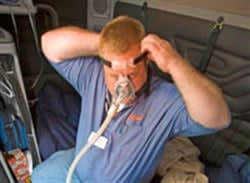
LAS VEGAS - Seeing disturbing indications that the Federal Motor Carrier Safety Administration may plan to address the issue of sleep apnea among truck drivers with a "guidance" rather than a rulemaking, the American Trucking Associations has a new policy position that will allow its staff to work to convince agency leaders that a formal rulemaking process is necessary.
The new policy was approved by the ATA board of directors during ATA's annual Management Conference & Exhibition.
"Fatigue and driver health are two serious issues facing the trucking industry," ATA President and CEO Bill Graves said. "However, as important as it is to address those issues, it is equally important for the federal government to use the regulatory process - with its emphasis on science-based outcomes and cost-benefit analyses."
ATA's new policy reads in part that any effort to address sleep disorders, such as obstructive sleep apnea, should be done "through rulemaking and not through the publication of regulatory guidance;" and that those rules focus on "conditions that pose a substantially elevated crash risk based on sound data and analysis, be cost beneficial and promote effective treatments that minimize the impact to motor carriers."
"There's potential that in the future, guidance could be made effective immediately, and that would not be a good idea from our perspective," says Dave Osiecki, senior vice president of policy and regulatory affairs. "A rulemaking requires public input," which would allow the trucking industry and ATA to comment on how it would affect them.
"It also requires a cost benefit analysis, which goes to the point that there has to be enough benefit to outweight the cost," Osiecki says. "We're a little concerned that that is not the current plan of this administration.
"We know that federal regulators are looking to address the issue of sleep disorders," said Mike Card, president of Combined Transport, Central Point, Ore., and new ATA chairman, "what we are doing today is asking the government to follow its own normal processes and do this properly."
More Drivers

Why Hiring Truck Drivers Is Getting Harder
Higher recruiting costs, a shrinking driver pool, and renewed pay competition are raising the stakes for fleets heading into 2027.
Read More →
Roehl Offers Truck Drivers $10,000 Retention Incentive
Payments begin after the first load and continue in mileage-based installments for eligible experienced drivers joining the fleet.
Read More →
Platform Science Adds Dispatch and Safety Tools
Four additions to PS Fleet help fleets monitor loads, manage driver coaching, share truck locations and adjust video system settings.
Read More →
When Language Stops the Truck: The Return of ELP Out-of-Service Orders
English language proficiency rules for commercial drivers aren’t new, but renewed out-of-service enforcement has raised the stakes. Here’s what carriers need to know before a driver reaches a roadside inspection.
Read More →
Samsara Launches Custom AI Agent Builder
Agent Studio lets fleets create AI tools for hours-of-service monitoring, reporting and driver support, including agents that communicate by phone.
Read More →
Trucker Path Expands Reserved Parking Network
Trucker Path has added close to 6,000 more truck parking spaces to its Trucker Path Reserved Parking Network with the addition of Safe Truck Parking.
Read More →
EEOC Sues Texas Trucking Company Over Driver Age Limits
The agency says Trancasa USA rejected applicants over 65 and applied tougher driving-record standards to those over 60.
Read More →
Nussbaum, Roehl Announce Second Driver Pay Increase This Year
This year has seen a swath of major truck driver pay increases as freight capacity has tightened.
Read More →
From One Generation to the Next: How Mentorship Builds Safer Truck Drivers
After three decades in trucking, Harold Perry shares what he's learned about driver safety, mentorship, and helping the next generation build confidence behind the wheel.
Read More →
Truck Drivers Need More Than Another Alert
Fleets have more visibility into truck health, safety events, and driver activity than ever. The next challenge is turning all that information into useful guidance for the person who has to decide what to do next.
Read More →