




Artificial Intelligence: A Glossary
Confused by artificial intelligence terms? Here's a glossary of some of the most common terms and how they are being used in trucking and logistics.

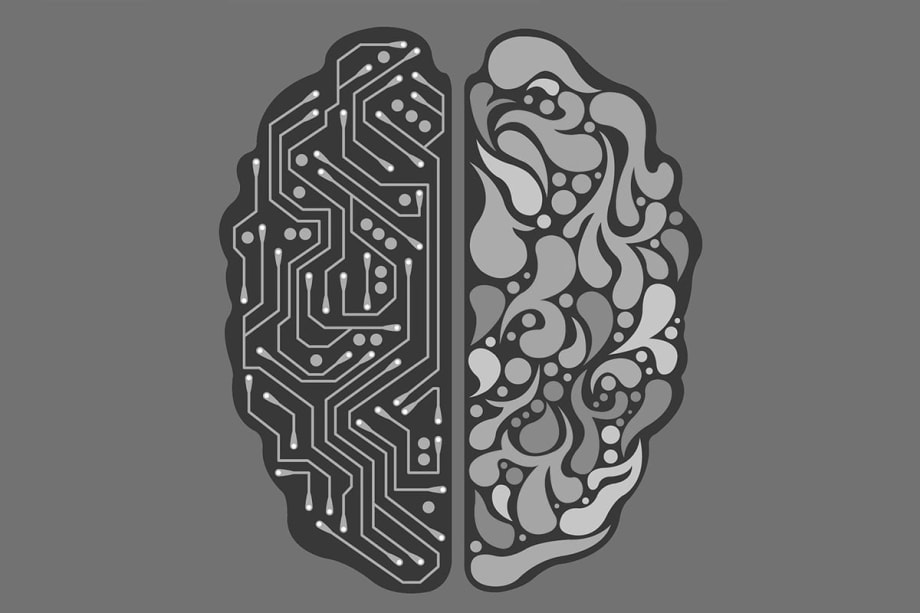
Photo: Seanbatty via Pixabay
Agentic AI: On of Gartner's Top Strategic Technology Trends for 2025, the next frontier of artificial intelligence is agentic AI, according to Nvidia. It uses sophisticated reasoning and iterative planning to autonomously solve complex, multi-step problems. Agentic AI can autonomously plan and take action to achieve goals set by the user. As IBM explains, agentic AI takes autonomous capabilities to the next level by using large language models, machine learning, and natural language processing to perform autonomous tasks on behalf of the user or another system.
Algorithm: A logical sequence of explicit, step-by-step instructions to solve any problem. These are the building blocks that make up machine learning and artificial intelligence. The goal of an algorithm is to teach AI, neural network, or other machines how to figure things out on their own.
Artificial Intelligence: Computers capable of doing human-like tasks: decision-making, object classification and detection, speech recognition and translation.
Artificial neural network: An algorithm that attempts to mimic the biological neural networks that make up the human brain, with layers of connected “neurons” sending information to each other.
Big data: Large amounts of structured and unstructured data that is too complex to be handled by standard data-processing software.
Chatbots: Simulates a real conversation through text or voice messages. Chatbots use machine learning to identify communication patterns and thus learn to imitate real conversations. After each dialogue, they become smarter. According to Nvicia, AI chatbots use generative AI to provide responses based on a single interaction. A person makes a query and the chatbot uses natural language processing to reply.
Cognitive computing: A computerized model that mimics human thought processes to assist humans in finding solutions to complex problems, rather than automating things. It overlaps with AI and uses many of the same underlying technologies.
Computer vision: A field of AI that uses AI technologies to solve complex problems using information from images and video, such as object detection.
Data mining: The process of sorting through large sets of data in order to identify recurring patterns while establishing problem-solving relationships.
Digital twin: A virtual copy of a physical asset, which can enable better monitoring, diagnostics and predictions. At its simplest, a digital twin can be described as a virtual copy of a real object, explains Intangles. It is linked to its “physical twin” through a dynamic data feed. This means the digital twin is continually “learning” to be a better and more accurate replica of its physical counterpart. "And because it’s virtual, you can do far more with the Digital Twin than you could with the physical thing."
Generative AI: Generative AI, such as ChatGPT or image-based tools such DALL-E, is a type of artificial intelligence that can create new content, such as text, images, or video, using deep-learning models learned from training on large amounts of existing data. As Deloitte explains, it can retrieve, parse, analyze, organize, and synthesize a range of disparate datasets, text, documents, and other readable/scannable content.
Machine learning: A set of algorithms that allows you to feed machines (computers) data and let them learn a few tricks on their own, without being explicitly programmed to do so. Machine learning is a subset of AI. It can be fed only with structured data, while AI can handle both structured and unstructured pieces of information.
Updated 2025 to add new terms.
More Fleet Management

Color Match Smarter: Tools That Restore & Perform
For fleet managers and collision repair professionals keeping heavy-duty trucks on the road, getting the color right the first time isn't just about appearance — it's about efficiency, turnaround time, and bottom-line results. Discover how today's digital color tools are transforming the repair process from guesswork to precision.
Read More →
FMCSA Pauses Biennial-Update Enforcement Amid Motus Transition
Carriers whose updates were due on or after June 1 have more time, while FMCSA works to stabilize its new registration system and warns of phishing sites impersonating its new carrier registration system, Motus.
Read More →
2026 Blueprint for Countering Smarter Supply Chain Theft
Cargo theft is no longer just the cost of doing business. It's a multi-billion-dollar criminal enterprise exploiting vulnerabilities across your fleet, drivers, and supply chain.
Read More →


How Telematics Improves Visibility, Control, and Performance in Refrigerated Fleets
Explore how telematics help refrigerated fleets improve visibility, uptime, efficiency, compliance, and cargo protection across connected cold chain operations.
Read More →
What the U.S.-Canada Trade War Means for Trucking
Escalating U.S.-Canada tariffs could disrupt cross-border freight, reduce truck volumes, raise costs, and create new uncertainty for carriers on both sides of the border.
Read More →
What Are Trucking’s Top Concerns for 2026?
The American Transportation Research Institute wants to know what's worrying trucking fleet managers, drivers, and other stakeholders in its annual Industry Issues survey.
Read More →
American Trucking Associations Looks for a New Leader
ATA President and CEO Chris Spear abruptly left his job at the association on August 21, at a pivotal time for the trucking industry.
Read More →
Public Wi-Fi Cybersecurity Risks: How Truck Drivers and Fleets Can Protect Their Data
Public Wi-Fi can expose truck drivers and fleets to credential theft, malware, and other cyber threats. Here’s how to reduce the risk on the road.
Read More →
For Nicky Cupp, Fleet Innovation Starts With Frustration
HDT Truck Fleet Innovator Nicky Cupp turns everyday pain points at Fraley & Schilling into opportunities for better technology and smarter processes.
Read More →
Adam Buttgenbach’s Approach to Electric Trucks: Start With Where They Fit
HDT Truck Fleet Innovator Adam Buttgenbach helped PepsiCo build one of North America’s largest EV fleets by focusing on where electric trucks make operational sense.
Read More →