




Aftermarket Outlook: Near-Term Spotty; Consolidation, Reman Among Long-Term Trends
LAS VEGAS -- The aftermarket, like the trucking industry at large, has been in a bit of a slump the last six or seven months, and Stu MacKay, president of MacKay & Co., thinks it will continue for at least a little while

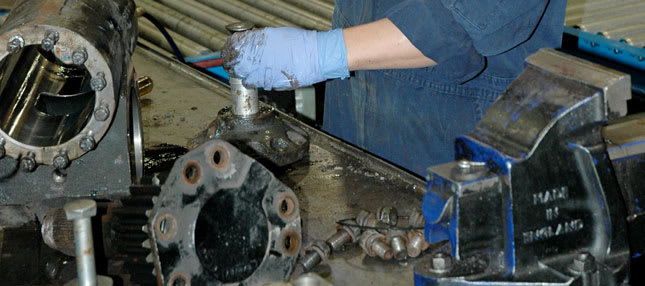
One trend affecting the aftermarket is increased focus on remanufacturing.
LAS VEGAS -- The aftermarket, like the trucking industry at large, has been in a bit of a slump the last six or seven months, and Stu MacKay, president of MacKay & Co., thinks it will continue for at least a little while.
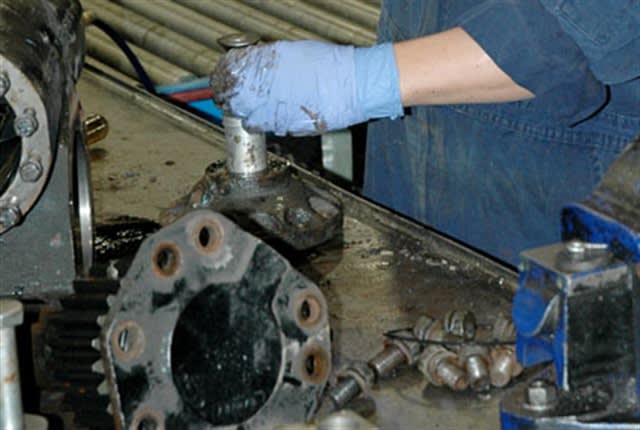
One trend affecting the aftermarket is increased focus on remanufacturing.
"In the very short term, we've got some issues," he said during Heavy Duty Aftermarket Dialogue Monday, the day before Heavy Duty Aftermarket Week.
MacKay shared graphs showing dealer and independent distributors' parts sales and inventory numbers, and they all showed recent downward trends.
Much of it is due to the general uncertainty in the business world because Congress still has not solved some of the key fiscal issues that had us at the brink of a "fiscal cliff" at the end of the year.
"The things that are leading indicators for the short term are not bullish," MacKay said. Looking at the short-term outlook, he said, "Is it seriously negative? No. Is it seriously positive? No. He believes we'll see similar levels over much of 2013 as we have the last six months or so.
"It would be helpful if we could clear up a bunch of things in Washington," said MacKay, who has been know to get wound up about political issues. "There are an awful lot of issues that need to be cleared up. Until we do, I think we're stuck with some of the things we've been seeing over the last several months.
"Long term, I think it'll be more positive, but it's going to take more than what we've got right now to get there."
Long-term trends
MacKay outlined some trends in the trucking industry that will affect the aftermarket.
1. Consolidation will continue, he said, among for-hire and private fleets, among independent distributors, among OE truck dealers.
"I don't think there's any question about further consolidation in the distribution system," he said. "When you look at Rush or MHC or FleetPride, it's been pretty successful."
That kind of consolidation can be good and bad. Larger fleets tend to be able to have more leverage to negotiate cheaper parts deals. Larger dealer/distributor groups have more clout to negotiate for cheaper parts deals from their suppliers.
We will continue to see an increased emphasis on reman and rebuild. "The opportunities [for truck owners] to save money by remanufacturing and rebuilding are significant," he said. As an example, he said, Schneider National has had about 650 tractors in their fleet pulled out and basically remanufactured using glider kits. "That's 650 new trucks that didn't get built. They got new power, new electronics, for something like 40% of the cost of putting new trucks on the road."
He also pointed out that two other transportation industries, railroads and airlines, keep their assets for much longer with the help of rebuilding and refurbishing.
Shrinking sweet spot. Looking ahead, MacKay noted that there's a "sweet spot" for the aftermarket when a Class 8 truck is about seven or eight years old when it starts presenting significant opportunities for the aftermarket, with major components needing replacing or overhaul.
Looking at the period from 2000 to 2005 or 2006, he said, we put a lot of new trucks on the street. One year we hit close to 300,000.
"What we're getting now is the benefit of that sweet spot from 7 or 8 years ago," MacKay said. But if you look at sales since 2009, he said, we'll be looking at a much smaller number of trucks in that sweet spot in a few years.
Then and Now
For some perspective, MacKay looked at some structural trends in the aftermarket business compared to 30 years ago.
One of the biggest changes has been the switch from medium-duty to heavy-duty trucks. In 1982, out of 3.6 million commercial vehicles, two-thirds were medium-duty, and Class 6 made up about 50 percent.
By 2012, Class 8 made up 65% of the 4.4 million units in operation. Only about a third are medium-duty, and 24% of those are Class 7, with 11% Class 6.
One of the reasons for this, he explained, is the changing nature of retail. In the early 80s, you still had many local businesses who were taking deliveries off the back of straight trucks. Today, many of those local stores have been replaced by the likes of Walmart and Home Depot, who are served by Class 8 tractor-trailers.
Meanwhile, some of that medium-duty truck use transitioned down into smaller vehicles, like the package cars used by UPS.
Looking forward over the next three or four years, however, MacKay foresees an increase in the use of Class 6 trucks at the expense of Class 7, because of the ability to use a non-commercial-licensed driver.
The average annual miles have risen significantly over the past three decades. In 1982, a Class 8 truck ran just short of 50,000 miles a year, Class 6/7 just short of 21,000 miles, and trailers about 45,000. Today, the average miles for a Class 8 truck is 76,500, Class 6/7 is now 32,000, and trailers run 55,700.
"Different equipment, different operating conditions, and much more efficient use of the equipment," MacKay said.
For the aftermarket, perhaps the most important change is the rise in replacement mileages for components. In 1982, the replacement life for an alternator was 132,000 miles, for a clutch 171,000, and a Class 8 truck would run 276,000 miles before it had to have an engine overhaul.
Today, alternators last an average of 278,000 miles, clutches 369,000, and Class 8 engines go 680,000 miles before overhaul and among for hire carriers it's 862,000 miles.
Today, the first owner of the truck may never replace a clutch or engine. And fleets are more likely today to simply buy a reman engine rather than have it overhauled.
"We're building better products, and they are being much more efficiently used," MacKay said.
"The productivity of the trucks in service today is dramatically better than it was 10, 20, 30, 40 years ago," MacKay said. Looking at MacKay and Co's Truckable Economic Activity numbers and the number of medium-duty trucks, we went from about 65,000 trucks for each 100 billion of TEA to about 20,000. We've seen a similar trend for class 8 but not as steep.
Looking at the heavy duty aftermarket (Class 6-8), an approximately $9.3 billion business in 1982, the largest piece was power generation, from the fan to the flywheel, at close to 40%. The second largest was power transmission, starting at the clutch base down through the driven axles, 23%. The undercarriage business (brakes, steering, suspension, etc.) was 18% and electrical 11%.
In 2012, the heavy-duty aftermarket was a $22.4 billion business. The largest piece was still power generation, but down a bit at 31%. The undercarriage business had risen to 22% to the second-largest category. Power transmission had dropped to only 14%, cab/chassis (not broken out separately in the 30-year-old numbers) was 14%, and electrical 8%.
More Aftermarket

What Three Fleets Are Doing Differently When Buying Truck Parts in 2026
With freight improving but costs still climbing, fleet maintenance executives explain how they're balancing price, quality, and supplier relationships.
Read More →
ConMet Expands Aftermarket Brake Drum Lineup With TruCast
A new heavy-duty truck brake drum option in the aftermarket gives customers more flexibility within the ConMet product family.
Read More →
Phillips Opens High-Tech Distribution Center for Faster Parts Delivery
Phillips Industries’ new Cincinnati-area distribution center is now shipping aftermarket trucking parts nationwide, aiming to speed up delivery times for customers.
Read More →
Volvo to Sponsor America’s Road Team for 2025
Volvo Trucks announced that it is extending its exclusive sponsorship of America’s Road Team for 2025.
Read More →
Webb to Start Taking Orders for UltraSet Pre-Adjusted Wheel Hubs
Webb, which recently acquired the Stemco Trifecta pre-adjusted hub program, will soon start taking orders for its replacement pre-assembled hub, the UltraSet.
Read More →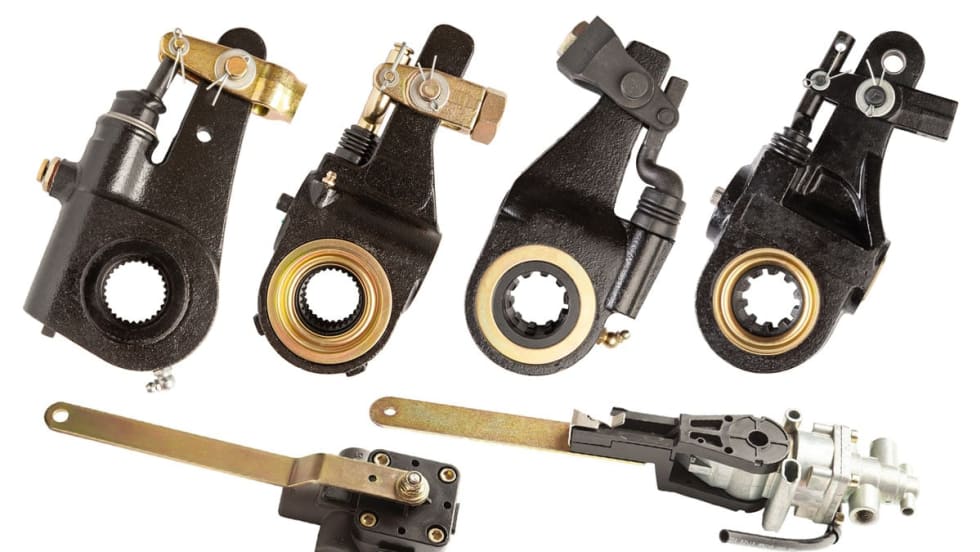
All-Makes Automatic Brake Adjusters, Ride Height Control Valves from Midland
SAF-Holland has added automatic brake adjusters and ride height control valves to its Midland All-Makes Program.
Read More →
ZF Aftermarket Expands [pro]Academy Training
ZF Aftermarket said it is expanding its ZF [pro]Academy training and will be adding 40 new modules this year.
Read More →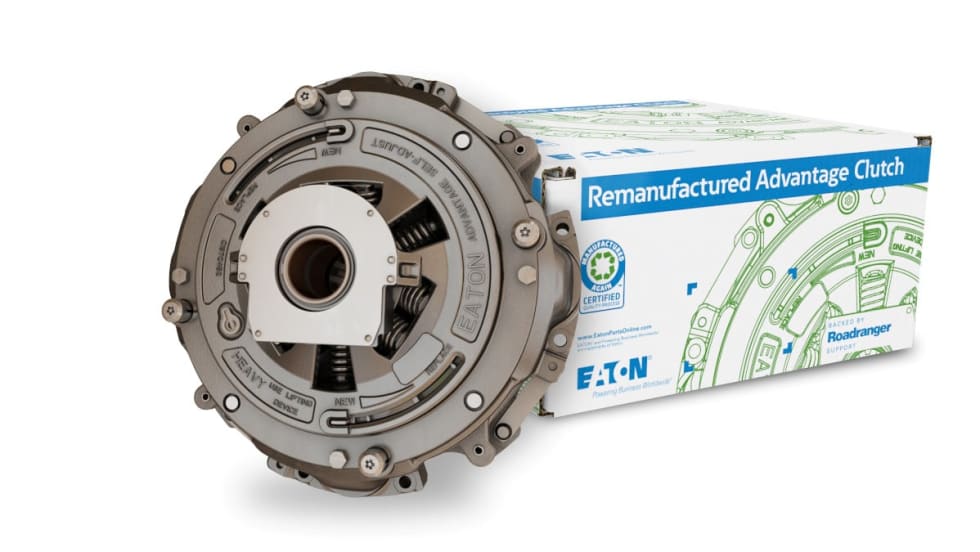
Eaton Adds Remanufactured Advantage Line of Clutches
Eaton has added its Advantage clutches to its remanufactured product line. The clutches feature a unique strap drive intermediate plate designed to allow customers to choose the latest OE specification
Read More →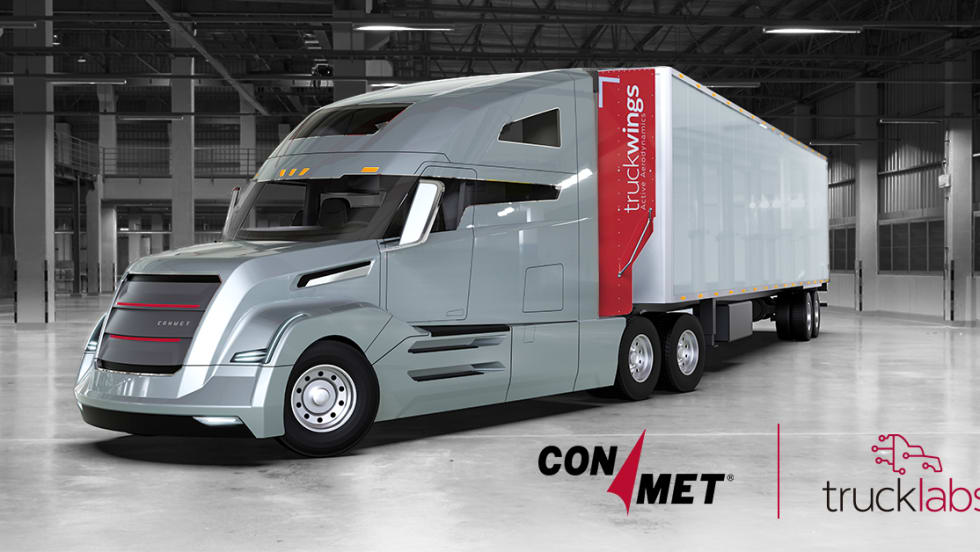
ConMet Acquires TruckLabs, the Creator of TruckWings
Commercial truck and trailer parts provider ConMet acquired TruckLabs, the company that created TruckWings, an aerodynamic device that attaches to truck cabs and deploys to close the gap between truck and trailer. TruckLabs now operates as a subsidiary of ConMet.
Read More →
Diesel Laptops Releases Fault-Code-to-Part-Number Tool
Diesel Laptops said its Truck Fault Codes allows users to input a fault code and immediately identify and order the parts needed to complete repair work.
Read More →