




Aero Add-ons Put to the Test
The Performance Innovation Transport Group recently tested trailer side skirts and undercarriage air deflectors.

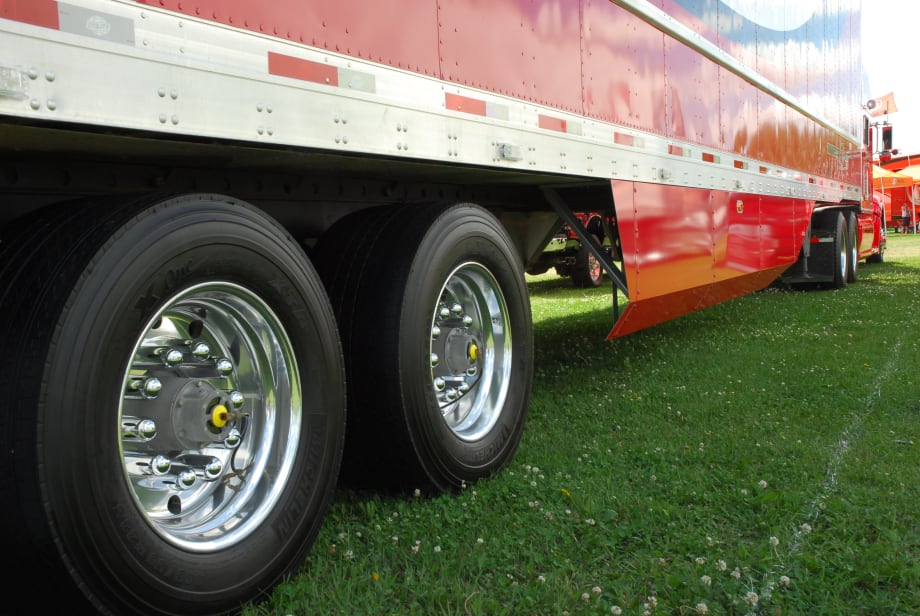
Not all aero fitments produce the same results. SAE Type II test results from Performance Innovation Transport Group sheds some light on the differences.
There’s no shortage of fuel-saving technologies on the market. Choosing the right device for your application is never easy. Is the ROI reasonable? Will it be maintenance neutral? Is it reliable? Will it get in the way? Will the supplier be there in five years to honor the warranty?
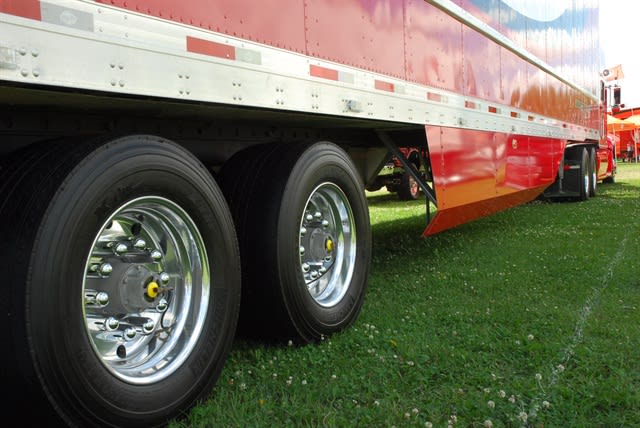
Not all aero fitments produce the same results. SAE Type II test results from Performance Innovation Transport Group sheds some light on the differences.
Since 2007, a group based in Pointe Claire, Quebec, has been helping its fleet members answer some of those questions.
Performance Innovation Transport Group is an offshoot of FPInnovations Inc., one the world’s largest private, not-for-profit forestry research centers.
With expertise developed over 35 year through one of FPInnovations’ divisions, the Forest Engineering Research Institute of Canada, a group of Canadian carriers formed PIT to test various fuel-saving products and technologies.
PIT recently released the results of a fuel economy test campaign of four brands of trailer side skirts (Freight Wing, Laydon Composites, Ridge Corporation and Transtex Composite), and three brands of undercarriage air deflectors (AirFlow Deflector, Airman and SmartTruck).
The test results show that trailers with side skirts consumed an average of 6.69% less fuel than similar vehicles without skirts. Trailers with undercarriage aerodynamic devices consumed 1.43% less fuel on average than similar units without the deflectors. Fuel savings with the side-skirt devices ranged across the brands from 5.2% to 7.45% compared to similar vehicles without skirts. Fuel savings with the undercarriage devices ranged across the brands from 0% to 2.2%.
“The goal of these trials was to identify the real value of each technology so fleet operators can focus their implementation efforts where they get the best value and can more easily justify their capital investment,” said Yves Provencher, director of PIT. “Our controlled test-track fuel efficiency studies accelerate technology implementation and provide the commercial vehicle industry with the information it needs to make sound technology choices.”
In the past, PIT, through its Energotest program, has tested low-rolling resistance tires, various tractor and trailer aerodynamic fitments, add-on fuel saving technologies, manual versus automated transmission, hybrid vehicles and more. PIT has also compared results of the various generations of EPA emissions requirements.
Testing last summer of 6x2 vs. 6x4 tractors found that 6x2 tractors used 2.6% to 3.5% less fuel than similar 6x4 tractors. PIT traction performance evaluations showed that 6x2 tractors’ traction was also reduced compared to 6x4 models.
PIT operates a testing consortium with about 50 fleet members. Fleet members range from the largest and most innovative fleets in Canada to one small Quebec-based fleet of 25 trucks.
There are just two American fleets in the group, but PIT has openings for
more.
Fleets pay a membership fee based on fleet size that vary from $35 to $50 per truck per year. The minimum fee is $5,200.
Member fleets that are approached by vendors with a product are referred to PIT to have the product tested before the fleets will even look at it. It’s like the “Gold Seal” of approval, Provencher says.
Fleet members can also request specific product tests and within certain constraints can help define the testing protocol.
There’s more information about PIT at www.pit.fpinnovations.ca.
What’s keeping fleets on the sidelines?
A new fleet survey and research conducted by The North American Council for Freight Efficiency has identified what stands between fleets and better fuel economy. NACFE, in partnership with Cascade Sierra Solutions, dug deep into why there hasn’t been wider adoption of several commonly available technologies that could deliver thousands of dollars in fuel savings.
NACFE identified five key bottlenecks to nationwide implementation of available technologies. In order as reported in the survey:
Lack of credible information on payback;
Lack of access to capital;
Insufficient reliability;
High initial cost of trucks; and,
Unavailability of the technology.
“Our survey and report clearly shows the gap between perceptions and reality of the adoption of technologies,” says Mike Roeth, executive director of NACFE. “Still, fleets have to wade through a lot of information, decide what’s credible and what is just marketing, and then make a decision on what can be a substantial investment.”
The NACFE Barriers study used telephone interviews, focus groups and online survey methods to interviewed nearly 1,900 owner-operators as well as large and small fleets that operate over 50,000 trucks and 100,000 trailers about their decision-making processes for adopting new fuel efficiency technology.
The full report is available online at www.truckinginfo.com/barriers.
More Aftermarket
What Three Fleets Are Doing Differently When Buying Truck Parts in 2026
With freight improving but costs still climbing, fleet maintenance executives explain how they're balancing price, quality, and supplier relationships.
Read More →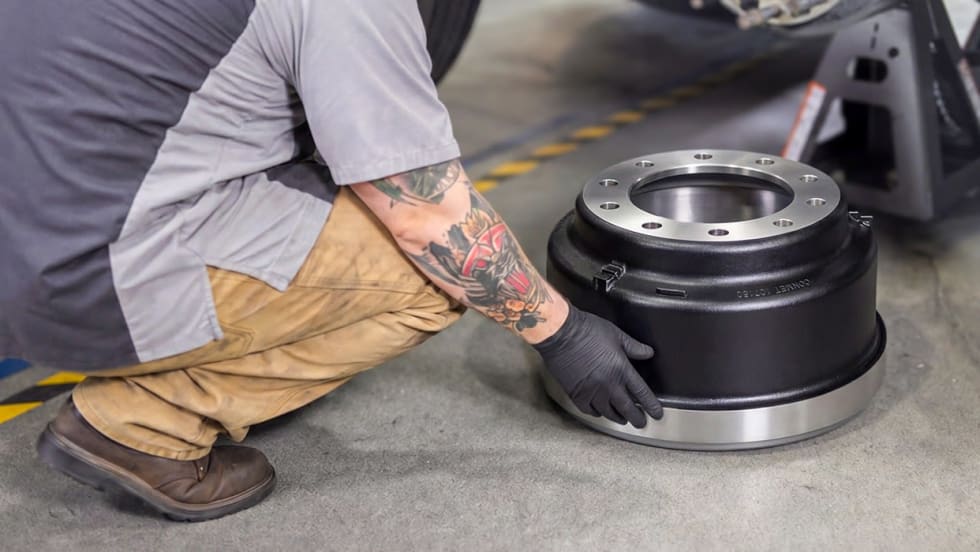
ConMet Expands Aftermarket Brake Drum Lineup With TruCast
A new heavy-duty truck brake drum option in the aftermarket gives customers more flexibility within the ConMet product family.
Read More →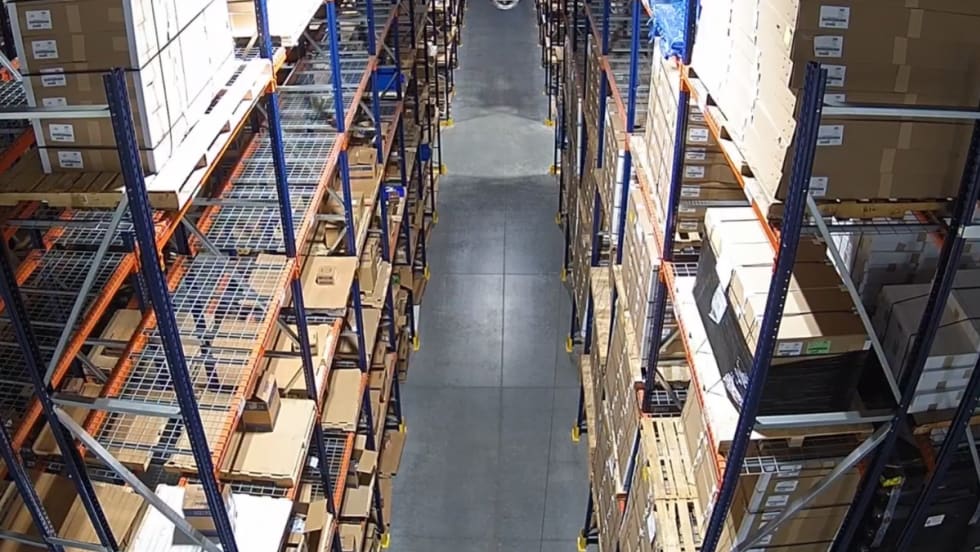
Phillips Opens High-Tech Distribution Center for Faster Parts Delivery
Phillips Industries’ new Cincinnati-area distribution center is now shipping aftermarket trucking parts nationwide, aiming to speed up delivery times for customers.
Read More →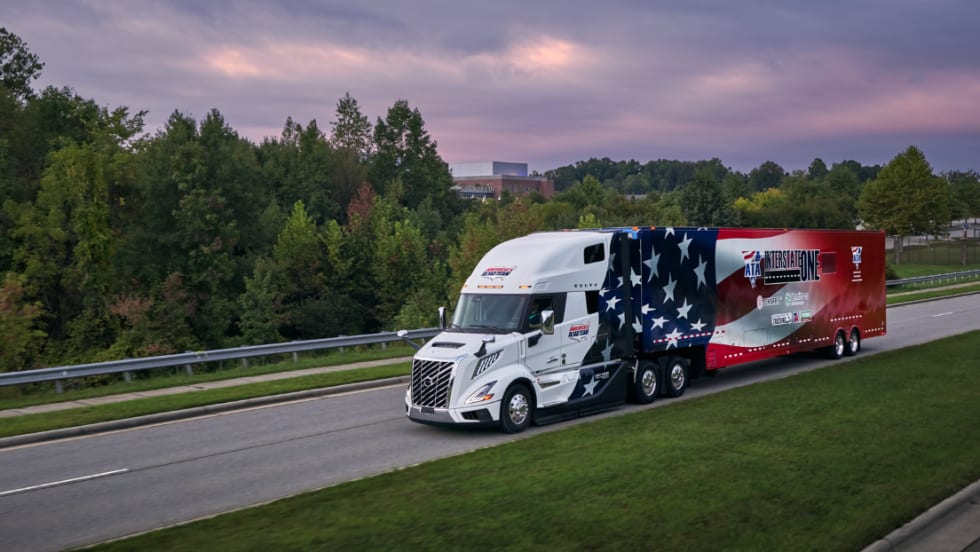
Volvo to Sponsor America’s Road Team for 2025
Volvo Trucks announced that it is extending its exclusive sponsorship of America’s Road Team for 2025.
Read More →
Webb to Start Taking Orders for UltraSet Pre-Adjusted Wheel Hubs
Webb, which recently acquired the Stemco Trifecta pre-adjusted hub program, will soon start taking orders for its replacement pre-assembled hub, the UltraSet.
Read More →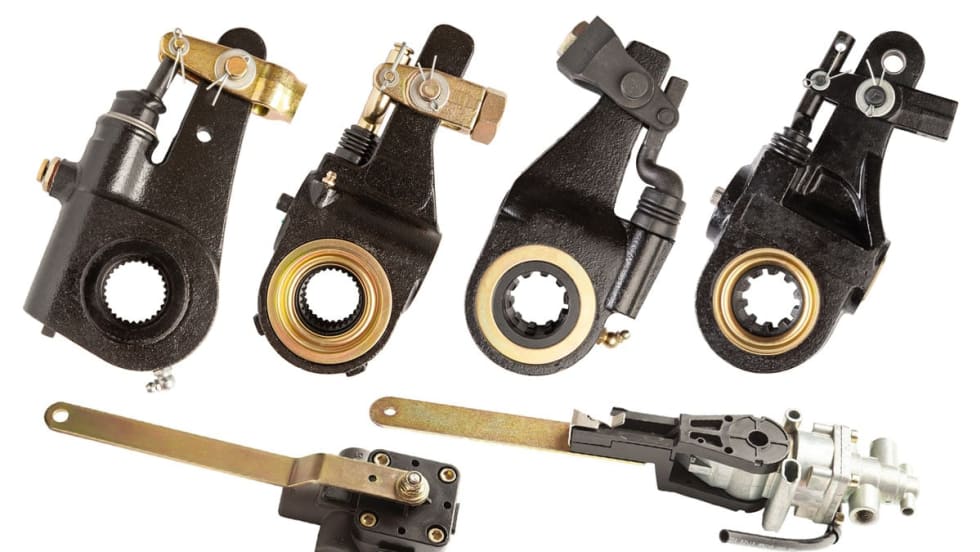
All-Makes Automatic Brake Adjusters, Ride Height Control Valves from Midland
SAF-Holland has added automatic brake adjusters and ride height control valves to its Midland All-Makes Program.
Read More →
ZF Aftermarket Expands [pro]Academy Training
ZF Aftermarket said it is expanding its ZF [pro]Academy training and will be adding 40 new modules this year.
Read More →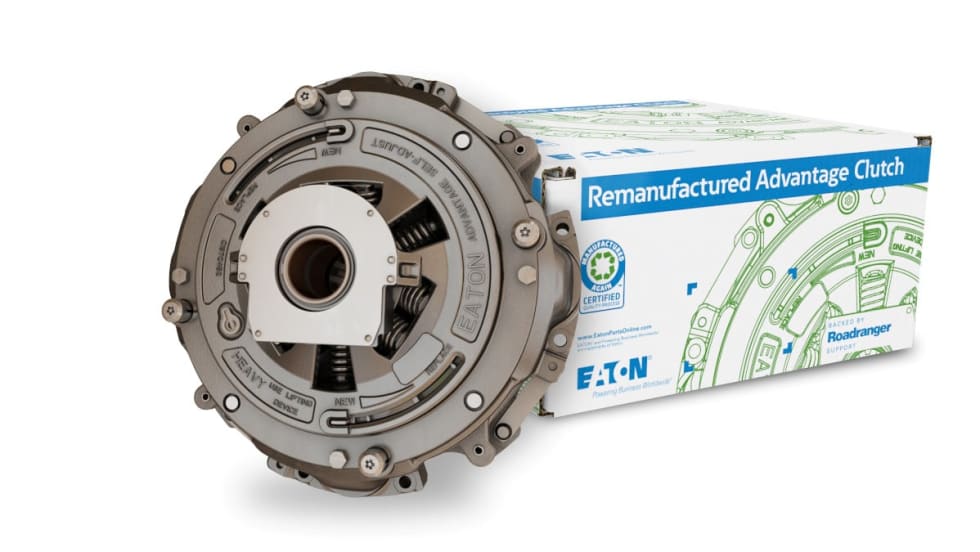
Eaton Adds Remanufactured Advantage Line of Clutches
Eaton has added its Advantage clutches to its remanufactured product line. The clutches feature a unique strap drive intermediate plate designed to allow customers to choose the latest OE specification
Read More →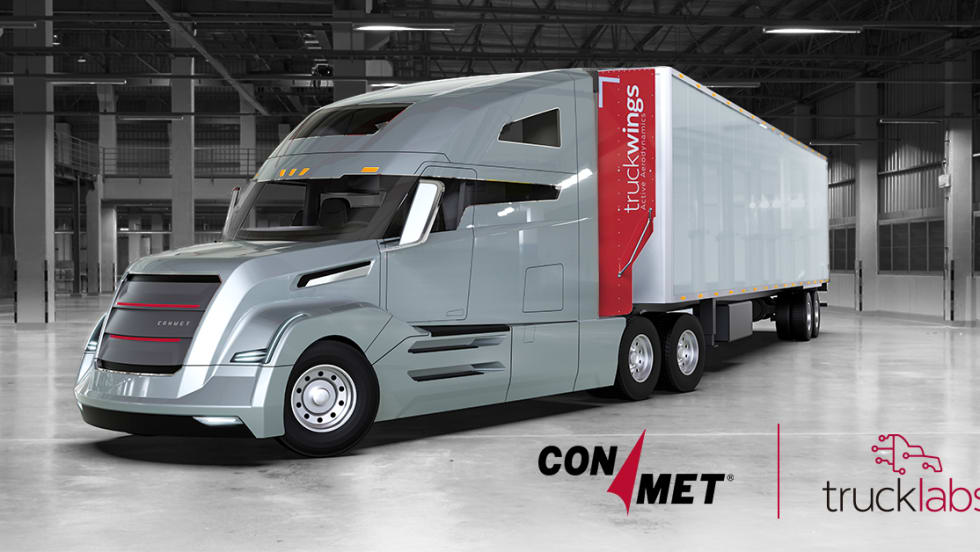
ConMet Acquires TruckLabs, the Creator of TruckWings
Commercial truck and trailer parts provider ConMet acquired TruckLabs, the company that created TruckWings, an aerodynamic device that attaches to truck cabs and deploys to close the gap between truck and trailer. TruckLabs now operates as a subsidiary of ConMet.
Read More →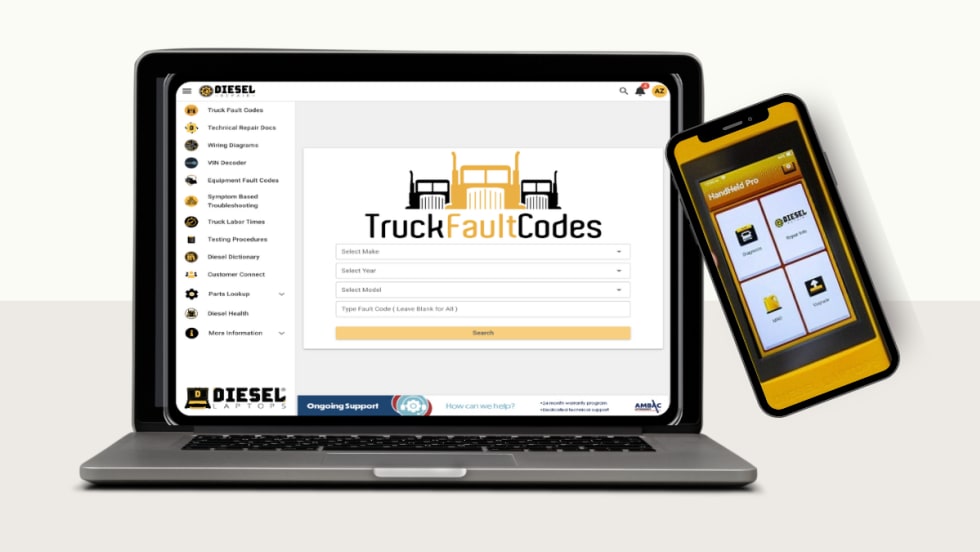
Diesel Laptops Releases Fault-Code-to-Part-Number Tool
Diesel Laptops said its Truck Fault Codes allows users to input a fault code and immediately identify and order the parts needed to complete repair work.
Read More →