




A Tale of Two Natural Gas Fleets
At a time when many shippers have chief sustainability officers and government contracts are requiring low-emissions or alternative-fuel equipment, some fleets are finding it pays to have natural gas trucks in their arsenal.

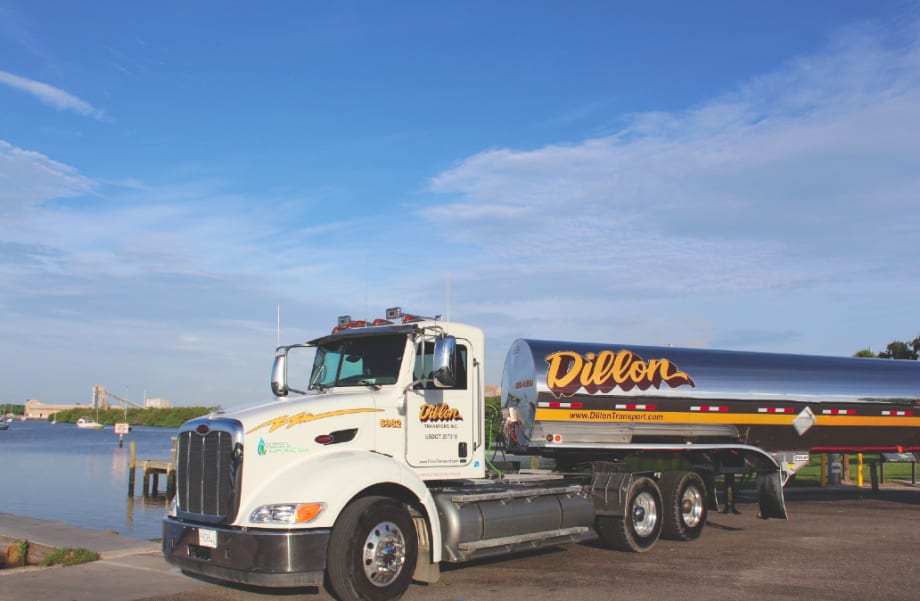
Dillon Transport uses natural gas as a strategy to go after new customers for whom sustainability is a key requirement.
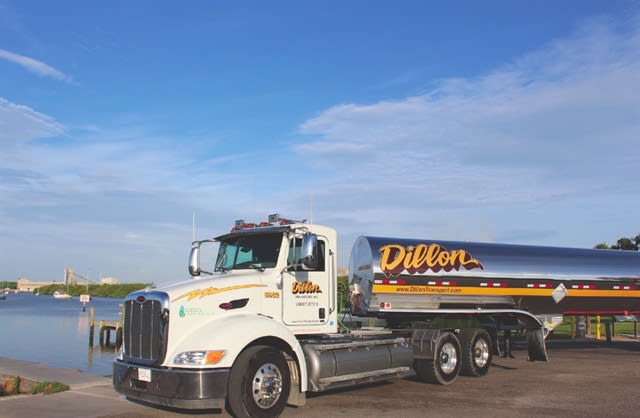
Dillon Transport uses natural gas as a strategy to go after new customers for whom sustainability is a key requirement.
At a time when many shippers have chief sustainability officers and government contracts are requiring low-emissions or alternative-fuel equipment, some fleets are finding it pays to have natural gas trucks in their arsenal.
Such was the case with two very different fleets who spoke to attendees in an educational session at the Green Fleet Conference this fall in Phoenix, Ariz.: Chicago-based Dillon Transport and Phoenix-based Waste Management.
Dillon Transport
Dillon Transport is a big advocate for natural gas. But in an anecdote illustrating the chicken-and-egg problem of infrastructure, Vice President Charles Musgrove noted that when it took a truck to Capitol Hill to promote incentives for natural gas, it couldn’t get there on its own power. It was shipped by flatbed. However, with the determination of fleets like Dillon, that’s changing.
Dillon started investigating in natural gas four to five years ago. Today it runs both liquefied natural gas and compressed natural gas, depending on the particular location. By the second quarter of 2014 it plans to have 25% of its 500-truck fleet running on natural gas.
In addition to being unusual in using both fuels, Dillon is unusual in its approach to the ROI of natural gas. Instead of focusing on the per-gallon fuel savings, it finds the big appeal of natural gas is its ability to bring in new, sustainability-focused clients. Contracts with those clients are multi-year deals that make the move feasible for Dillon and also lock in prices and capacity for the client.
Musgrove offered a list of common excuses not to use natural gas, and his responses.
• Tractors are too heavy. In fact, he says, they can be lighter with the elimination of the diesel particulate filter, DEF tanks and other emissions equipment.
• Not enough range. Fleets and truck makers are developing more multiple-tank options that extend range. One of the trucks being used in its Tampa operation has two saddle tanks and back-of-cab tanks, giving it a 450- to 500-mile range. The operation is only doing 320 miles per shift.
• The engines aren’t powerful enough. “We have 24 trucks that do it every day” with the 9-liter engines, Musgrove said, and the 12-liter is now available, with 15-liters from two companies in the works.
• I can’t get the ROI without government assistance. Musgrove maintains it’s working for Dillon without funding help.
• Drivers don’t like them. Dillon’s drivers do, he said. They’re quieter, for one thing – and one driver even told him it might have saved his marriage because he no longer came home stinking of diesel fumes.
• Maintenance costs are too high. Dillon has found the costs to be reasonable. With most problems, when they do occur, being covered by warranty. Without maintenance costs to emissions control systems, it may even be cheaper in comparison.
• The infrastructure isn’t there. Not yet, but it’s moving quickly, and there are portable/temporary fueling options available.
Waste Management
California emissions standards may have herded Waste Management into natural gas at first, but it quickly took the reins. Today the Phoenix-based fleet is working to transition its entire 32,000-vehicle fleet.
Marty Tufte, corporate fleet director, said the early driver of the refuse giant’s strategy back in the late ‘90s was really emissions.
The company found that the fuel offered it much more than emissions compliance. It has realized fuel cost savings, maintenance savings and customers demand it.
By the end of 2014, the fleet expects to be approaching the 4,000-vehicle mark in its transition. Although it still has close to 500 LNG trucks in its fleet, all WM’s new investment is CNG.
To support its efforts, the company has more than 50 natural gas stations across the country. It also sells its own brand of Clean N Green CNG in partnership with PetroCard.
WM also has a facility at its Altamont landfill near Livermore, Calif., that converts landfill gas into natural gas to fuel its trucks.
Tufte, who says he “walks the talk” and drives a natural-gas-fueled Honda Civic, says the company got into it in a big way starting in 2009 when it was asked to bid for the business of the City of Seattle. The bid called for either EPA 2007 diesels running 30% biodiesel or alternative fuels.
“At that point I chose alternative fuel, and I don’t regret that decision at all,” he says. “When we looked at that decision later, we went to the corporate office and showed them what the decision had yielded in terms of ROI, and they committed to convert the whole fleet.”
More Fuel Smarts

How Volvo Updated Its D13 for EPA 2027 [Watch]
Volvo’s updated D13 promises lower emissions without sacrificing performance or fuel economy. Take a closer look at what changed inside the engine in this HDT Spotlight video.
Read More →
Diesel Price Spike Shortens Payback for Natural Gas Trucks, Report Says
Energy Vision estimates fleets could recover the higher purchase price of an RNG-fueled Class 8 tractor in 1.3 to 2.8 years under current fuel-price scenarios.
Read More →
Calstart Becomes Catalyst Mobility, Reflecting Broader Focus
Calstart is now Catalyst Mobility, reflecting the nonprofit’s growing national role in clean transportation, including zero-emission trucks, infrastructure and incentive programs.
Read More →

Record Diesel Prices Squeeze Trucking Fleets
Average U.S. diesel prices have climbed to nearly $6 a gallon, surpassing the 2022 record as tight refinery capacity and Middle East disruptions keep fuel costs elevated.
Read More →
How Fuel Delivery Shapes Engine Performance
Fuel delivery depends on more than what happens at the injector. For fleet, maintenance and technical professionals, looking at the full path from pump to injector can provide useful context for understanding engine performance.
Read More →
East Coast Port Launches $45M Electric Truck Push
The Port Authority of New York and New Jersey announced millions in incentives for zero-emission drayage trucks, yard tractors, and new charging hubs near the port.
Read More →
California Bill Could Shed Light on Electric Truck Prices
Why do battery-electric Class 8 trucks remain so expensive? A California bill headed to Gov. Gavin Newsom would give fleets and state agencies more visibility into what manufacturers charge.
Read More →
Detroit Opens Orders for EPA 2027 Engines
Detroit isn’t starting from scratch to meet EPA 2027 diesel emissions standards. Its Gen 6 DD13 and DD15 engines keep much of today’s platform while updating the fuel and aftertreatment systems.
Read More →
Zero-Emission Truck Corridor Planned for West Coast
California, Oregon, Washington, British Columbia and Baja California are coordinating plans for truck charging and hydrogen fueling from Canada to Mexico.
Read More →
A Closer Look at Kenworth’s Electric T880E Vocational Truck [Video]
Learn more about Kenworth's T880E battery-electric vocational truck at the Paccar Technical Center, including its range, applications, upfitting considerations, and PTO options, in this HDT Spotlight video.
Read More →