




A Computer In Your Pocket: What Smartphones Can Do For Your Business
Florida-based Peninsula Trucking, a dedicated less-than-truckload carrier, is keeping up with its drivers, not through satellite tracking, but through their phones. Peninsula is using TeleNav Track, a web-based workforce management software with GPS tracking and navigation
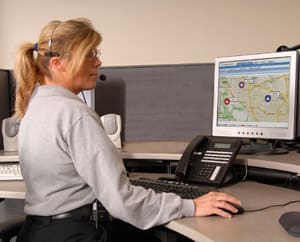
Smartphone technology can keep drivers connected to the back office.
Florida-based Peninsula Trucking, a dedicated less-than-truckload carrier, is keeping up with its drivers, not through satellite tracking, but through their phones. Peninsula is using TeleNav Track, a web-based workforce management software with GPS tracking and navigation.
Because TeleNav Track operates on mobile phones, Peninsula trucking didn't have to make a large capital investment.
"Satellite is very expensive," explains Michael Rowe, comptroller. "TeleNav Track makes tracking more affordable. Drivers are handed a mobile phone, and off they go."
Using TeleNav Track, Peninsula Trucking was able to save $61,000 a year because of the low cost of installation and the savings experienced with tracking, reporting and navigation.
It's been hard for some carriers, especially smaller players, to compete in the current economic environment, with freight hard to come by and the continued pressure on pricing. Fleets with in-cab computers and other rugged mobile hardware devices may well have the competitive advantage, with the ability to improve their productivity, prop up their customer service and keep drivers happier while they're at it.
But in the last few years, a device has come to market that is just as powerful, even more portable, and affordable: the smartphone. Smartphones can not only help consumers surf the Web, keep up on Facebook, manage their phone lists and download games; they also can offer a fleet or owner-operator many of the same capabilities as an in-cab computer or navigation system, for less.
"The smartphones are essentially a mini-computer," says Zach Womack, co-founder of Applicandy, a mobile application development company.
"You're talking about something that even a small company can afford," says Keith Halasy, senior director of marketing for TeleNav. "This is not specialized equipment anymore. They're ubiquitous."
While any mobile phone offers texting and calling, good tools for communicating with drivers, smartphones go beyond these capabilities to handle a large number of tasks and a large amount of data, Halasy says. Whereas before you'd have to purchase multiple devices, such as a navigation device, a camera, and a cellular phone, the smartphone rolls all these capabilities into one device.
"You don't need your laptop anymore," says Dan Ribar, chief information officer at 1st Guard Corp., a trucker insurer that offers a smartphone app. "Now, it's in your pocket all the time."
The iPhone
One of the devices that paved the way for this all-in-one concept was Apple's iPhone, a cell phone that's also an iPod, a video camera, and a mobile Internet device with e-mail and GPS maps. A flood of software applications (called "apps") for the trucking industry has hit the market, especially because Apple opened up the platform to third-party software developers. According to Applicandy's Womack, this has given smaller developers the opportunity to design applications that are more specialized and beneficial to smaller businesses.
For example, Applicandy recently debuted iLogMiles, an iPhone application that allows truck drivers to generate and display daily log records. Womack says the application provides drivers with the tools they need to make better business decisions, while also giving them a fun way to log their hours of service.
"To know exactly how much you are making is absolutely critical for any trucking business," he says. "With relative and accurate information in their pocket, smart business owners will be empowered when it comes down to negotiation time. iLogMiles provides them with useful analytics tools, coupled with a fun and easy-to-use interface."
Applicandy points to research by Gartner Inc., suggesting that the number of smartphone application downloads are expected to grow from 4,507 in 2010 to 21,646 in 2013.
"As the use of mobile applications increases and the devices they operate on become more powerful, we are going to see businesses invest less in expensive, hardware-based systems when the same tasks, and more, can be accomplished with the phone," says Bryan Hinton, Applicandy co-founder.
1st Guard Corp., a truck insurer out of Venice, Fla., also decided to take advantage of the platform. The company first launched Trucker1, a free application for both customers and non-customers. For non-customers, the application provides a digital speedometer, a map-version of the speedometer, and a "Friends" feature, which allows truckers to track their friends' current GPS location. For 1st Guard customers, the application allows truckers to see their account data, look at existing claims and their status, attach new pictures to a claim, or open a new claim, all from the phone.
1st Guard's newest application, AheadofMe, is designed for long-haul truck drivers. It determines future destination by analyzing current location, speed and direction of travel. It also displays the high and low temperature along with speed, latitude and longitude and course direction.
"The iPhone provides a perfect platform for extending information to and communication with our customers," says Ribar.
The insurer has plans to extend the software to other smartphone platforms.
Camden, Ind.-based LoadOut Technologies has unveiled an application for use on the iPhone or iPod Touch platforms that monitors and controls the loading process at material handling facilities. The application works by sending a signal to the "yellow box," a hardware control module equipped with a camera. Once a connection is made, it displays an image of the loading on the iPhone or iPod. The worker can then load the truck with the push of a button, while monitoring the loading process in real time. This way, the driver can stay inside the cab.
According to Neil Mylet, CEO and founder of LoadOut, using the smartphone can not only help the driver improve their business, but also improve the quality and experience of their job. "For years, technology has been about improving operations," he says. "The value of the smartphone is it brings humans closer to the processes; it engages them."
There are a myriad of new and useful applications for the iPhone, including Commercial Truck Trader's free application that lets truck shoppers search more than 65,000 new and used commercial trucks and trailers; PCS Software's new iLoadFinder for finding loads in a certain radius and iBOL for collecting consignee signatures; iCooper's new iDDL app for documenting hours of service; and the Trucker app.
Other platforms
Applicandy's Womack says the iPhone made everyone in the smartphone industry step it up. With new innovative platforms such as the Android device from Google, the Blackberry and the Motorola Droid, the iPhone is no longer the be-all-end-all of smartphones.
UDrove LLC, an Idaho-based affiliate company to the Internet Truckstop, offers its new uDrove compliance management tool on several smartphones, including the Blackberry, iPhone and Android. Using uDrove, drivers can keep a log, track mileage for tax purposes, record fuel and business expenses and complete and electronically submit driver vehicle inspection reports and proof of delivery documents. The tool also provides fleets and shippers with real-time load tracking from pickup to delivery.
The software works by transferring compliance and business activity information from the smartphone to the uDrove web site, giving drivers and fleet managers access to this data.
TeleNav Track, a mobile software with GPS and navigation capabilities, also runs on a variety of smartphone technologies, including BlackBerry, HP, HTC, Intermec, Motorola, Palm and Nokia devices. According to TeleNav's Halasy, the system offers capabilities that were previously only available to larger companies. Now, they can be used by a much broader, larger set of companies.
Using a combination of back-office software and the mobile application, f
More Fleet Management

Why Private Fleets Are Taking More Freight
Private fleets are putting their own trucks on demanding customers and high-cost lanes as companies seek greater control over service, costs, and capacity.
Read More →
Color Match Smarter: Tools That Restore & Perform
For fleet managers and collision repair professionals keeping heavy-duty trucks on the road, getting the color right the first time isn't just about appearance — it's about efficiency, turnaround time, and bottom-line results. Discover how today's digital color tools are transforming the repair process from guesswork to precision.
Read More →
FMCSA Pauses Biennial-Update Enforcement Amid Motus Transition
Carriers whose updates were due on or after June 1 have more time, while FMCSA works to stabilize its new registration system and warns of phishing sites impersonating its new carrier registration system, Motus.
Read More →


2026 Blueprint for Countering Smarter Supply Chain Theft
Cargo theft is no longer just the cost of doing business. It's a multi-billion-dollar criminal enterprise exploiting vulnerabilities across your fleet, drivers, and supply chain.
Read More →
How Telematics Improves Visibility, Control, and Performance in Refrigerated Fleets
Explore how telematics help refrigerated fleets improve visibility, uptime, efficiency, compliance, and cargo protection across connected cold chain operations.
Read More →
What the U.S.-Canada Trade War Means for Trucking
Escalating U.S.-Canada tariffs could disrupt cross-border freight, reduce truck volumes, raise costs, and create new uncertainty for carriers on both sides of the border.
Read More →
What Are Trucking’s Top Concerns for 2026?
The American Transportation Research Institute wants to know what's worrying trucking fleet managers, drivers, and other stakeholders in its annual Industry Issues survey.
Read More →
American Trucking Associations Looks for a New Leader
ATA President and CEO Chris Spear abruptly left his job at the association on August 21, at a pivotal time for the trucking industry.
Read More →
Public Wi-Fi Cybersecurity Risks: How Truck Drivers and Fleets Can Protect Their Data
Public Wi-Fi can expose truck drivers and fleets to credential theft, malware, and other cyber threats. Here’s how to reduce the risk on the road.
Read More →
For Nicky Cupp, Fleet Innovation Starts With Frustration
HDT Truck Fleet Innovator Nicky Cupp turns everyday pain points at Fraley & Schilling into opportunities for better technology and smarter processes.
Read More →