




7 Strategies For Better Customer Relations
Coastal Pacific Xpress is bigger now than it was three years ago - and it's done so while being choosy about its customers, even through the recession

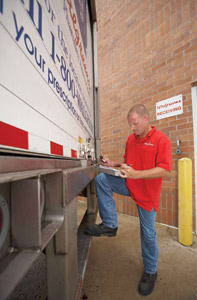
To intelligently negotiate rates, you need to know your direct and indirect costs, for each customer and even for each lane. (Photo by Paul Hartley)
Coastal Pacific Xpress is bigger now than it was three years ago - and it's done so while being choosy about its customers, even through the recession.
"A carrier has to make a decision of what his target market is," explains Jim Mickey, co-owner and president (administration) for the British Columbia-based carrier, which runs about 300 trucks, serving big-box retailers such as Costco and Wal-Mart, among others.
"In my case, I want to serve customers that are interested in the financial health of the carrier and have an appreciation for the costs of that higher quality of service - that have a reasonable appreciation of the investment a carrier makes in his business, all of which have a measurable cost and a measurable service value for the retailer."
Mickey's story is a standout in an industry hard-hit by the worst recession in memory.
"We lost about nine years' worth of rate increases in six months," says Lana Batts, trucking industry consultant and principle of Transport Capital Partners. "Our latest survey showed about half of the carriers were hauling below variable costs. That's just not sustainable."
While front haul rates are starting to look like backhauls and many shippers are asking for lower bids every time you turn around, it's probably an understatement when Stifel, Nicolaus transportation analyst John Larkin says that "shipper carrier relationships have generally deteriorated.
"Many shippers have shifted into survival mode and have beaten up carriers on pricing, fuel surcharges, and payment terms," Larkin says. "With most relationships of little or no value, carriers are awaiting the day when demand outstrips supply so that they can return the favor to shippers by jacking up rates unmercifully. This scenario won't play out in all cases, but I think it is safe to say that my comments describe the current tone out in the market."
But there are some exceptions. Paul Newbourne, vice president and general manager at logistics company Leveraged Execution Providers, says he's seeing two camps of shippers/customers in this environment.
The reactionary shippers are the ones that are going through extensive cost-cutting activity and excessive bidding and re-bidding events, he explained in a recent conference call on supply chain dynamics, hosted by Stifel Nicolaus Transportation and Logistics Research Group.
"If a carrier's forced to take freight at low rates, they look for ways to cut costs," Newbourne explained. But cuts in driver wages, maintenance, customer support personnel and other areas also affect the ability of the carrier to provide the service and capacity the customer needs on a consistent basis - especially when capacity begins to tighten again.
That's why what Newbourne calls the "best in class' customers" are taking a much more selective approach in re-bidding activity. "They're working toward a longer-term collaborative approach with their service providers," he said, as part of activities that will drive continuous improvement, such as re-evaluating where they're sourcing products, investing in logistics and supply chain capabilities, implementing new and upgraded technology, and adjusting order profiles and inventory levels.
In addition, some carriers are doing a better job of holding on to rates and business, often by targeting the "best in class" customers Newbourne describes. In some cases, not backing down on rates may mean losing some volume as a trade-off. But that extra volume doesn't count for much if it means losing money on every load.
Following are seven ways you may be able to improve your relationships and your rates with shippers and other customers.
1. Know your costs
Hauling freight for less than it costs to transport it might keep cash flow going for a while, but it's not going to keep you afloat forever. But to make sure you're getting rates that at least cover your costs, first you have to know what those costs are.
Ken Manning, president of Transportation Costing Group, earlier this year during a Truckload Carriers Association webinar on pricing, shared a quote from Werner Enterprises COO Derek Leathers: "We will not move freight at a loss. We are willing to walk away from even large shippers. You must know your costs."
And you have to look at those costs continually. A lane that was profitable a year ago may no longer be. If a shipper was giving you freight through five different locations that were profitable two years ago, it's quite possible that one or more of those locations are down so badly that your total business from that shipper is no longer worth hauling.
That's what TCG does with its software, Cost Information Systems, available in versions for truckload and less-than-truckload carriers. It helps carriers establish the actual profit or loss of each load they move, based on how they move it, what expenses they have directly related to the load, and taking into consideration deadhead miles, headhaul vs. backhaul requirements.
Once you determine which accounts are profitable, which are not, and why, carriers "can protect the accounts that are profitable, while putting together an action plan on how to improve or deal with the accounts or business that is not profitable," explains Jack Jones, TCG's vice president of truckload product development.
It also allows the carrier to talk to the shipper about particular lanes that are a problem within that shipper's business and see what kind of solutions they can come up with during negotiations. That may be looking at a different rate for that lane, he says, or it may mean looking at ways to reduce the costs in that lane. For instance, the shipper and carrier might be able to work together to reduce out-of-route miles in that lane, or shift appointment times so drivers can get the most productivity out of their allotted driving and working hours.
2. Know your shippers
You need to know your shippers - not just the rates they pay, but also things like:
* how long they take to pay,
* their financial situation,
* whether they emphasize long-term relationships over adversarial pricing,
* how important things like on-time performance, carbon footprint and safety are to them, and
* how the customer's freight figures into your total network.
For instance, TCG's Manning says you should look at whether those loads are going to inbound areas or outbound areas. If you're consistently delivering freight into areas where inbound freight outweighs outbound freight, you're going to be scrambling for low-paying backhauls. So customers that have freight that goes into areas where better-paying outbound freight is the norm may be more desirable customers. That type of information has to be balanced against the rates.
"One of the problems we're finding in working with our clients right now is with so many bid packages out there and so many carriers competing for them, there are a lot of carriers out there that are bidding on freight that they don't really understand," says TCG's Jones. "As a result, they're not bidding on it with any respect for the way the business is actually going to operate, what the costs are going to be and so on. So they price it wrong; they bid it from the wrong assumptions," and end up winning the business but taking a bath.
CPX's Mickey says carriers should try to match their values and priorities with those of the shippers they go after. In his case, he offers the example of two big-box retailers he hauls for: Wal-Mart and Costco. While both are known for good values on merchandise, Mickey says their approach to transportation is much different.
Wal-Mart, he says, is focused primarily on the rate, and is constantly coming back to him to see if he can do it for less. Eventually, Mickey loses the business to someone who will ship it for less - but eventually Wal-Mart comes back because the low-cost shipper can't cut it.
Costc
More Fleet Management

2026 Blueprint for Countering Smarter Supply Chain Theft
Cargo theft is no longer just the cost of doing business. It's a multi-billion-dollar criminal enterprise exploiting vulnerabilities across your fleet, drivers, and supply chain.
Read More →
How Telematics Improves Visibility, Control, and Performance in Refrigerated Fleets
Explore how telematics help refrigerated fleets improve visibility, uptime, efficiency, compliance, and cargo protection across connected cold chain operations.
Read More →
What the U.S.-Canada Trade War Means for Trucking
Escalating U.S.-Canada tariffs could disrupt cross-border freight, reduce truck volumes, raise costs, and create new uncertainty for carriers on both sides of the border.
Read More →

What Are Trucking’s Top Concerns for 2026?
The American Transportation Research Institute wants to know what's worrying trucking fleet managers, drivers, and other stakeholders in its annual Industry Issues survey.
Read More →
American Trucking Associations Looks for a New Leader
ATA President and CEO Chris Spear abruptly left his job at the association on August 21, at a pivotal time for the trucking industry.
Read More →
Public Wi-Fi Cybersecurity Risks: How Truck Drivers and Fleets Can Protect Their Data
Public Wi-Fi can expose truck drivers and fleets to credential theft, malware, and other cyber threats. Here’s how to reduce the risk on the road.
Read More →
For Nicky Cupp, Fleet Innovation Starts With Frustration
HDT Truck Fleet Innovator Nicky Cupp turns everyday pain points at Fraley & Schilling into opportunities for better technology and smarter processes.
Read More →
Adam Buttgenbach’s Approach to Electric Trucks: Start With Where They Fit
HDT Truck Fleet Innovator Adam Buttgenbach helped PepsiCo build one of North America’s largest EV fleets by focusing on where electric trucks make operational sense.
Read More →
Deen Albert: Let Automation Do the Math, People Make the Decisions
HDT Truck Fleet Innovator Deen Albert makes sure people are still at the heart of operations at Grand Island Express, even while adopting artificial intelligence tools. AI-assisted dispatch helped boost revenue 25% with the same number of trucks.
Read More →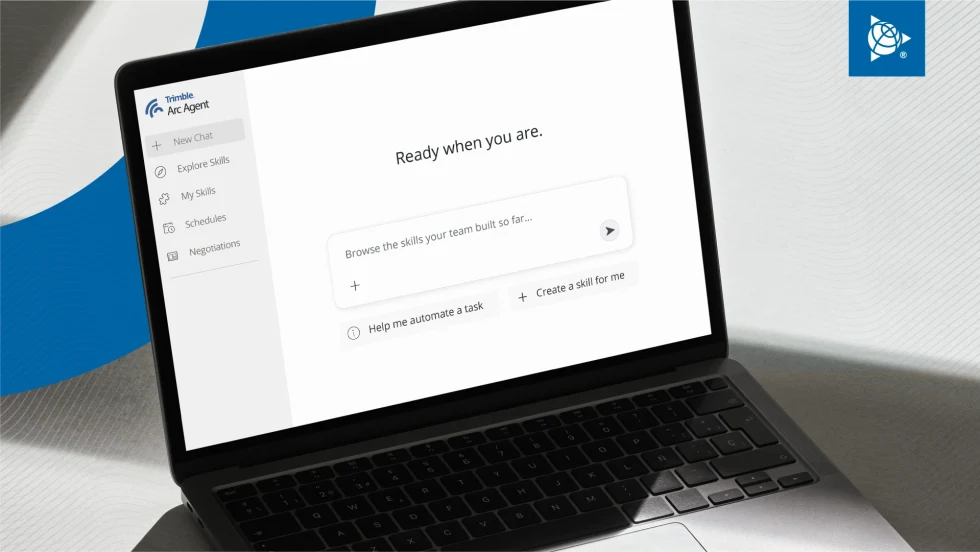
Trimble’s New AI Agent Takes Aim at Fleet Back-Office Busywork
Arc Agent works across Trimble TMS products to automate repetitive tasks such as freight orders, maintenance, invoices, fuel costs and more.
Read More →