




2012 HDT Truck Fleet Innovators: John Fershtand on Making It All Add Up
John Fershtand, director of fleet operations and energy management for Ben E. Keith Foods, is a math whiz who loves anything on wheels.

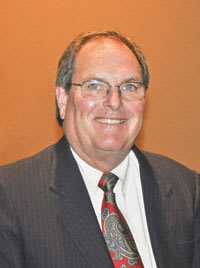
John Fershtand
John Fershtand, director of fleet operations and energy management for Ben E. Keith Foods, is a math whiz who loves anything on wheels. For the past seven years, he's applied those traits to managing the equipment at Ben E. Keith Foods in Ft. Worth, Texas.
"I tell people I'm a shade-tree mechanic with a math degree," he says. He hadn't worked in trucking before but knew one of the company's executives since childhood and watched the company's growth with interest.
"I kept asking him about how they take care of the trucks and so forth, and it wasn't well defined," he recalls. "I told him I thought a fleet that size needed to have some well-defined goals and management tools to take care of the trucks." Fershtand talked himself into a job as director of fleet operations.
Today, the fleet of about 530 trucks, mostly Freightliner M2 112s, travels about 2.6 million miles and makes more than 80,000 stops a month for food delivery. Most are day routes from distribution centers. About 10 routes are overnights with sleeper cabs.
When Fershtand started, he says, the four different shops did not communicate with one other and weren't consistent. He implemented a computerized maintenance program, Arsenault's Dossier, in all the shops. He also came up with an asset retirement plan, guidelines for how long equipment should be run to reduce the cost of maintenance and keep the fleet running in good order, "and looking like a professional fleet should," Fershtand says.
When it comes to saving fuel, aerodynamic add-ons don't do much for an operation such as Ben E. Keith's (and tend to get knocked off in tight areas, anyway.) That hasn't stopped Fershtand from working to improve the numbers.
For a food delivery operation, route optimization is a top way to keep fuel costs down. "It's probably where you can gain the most as far as using less fuel," Fershtand says. "You can do a lot of things to save a half percent of fuel, but if you knock 10 miles out of a route, you're a whole lot better off."
It's not easy. Most customers would prefer to get deliveries at a specific time, when the kitchen's not busy, but not every drop can happen between 10:30 and 11:30 every day. "Integrating customer needs and traffic, and all the other things that influence the way a daily route is run is a huge undertaking, but we're on it."
Ben E. Keith uses Roadnet software. "It requires some training and some discipline on the part of the transportation department, so once you give them a route they have to use that route," he says.
Another major improvement is the use of Carrier Vector refrigeration units with Deltek hybrid diesel-electric technology. "We own more of them as a percentage of our fleet than any other fleet in the country," Fershtand says. About 70% of the fleet uses the units. Fershtand has been buying them since they first came out four years ago.
The Vector units have all-electric refrigeration architecture. Unlike mechanical refrigeration systems, the diesel engine is dedicated to one function: driving a high-performance generator, which powers the compressor, fans and operating system. When stationary, Vector units can be plugged into an electric power source, eliminating the need to run the engine and generator.
"We think they get approximately 15% better fuel economy than the old Carrier units, and they are less problematic because they have 60% fewer moving parts," Fershtand says. "They work better. They cool down quicker."
The company is building a new facility in Houston, which will feature an infrastructure to plug in the reefer units. "If you're using electricity, the energy consumption is about 50% less," he says. "The electricity costs about half what the diesel fuel costs. Electricity, for the most part, is pretty green fuel, more so than diesel."
If the results at the Houston facility are as good as Fershtand hopes, they'll look at retrofitting the other locations.
At more than 30%, idling time was another large area to target. Now, it's less than 5%. Onboard computers track idling. Drivers initially were given incentives to help get idling time down, but now "they know if they're stopped, the engine goes off." Thermo King TripPak APUs are used on the sleeper trucks.
Meritor Tire Inflation Systems by PSI are used on all the trailers, and two branches use nitrogen generators to fill tires instead of regular air. One branch uses wide-base single tires, and the others use low-rolling-resistance tires.
"The biggest enemy of tires is low inflation, so anything you can do that maintains proper tire inflation helps," he says. "It helps fuel economy and helps the tires last longer."
Fershtand is also happy with the better fuel economy of EPA-2010-compliant engines and plans to buy about 200 this year.
For the future, they're looking at natural-gas-powered tractors. "We are exploring the opportunities there and expect to be in that environment in the next two to five years. The OEMs are getting into it instead of the aftermarket retrofits, and that's one of the things we've been waiting on.
"Now that the OEMs have become a game player in the industry, and there's more and more delta between the cost of a gallon of diesel fuel and the equivalent of natural gas, it becomes more and more incentive. And the [fueling] infrastructure is continuing to grow."
A few years ago, Fershtand also took over energy management when Ben E. Keith learned of another company that changed out all the lighting in its warehouse and got a rebate from the utility company. Fershtand's boss asked him to investigate how Ben E. Keith could do the same.
"We changed out the lighting in every one of our six warehouses and saved more than a million dollars a year in utility bills." That's when he took on the additional title of director of energy management. "I was doing fossil fuels anyway, diesel fuel and gas at the general office level, so I took over the monitoring of all the energy use at that point."
The incident, he says, illustrates that "as businesses have become more mature and as margins get tighter and tighter, there's not a line on an operating statement that doesn't need to be managed."
More Fleet Management

How Telematics Improves Visibility, Control, and Performance in Refrigerated Fleets
Explore how telematics help refrigerated fleets improve visibility, uptime, efficiency, compliance, and cargo protection across connected cold chain operations.
Read More →
What the U.S.-Canada Trade War Means for Trucking
Escalating U.S.-Canada tariffs could disrupt cross-border freight, reduce truck volumes, raise costs, and create new uncertainty for carriers on both sides of the border.
Read More →
What Are Trucking’s Top Concerns for 2026?
The American Transportation Research Institute wants to know what's worrying trucking fleet managers, drivers, and other stakeholders in its annual Industry Issues survey.
Read More →

American Trucking Associations Looks for a New Leader
ATA President and CEO Chris Spear abruptly left his job at the association on August 21, at a pivotal time for the trucking industry.
Read More →
Public Wi-Fi Cybersecurity Risks: How Truck Drivers and Fleets Can Protect Their Data
Public Wi-Fi can expose truck drivers and fleets to credential theft, malware, and other cyber threats. Here’s how to reduce the risk on the road.
Read More →
For Nicky Cupp, Fleet Innovation Starts With Frustration
HDT Truck Fleet Innovator Nicky Cupp turns everyday pain points at Fraley & Schilling into opportunities for better technology and smarter processes.
Read More →
Adam Buttgenbach’s Approach to Electric Trucks: Start With Where They Fit
HDT Truck Fleet Innovator Adam Buttgenbach helped PepsiCo build one of North America’s largest EV fleets by focusing on where electric trucks make operational sense.
Read More →
Deen Albert: Let Automation Do the Math, People Make the Decisions
HDT Truck Fleet Innovator Deen Albert makes sure people are still at the heart of operations at Grand Island Express, even while adopting artificial intelligence tools. AI-assisted dispatch helped boost revenue 25% with the same number of trucks.
Read More →
Trimble’s New AI Agent Takes Aim at Fleet Back-Office Busywork
Arc Agent works across Trimble TMS products to automate repetitive tasks such as freight orders, maintenance, invoices, fuel costs and more.
Read More →
How HDT’s 2026 Truck Fleet Innovators Are Rethinking Fleet Operations
Meet five trucking leaders who are challenging assumptions, solving operational problems, and putting innovative ideas to work.
Read More →