




2007 Truck Market: Buy, Lease or Wait?
New emissions technology will most likely hurt sales, but full-service leasing could do well.
U.S. truck manufacturers came into 2007 braced for a bad year. New emissions rules – and the higher price tag for compliance – prompted many new truck buyers to shift trades and replacements from 2007 to 2006. At the same time, truck dealers stocked up on '06 technology trucks. Thus Class 8 production soared last year and is expected to fall off sharply in 2007. But nobody is quite sure when and how buyers will come back.
Industry analysts estimate the "pre-buy" at around 55,000 units. A large chunk of those went into big for-hire fleets. "Generally, large truckload carriers pre-bought the most because the cost and efficiency of equipment is most critical to their profitability," explained Peter Nesvold, a transportation analyst with Bear Stearns. "Smaller fleets might not have had the capital to pre-buy. The economics of pre-buying don't make sense to some private fleets who own trucks for 10-plus years. And less-than-truckload carriers were somewhere in between the TLs and private fleets."
Maverick Transportation has several hundred 2007 model year trucks with pre-2007 technology. In the third quarter they'll start taking delivery of trucks with 2007 engines.
"We've kind of taken a little more conservative approach than historically because we jumped in with both feet in 2003," said Chairman and CEO President Steve Williams, referring to the last emissions changeover. "I'm a firm believer in 'let's not change our trade pattern, let's just get it over with and move on.'"
C.R. England bought 1,600-1,700 new trucks last year and will buy far fewer this year, but Chairman Dan England said that pretty much follows their normal buying pattern. "It just so happens that we purchase on three cycles and one of our cycles is way bigger than the other two," he explained. Fortunately, 2007 is a small buy year. So is 2010 when emissions must meet even tougher emissions standards.
In a fourth quarter survey done by CK Commercial Vehicle Research, a little over half of fleets responding said they planned to order trucks with 2007 EPA-complaint engines before the end of the year. About a third of that group said their orders would likely be placed before the end of March. Researchers said data indicated a stronger demand from private fleets than for-hire or vocational fleets. They also noted that 49 percent of respondents said they had no plans to buy '07 EPA engines until 2008 or later.
"It's going to be a buyers market," predicted owner-operator Dave Sweetman. The veteran trucker (who also writes a column for Newport's RoadStar magazine) can't be considered a typical buyer. When he puts together a new truck he starts with a daycab and long frame rails to accommodate extra-large custom sleepers. He transports expensive sports cars and vintage vehicles for Horseless Carriage and his meticulously maintained rig routinely draws admiring inspections from celebrities like Jay Leno.
But Sweetman is also an astute negotiator who is "thinking seriously" about a 2008 model year Kenworth with an EPA '07 compliant Cummins engine. "I'm waiting on some of the incentives," he said. As the year progresses – and if sales remain soft – he expects manufacturer and dealer incentives will wipe out most or all of the emissions-related price increase. He also thinks engine manufacturers will throw in extended warranties at no extra cost and other component makers may be willing to further sweeten the deal. If not?
"There's no big hurry," he said. "My truck is a little over 4 years old and it still looks and runs like brand new."
As of early February few suppliers had publicly announced discounts. Nesvold said some manufacturers were offering incentives – mostly special financing – to spur dealer orders, but they didn't expect to see many manufacturer purchase incentives aimed directly at fleets. And instead of extended warranties, they expected uptime guarantees from engine makers.
At least early in the year buyers still had a shot at getting into trucks with pre-2007 engines. Citing statistics from A.C.T. Research, Nesvold estimated there were about 40,000 pre-2007 engines in the supply chain at the end of 2006 and a little more than 59,000 Class 8 trucks in inventory. "In all, that's roughly 100,000 '06-technology trucks that fleets will need to absorb," he said.
It may not be too late for some who didn't pre-buy, but availability doesn't necessarily drive sales. The owner of a small flatbed fleet confided that he'd been doing a little last-minute shopping, but was stopped short of buying by one simple fact: "We don't have the freight so we don't have the money," he said.
Chuck Hammel, president of Pitt Ohio Express said "of course" they pre-bought trucks last year. Like most, they're concerned about the cost and performance of the new engines, but that won't stop them if new equipment is needed this year.
"You just don't order equipment for the heck of it," he said. "It depends on what the economy is like."
As of early February the picture was starting to look a little brighter, but fourth quarter 2006 was "one of the most challenging freight environments in recent memory," said Swift Transportation President and CEO Robert Cunningham in the company's financial reports. Along with downturns in the housing and automotive markets, he blamed the rough quarter on pre-buying, which added capacity at a time when demand was slowing.
Werner Enterprises also noted an increased supply of trucks in the company's primary markets. The accelerated purchase of new trucks "disrupted the supply and demand balance in the second half of 2006, contributing to a more challenging freight market for truckload carriers," the company said. Increased capacity led to lower rates for spot market freight (i.e. freight not hauled under contract) in the truckload market. Or as Werner put it, "the pendulum for spot market pricing swung from truckload carriers to shippers."
"It's disruptive to the market when you've got these huge pre-buys taking place," noted England. "That's one of the things that create overcapacity and we're victims of that right now." But he and many others believe the problem is short-term. "I think things are fundamentally sound, and I think we'll get through this overcapacity by the end of the year." Perhaps, he added, the truckload segment will even find itself in another undercapacity situation.
Trucking didn't get the seasonal bump it has come to count on every fall, which caused some speculation that many smaller, financially borderline carriers would close their doors. Bear Sterns' trucking company bankruptcy index showed a spike in filings during November, when the American Trucking Associations' for-hire freight index dropped 8.8 percent, but filings moderated during December when the ATA index showed improvement. "But even in November filings were 25 percent lower than they were in January 2000," Nesvold pointed out. "So bankruptcies have been gradually increasing but are still meaningfully better than they were late in the 1990s cycle."
Although there was some pull-ahead buying by vocational fleets (construction, refuse, logging, etc.), it wasn't as extensive as it was among the large, highway carriers, said Mack spokesperson John Walsh. "Customers in vocational applications generally retain and utilize their trucks for a longer period of time."
For them, too, the economy is the overriding concern. The owner of one small Oregon logging company bought new trucks and other equipment over the past few years mainly to take advantage of tax incentives. A recent slump in timber prices, coupled with higher interest rates, now has him struggling to keep up with the payments. "Our interest rates have gone from 6 percent to 8 percent," he noted. "For a company like ours, that's a lot of money."
THE LEASING OPTION
One industry segment that may come out on the plus side of this technology changeover is leasing.
"If I had a private fleet, I'd lease right now. I wouldn't want to take the risk," said Hal Booth, senior vice president, PHH First Fleet, a Florida-based company that provides asset management and financial services to private fleets.
One consideration is resale values. Lease contracts are priced, in part, on estimated residual value. Under most arrangements if the equipment sells for less than expected, the leasing company swallows the difference. That's one selling point for leasing, but the bigger issues are maintenance costs and capacity.
"The manufactures like to say these new engines are as solid as pre-emissions engines, but there's no doubt that more maintenance will be required," noted Lance Bertram, vice president, Idealease. Full-service lessors will bump their maintenance rates slightly on the new trucks, basing their estimates on maintenance and repair information provided by engine makers and truck manufacturers. "That's the best case situation," said Bertram. "If something happens with those engines that the manufacturers don't foresee, we'll have some unsettling rising costs."
Full-service leasing and even maintenance contracts can isolate truck users from those maintenance surprises; it can also get them into well-staffed, well-equipped shops.
"Every time we see a technology shift we also see a lot of fleets reassessing their business model to decide if they want to stay in the truck maintenance business," said Olen Hunter, director of sales for Paccar Leasing. "The cost associated with equipping shops and training technicians can increase significantly with major new technology."
"It's getting more and more complicated to run your own fleet," noted Todd Renehan, executive vice president, sales and marketing for Ryder Fleet Management Solutions. It's getting harder and harder to find technicians, training is expensive, new diagnostics tools are needed, and shops must comply with strict environmental regulations. "As complexities increase that's good for us," he adds. "It's what we do for a living."
More Fleet Management

How Innovative Trucking Leaders Turn Change Into an Advantage
As the pace of change accelerates in trucking, the fleets that adapt best have more than the latest technology. They have cultures that embrace improvement.
Read More →
Freight Broker Bonds Just Got Harder to Get. Here's What That Means for Your Fleet.
When it gets harder for a freight broker to prove they are financially sound, the ones who cannot clear that bar get pushed out of the market. And those are exactly the brokers who used to leave motor carriers holding the bag.
Read More →
Long-Awaited Canadian Border Bridge to Open in Detroit
For trucking, the bridge opening should offer immediate improvements in efficiency and reliability, with new customs facilities, expanded inspection capacity, and direct freeway-to-freeway connections.
Read More →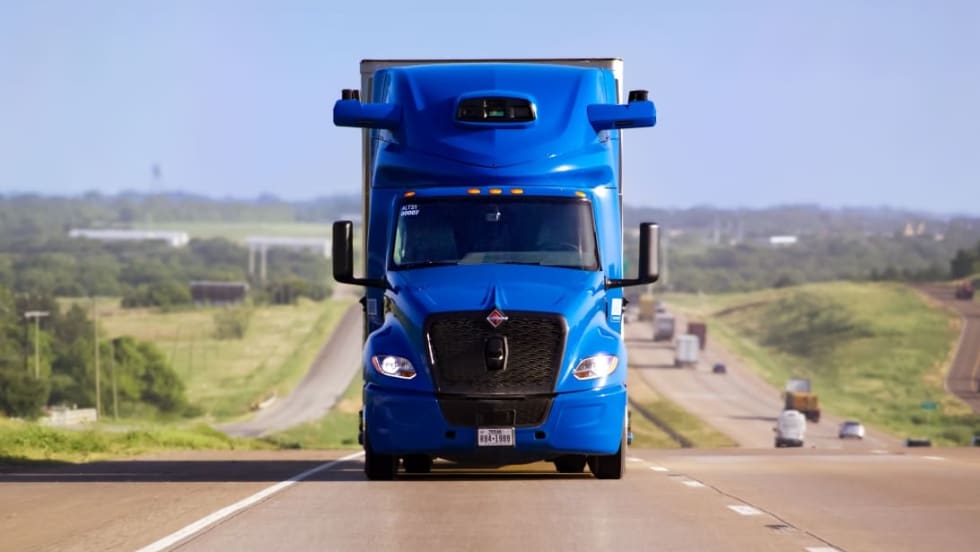
Aurora Rolls Out Next Generation of Driverless Trucks for Commercial Freight
Aurora's latest autonomous trucks it's rolling out with International feature lower-cost hardware designed for a million miles as the company expands commercial driverless freight operations across the U.S. Sun Belt.
Read More →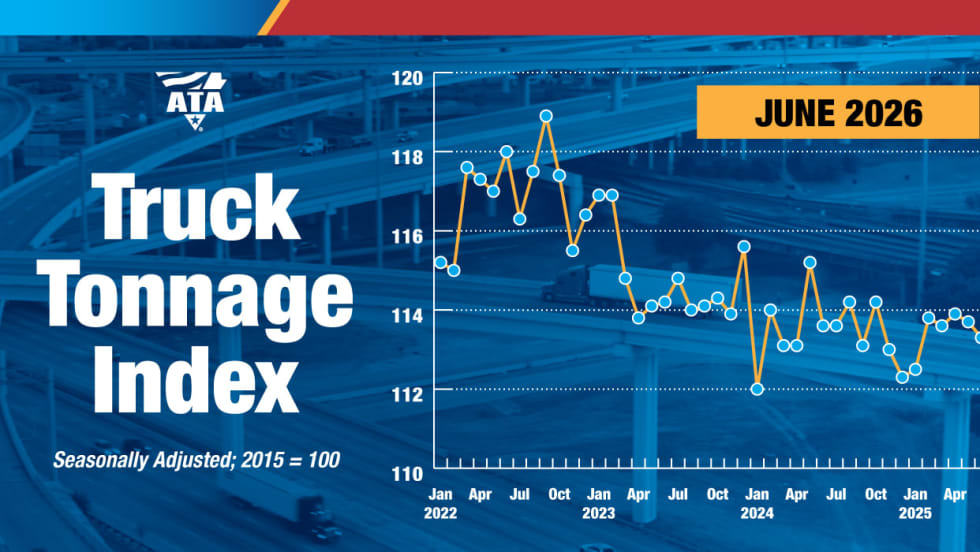
Freight Tonnage Down, Rates up, as Lower Capacity Powers Trucking Recovery
The recovery from the freight recession continues to be driven by reduction in capacity rather than by increased demand.
Read More →
Think Your Trucking Fleet Isn't Using Much AI? Think Again
Shadow AI — the use of unauthorized artificial intelligence tools at work — is becoming increasingly common, putting sensitive company data at risk. Learn how trucking fleets can protect sensitive data while embracing AI.
Read More →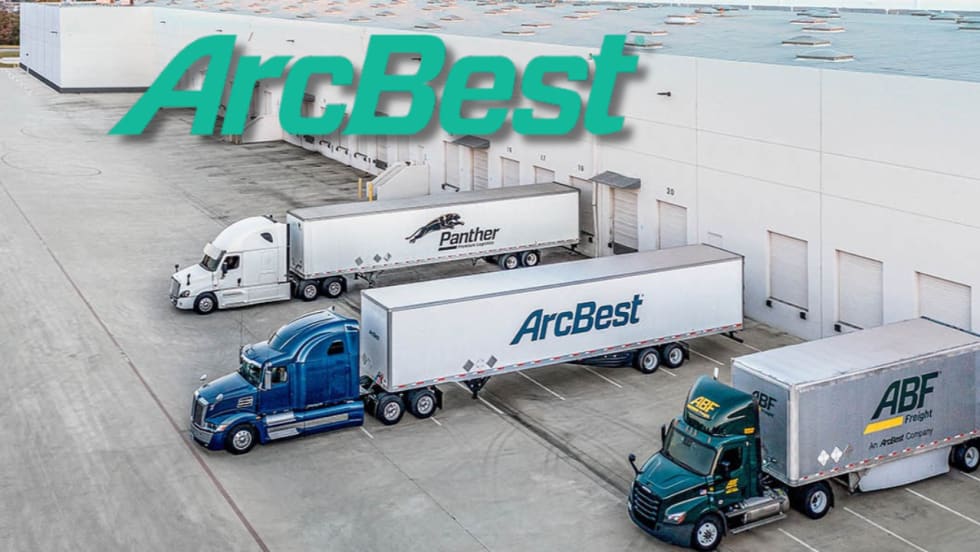
ArcBest Consolidates Brands, Cuts Workforce
The company will bring three business units under the ArcBest brand, eliminate about 2% of positions, and expects the changes to generate $40 million in annual savings.
Read More →
Trucking Fleets Faced Record Operating Costs During Third Year of Freight Recession
ATRI's annual operational cost report shows carriers trimmed fleets, delayed equipment purchases, and ran older trucks as expenses continued to outpace freight rates.
Read More →
Michelin Adds AI Assistant to MyConnectedFleet Platform
Michelin’s new generative AI tool delivers instant fleet insights, helping managers analyze fuel use, tire maintenance, vehicle status, and operational performance without manually creating reports.
Read More →
LytxOne Platform Now Features AI, Compliance, and Asset Tracking Tools
New enhancements add AI-powered insights, asset tracking, compliance automation, and configurable privacy controls to Lytx's all-in-one fleet management platform.
Read More →