



Related:
Answers to Questions about COVID-19 Emergency Declaration for Trucking Relief Supplies
FMCSA Offers More Answers to Questions on COVID-19 Hours of Service Exemption
 MENU
MENU SEARCH
The Federal Motor Carrier Safety Administration has expanded through June 14 its emergency declaration relaxing hours-of-service and some other rules for drivers transporting “relief” loads for COVID-19.
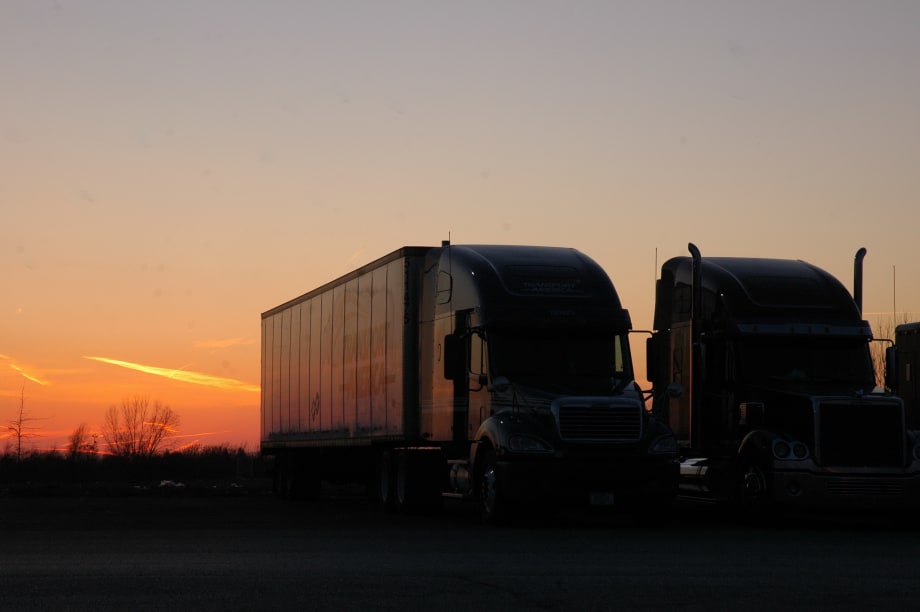
Many fleets that are eligible to use the COVID-19 emergency hours-of-service exemption are choosing not to.
Photo: Jim Park
The Federal Motor Carrier Safety Administration has expanded through June 14 its emergency declaration relaxing hours-of-service and some other rules for drivers transporting “relief” loads for COVID-19.
The new emergency declaration explains that a national emergency continues to exist that warrants extension of Emergency Declaration No. 2020-002, which was issued on March 13, expanded on March 18, and extended and further expanded on April 8.
The April 8 extension was due to expire on May 15; this new extension continues the exemption granted from Parts 390 through 399 of the Federal Motor Carrier Safety Regulations (FMCSRs) through June 14, or until the revocation of the presidentially declared COVID-19 national emergency.
Motor carriers and drivers providing direct assistance in support of relief efforts related to the COVID-19 national emergency are granted emergency relief from Parts 390 through 399 of the FMCSRs. The notice explains that direct assistance means transportation and other relief services “incident to the immediate restoration of essential services (such as medical care) or essential supplies (such as food and fuel) related to COVID-19 during the emergency.”
That includes transportation to meet immediate needs for:
medical supplies and equipment related to the testing, diagnosis and treatment of COVID-19;
supplies and equipment necessary for community safety, sanitation, and prevention of community transmission of COVID-19 such as masks, gloves, hand sanitizer, soap and disinfectants;
food, paper products and other groceries for emergency restocking of distribution centers or stores;
immediate precursor raw materials -- such as paper, plastic or alcohol -- that are required and to be used for the manufacture of items in the first three categories above;
fuel;
liquefied gases to be used in refrigeration or cooling systems;
equipment, supplies and persons necessary to establish and manage temporary housing, quarantine, and isolation facilities related to COVID-19.
The agency notes that direct assistance does not include routine commercial deliveries, including mixed loads with a nominal quantity of qualifying emergency relief added to obtain the benefits of this emergency declaration.
HDT COVID-19 research conducted in late March/early April indicated that many fleets were not taking advantage of the emergency declaration. Only a small number of survey respondents said they were using it extensively – 5%. About a quarter, 27%, were using it on a limited basis, while another quarter were not using it at all; 42% said it was not applicable to their business.
When asked why they were not taking advantage of the relief, many explained that they didn’t really need it. Their deliveries were local or regional, they were running teams, or they were able to make the needed deliveries within the normal hours of service – one pointing out that the absence of congestion makes this more possible than ever.
Many cited safety, enforcement, and liability reasons. Others said they didn’t want to over-work drivers. Another said they didn’t want drivers to basically learn bad habits that would be hard to reverse once the exemption was over.
As an example, in an interview, Werner Enterprises CEO Derek Leathers told HDT, that as a rule, the company has not taken advantage of it. "We have in fact hauled roughly a handful, I believe it was six shipments total out of 3 million miles a day that we deliver, that were truly, truly 'relief' in the true essence of the word. So if it was a load of ventilators that somebody was desperately waiting on, then in those cases we have utilized it. But as a general rule, we would like our drivers to be within the normalized hours of service with proper rest."

After three decades in trucking, Harold Perry shares what he's learned about driver safety, mentorship, and helping the next generation build confidence behind the wheel.
Read More →
Carriers whose updates were due on or after June 1 have more time, while FMCSA works to stabilize its new registration system and warns of phishing sites impersonating its new carrier registration system, Motus.
Read More →
ZF is expanding its North American commercial-vehicle presence with new transmission applications, electrification, trailer technology and autonomous-driving systems.
Read More →
Fleets have more visibility into truck health, safety events, and driver activity than ever. The next challenge is turning all that information into useful guidance for the person who has to decide what to do next.
Read More →
Could Tesla’s camera-only autonomous driving technology work on an 80,000-pound Semi? In this commentary, HDT's Deborah Lockridge takes a look at Tesla, Cybercab, and how autonomous trucks see the road.
Read More →
The U.S. Department of Transportation issued a new automated-vehicle strategy that outlines plans for driverless-truck regulations, cross-state freight corridors, and federal safety standards.
Read More →
New York City is expanding intelligent speed assistance and pedestrian-alert systems across its municipal fleet, moving the technologies from pilot programs into vehicle procurement and retrofit requirements.
Read More →
Federal regulators also are targeting more than 160 additional training providers and launching a nationwide audit of third-party CDL skills testers as part of a broader crackdown on trucking fraud.
Read More →
A trucking fleet can follow every rule and still make unsafe decisions. The real test comes when safety conflicts with freight, productivity, or cost.
Read More →
Two pilot programs could eventually reshape hours-of-service rules, giving truck drivers options to pause their 14-hour clock or use longer split sleeper rest periods.
Read More →