




TSA Moves to Streamline Hazmat Endorsement Process
The U.S. Transportation Security Administration is working to allow drivers with a valid Transportation Worker Identification Credential to obtain a hazardous materials endorsement without additional security checks.

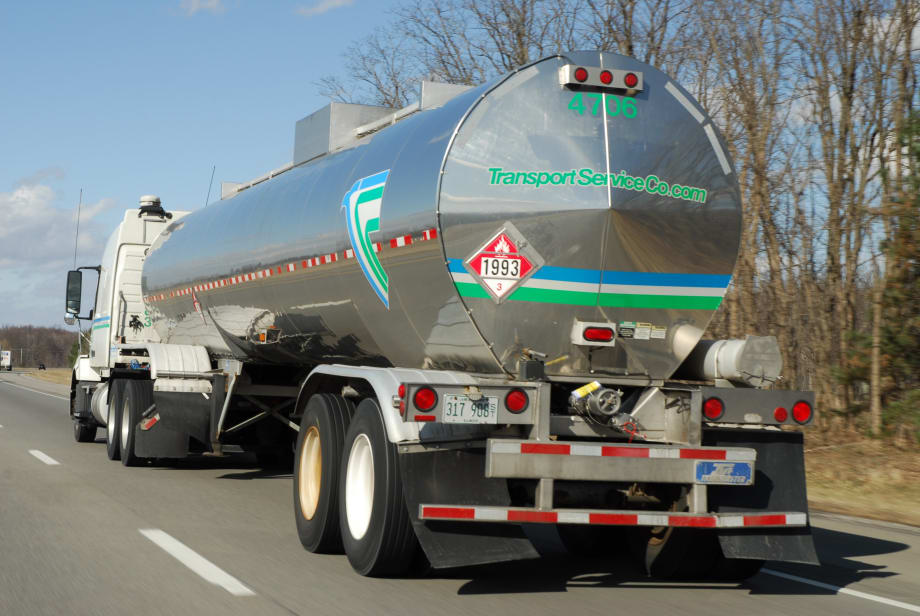
The American Trucking Associations is applauding a move by the Transportation Security Administration to streamline the HAZMAT endorsement process for drivers.
Photo: Jim Park
The Transportation Security Administration has issued an interim exemption that will allow drivers with a valid Transportation Worker Identification Credential (TWIC) to obtain a hazardous materials endorsement without going through additional security checks.
The TSA Modernization Act passed in October 2018 allows states to issue a hazmat endorsement on a state-issued CDL to a driver who holds a valid Transportation Worker Identification Credential. This provision allows states to use the existing TWIC to verify the completion of the TSA security threat assessment.
The exemption will go into effect until TSA can amend the pertinent regulations to conform with the TSA Modernization Act. TSA said until the process to revise the regulations is complete, it is necessary to issue this exemption so that drivers can comply with the new statutory language and remain in compliance with TSA’s regulations.
Under current law, cited in the 2001 anti-terrorism Patriot Act, no state may issue a hazmat endorsement for a commercial driver’s license until TSA notifies the state that the applicant does not pose a security threat. It also requires TSA to conduct a security threat assessment consisting of criminal, immigration, and terrorism checks. Hazmat applications also must provide biographic and biometric information to TSA.
But the TSA Modernization Act allows TSA to grant an exemption from those regulations if the administrator determines the exemption is in the public interest. TSA said it has has determined that it is in the public interest to grant an exemption from certain hazmat regulations when an applicant holds a valid TWIC.
With this new exemption, individuals with a valid TWIC may now forego the submission of information, biometrics, and fees to TSA because the individual is deemed to have already completed the appropriate security threat assessment.
The American Trucking Associations said in a statement that it applauded TSA taking what it called a “long overdue, but important,” step. “The announcement by TSA that they will now allow drivers with a TWIC to more quickly and easily receive a hazmat endorsement eliminates costly and duplicitous background checks for drivers,” said Dan Horvath, vice president of safety policy. “ATA has long urged federal agencies to eliminate these redundant background checks for drivers, notably the Transportation Worker Identification/hazmat issue.”
In 2018, ATA, said it, along with National Tank Truck Carriers, submitted comments to the Federal Motor Carrier Safety Administration regarding the issuance of a hazardous materials endorsements. As part of these comments, ATA and NTTC urged the agency to modify the requirements on states for issuing hazmat endorsements to align with federal law. Specifically, ATA and NTTC requested the agency acknowledge language in the Federal Aviation Reauthorization Act of 2018, which explicitly empowers states to issue hazmat endorsements to drivers who already hold a valid TWIC.
“We appreciate TSA making this commonsense change, a change that will keep our highways safe while reducing the administrative burden on drivers and costs to our industry,” said Horvath.
More Safety & Compliance
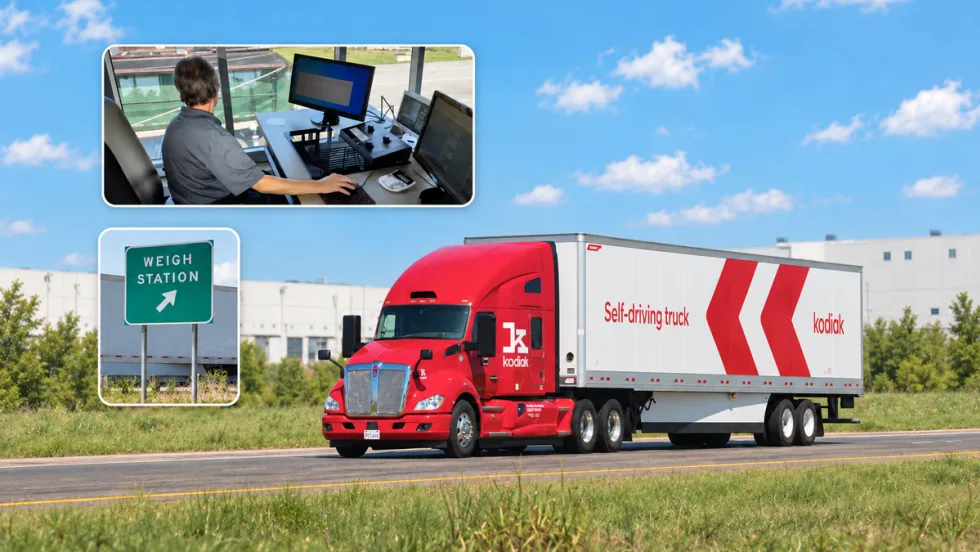
PrePass, Kodiak Connect Driverless Trucks to Roadside Enforcement
The system will allow enforcement agencies to verify Enhanced Inspection information and decide whether Kodiak’s autonomous trucks can bypass roadside screening sites.
Read More →
From One Generation to the Next: How Mentorship Builds Safer Truck Drivers
After three decades in trucking, Harold Perry shares what he's learned about driver safety, mentorship, and helping the next generation build confidence behind the wheel.
Read More →
FMCSA Pauses Biennial-Update Enforcement Amid Motus Transition
Carriers whose updates were due on or after June 1 have more time, while FMCSA works to stabilize its new registration system and warns of phishing sites impersonating its new carrier registration system, Motus.
Read More →
ZF Expands Commercial Vehicle Push in North America
ZF is expanding its North American commercial-vehicle presence with new transmission applications, electrification, trailer technology and autonomous-driving systems.
Read More →
Truck Drivers Need More Than Another Alert
Fleets have more visibility into truck health, safety events, and driver activity than ever. The next challenge is turning all that information into useful guidance for the person who has to decide what to do next.
Read More →
Tesla Wants a Self-Driving Semi. Are Cameras Enough?
Could Tesla’s camera-only autonomous driving technology work on an 80,000-pound Semi? In this commentary, HDT's Deborah Lockridge takes a look at Tesla, Cybercab, and how autonomous trucks see the road.
Read More →
What DOT’s Automated Vehicle Strategy Means for Trucking
The U.S. Department of Transportation issued a new automated-vehicle strategy that outlines plans for driverless-truck regulations, cross-state freight corridors, and federal safety standards.
Read More →
NYC Expands Speed, Pedestrian Safety Tech Across Fleet
New York City is expanding intelligent speed assistance and pedestrian-alert systems across its municipal fleet, moving the technologies from pilot programs into vehicle procurement and retrofit requirements.
Read More →
FMCSA Removes 110 Truck Driver Training Schools from Certified ELDT List
Federal regulators also are targeting more than 160 additional training providers and launching a nationwide audit of third-party CDL skills testers as part of a broader crackdown on trucking fraud.
Read More →
Beyond DOT Compliance: What Makes a Trucking Fleet Truly Safe?
A trucking fleet can follow every rule and still make unsafe decisions. The real test comes when safety conflicts with freight, productivity, or cost.
Read More →