




Understanding Disc-Brake Maintenance
One of the most important factors to consider about air disc brakes is that they require ongoing maintenance, like any other brake.
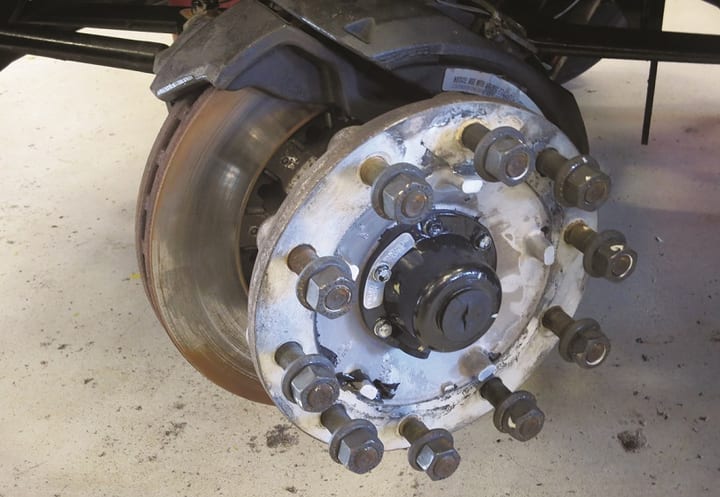
One of the most important factors to consider about air disc brakes is that they require ongoing maintenance, like any other brake.
Photo: Deborah Lockridge
There seems to be no stopping the rollout of disc brakes.
The stopping systems that emerged as an option for most OEMs around 2008 had become standard on steer axles by 2012, said Freightliner On-Highway Product Manager Kenton Mitchell, speaking at February’s annual meeting of the Technology & Maintenance Council in Atlanta.
Then their use continued to expand as collision-mitigation systems were introduced, and by 2018 four OEMs were offering air disc brakes on steer and drive axles.
While 5% of trucks were equipped with these brakes in 2010, the take rate on new Class 8 trucks is closer to 25%. He expects that share to exceed 50% by 2025.
Mitchell said, “It’s more, ‘How fast is it going to increase than how high is it going to go?’” That could be a good thing. The brakes are more responsive, will reduce brake steer, and shorten stopping distances.
Drum brakes on the steer and drive axles will meet the Federal Motor Carrier Safety Administration’s requirement to stop within 250 feet at 60 mph. Put air disc brakes on the steer axle alone, and the stopping distance improves by five feet. Across the steer and drive axles, about 15 feet will be saved. When they’re combined across the entire tractor-trailer, the stopping distance is shortened by 20 feet.
Still, there are challenges. The brakes are heavier than drums, and they have a higher initial purchase price. Users need to understand the total cost of ownership for their specific applications, Mitchell said. He also referred to the natural resistance to change, and the fact that users are simply more familiar with drum designs.
At the shop level, one of the most important factors to consider is that air disc brakes still require ongoing maintenance.
“Disc brakes are not maintenance-free any more than your drum brakes were,” said Jim Boyd, manager of fleet technical services at Southeastern Freight Lines, which now has discs on 30% of its tractors and 11% of its van trailers.
Inspections are required just as often, he said, stressing the importance of monitoring rotors and pads, to ensure there’s always enough friction material to protect the rotor.
“Pay close attention to the pads and pad life. A pad that gets into the rotor is a very expensive proposition – not just from a parts perspective, but from labor, wheel seal, and potential bearing cost,” he said.
“Some manufacturers offer tooling that is used to do wheel-on inspections,” Boyd added, noting that they may display measurements such as remaining rotor thickness and a percentage of the remaining brake pad. Other systems incorporate visual keys for the carrier and rotor.
“The measurement process of the components is more precise for disc brakes compared to drums,” he said.
Boyd listed several factors that need to be considered when working on disc brakes: Caliper adjustment testing; guide pins and boots; tappets and boots; pad thickness from one end of the pad to the other; the condition of the inside pad compared to the outside pad, and the condition and thickness of the rotor.
Like any maintenance work, it also requires a particular set of tools.
Much can be accomplished with normal hand tools and leather gloves, a wheel-on inspection tool, caging tool, and torque wrench. Feeler gauges, a dial indicator and base, small inspection mirror and light, and a digital slide caliper for measuring the thickness of the rotors and pads will round out the kit.
Hubs and rotors are heavy, Boyd added, stressing the importance of a special jack assembly for removing the assembly.
When it comes to overhauling the caliper, some manufacturers offer tooling kits for the work. Boyd’s fleet has decided to replace existing calipers rather than working on them in-house.
“With 27 shops, we have determined that it was not cost-effective to tool-up, train and then rebuild the calipers,” he said. “Our belief is that the incidence of failure on the caliper will be low.”
Initial training in the shop should focus on system identification, inspection procedures, and the replacements of brake pads, rotors and calipers, he said.
Southeastern Freight Lines has had a positive experience with the brakes overall. The inspections and pad replacements are “normal”, he said. A few caliper replacements could be traced to a frozen adjuster, water in a caliper, and unseated or torn silicon boots. A limited number of rotor replacements were mostly due to friction material that was allowed to wear down too far.
“Even if the brakes cost a little bit more, consider that lower total cost of ownership and consider how these new units will integrate into your fleet,” Boyd said. “What value can be placed on a vehicle that will stop more rapidly? That’s hard to quantify.”
More Maintenance
Oil Crisis Squeezes Trucking Lubricant Supplies
Fleets report higher lubricant costs as Middle East disruptions tighten supplies of ingredients used in synthetic engine oils and some driveline lubricants.
Read More →
Shell Prepares Rotella Oils for 2027
New CL-4 and FB-4 formulations will begin arriving in early 2027, with improved protection against oil breakdown, wear and deposits, according to Shell.
Read More →
Mack Expands Extended Coverage With Four Chassis System Plans
Mack Trucks' new system-specific coverage options allow heavy-duty fleets to select protection for driveline, cab, HVAC, electronics, and advanced safety components.
Read More →
What an Out-of-Service Order Really Costs, and How to Plan for One
The repair invoice is the first number you see — and often one of the smallest. Here’s what else an out-of-service order can cost a fleet, and how planning can reduce the damage.
Read More →
International Launches Online Truck Parts Store
Fleetrite.com lets fleets and repair shops find OEM and all-makes parts, check prices and availability, and order without calling a parts counter.
Read More →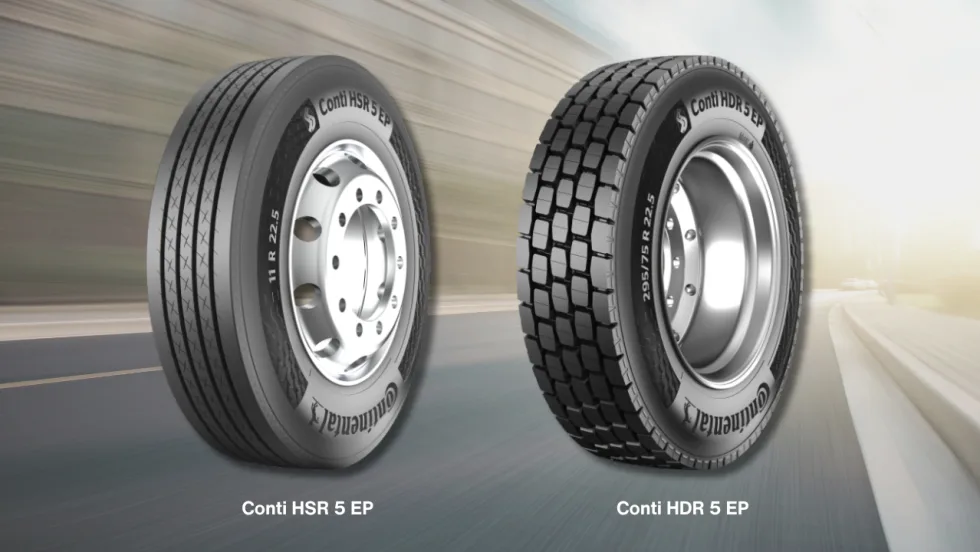
Continental Introduces New Regional Truck Tires
Continental says its new Generation 5 steer and drive tires for regional operations offer longer tread life, with estimated mileage gains of 22% and 19%, respectively.
Read More →
How AI Can Help Your Techs’ Efficiency
The technician shortage isn't going away, and no single fix can close the gap on its own. Trent Broberg makes the case that AI's real job in the shop is protecting the billable hours and job satisfaction of the techs you already have, not asking them to work faster.
Read More →
Color Match Smarter: Tools That Restore & Perform
For fleet managers and collision repair professionals keeping heavy-duty trucks on the road, getting the color right the first time isn't just about appearance — it's about efficiency, turnaround time, and bottom-line results. Discover how today's digital color tools are transforming the repair process from guesswork to precision.
Read More →
Wrong Repair Prompts Recall of Freightliner, Western Star 4x2 Trucks
DTNA is recalling more than 2,400 trucks that received an incompatible software fix instead of the hardware repair required to address brake valve corrosion.
Read More →
Truck Drivers Need More Than Another Alert
Fleets have more visibility into truck health, safety events, and driver activity than ever. The next challenge is turning all that information into useful guidance for the person who has to decide what to do next.
Read More →