





Related – Diversification in Disruptive Times: How Four Fleets are Doing It [Intro]
PGT Gives Customers One-Stop Shopping
Part 4: How 4 Fleets are Diversifying in Disruptive Times – Specialized carrier PGT Trucking launched a “single-source transportation solution for high-volume or complex project cargo.”
February 12, 2020
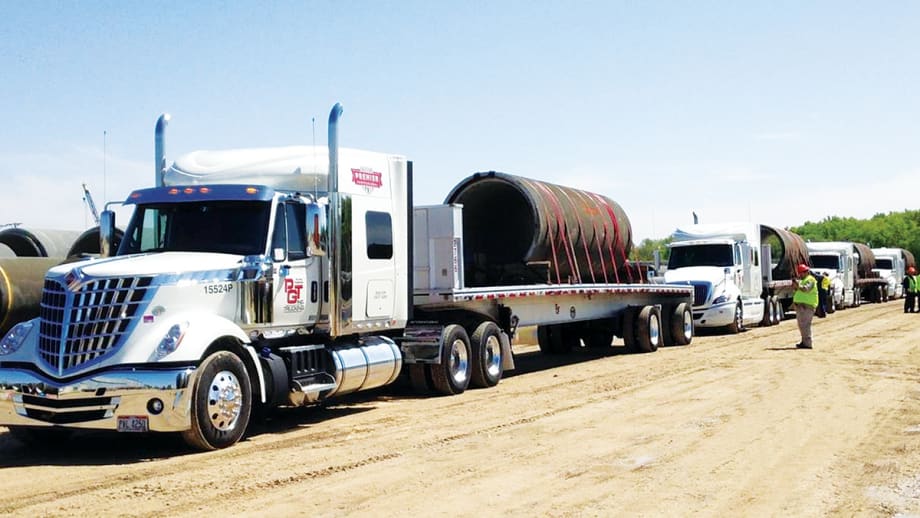
PGT’s new operation moves high-volume, heavy, valuable, or multifaceted freight with multiple shipments using flatbeds and specialized equipment.
Photo: PGT Trucking
3 min to read
Editor's note: This is the final installment in a four-part series looking at how fleets are seeking to diversify their businesses and reach new customers in a time of technological and commercial disruption.
Already a diverse operation offering flatbed, dedicated, international, and other specialized hauling services, PGT Trucking diversified right out of the trucking box by launching a “single-source transportation solution for high-volume or complex project cargo.”
Launched formally last June, PGT’s Project Cargo Management Division bundles the expertise and services of PGT and its affiliated companies, including heavy-haul and cryogenic-tank carrier Southern Pines Trucking, to move high-volume, heavy, valuable, or multifaceted freight with multiple shipments using flatbeds as well as a variety of specialized equipment.
The Aliquippa, Pennsylvania-based firm, whose primary operation fields over 1,000 tractors, 1,000 flatbeds, and 500 specialized trailers to haul freight in the U.S. and cross-border into Canada and Mexico, describes these projects as “packaged movements” set up to supply large, complex jobsites located throughout the country.
“The Project Cargo Management Division was created because we listened to our customers,” says Chad Marsilio, vice president, Commercial. When a project is complex enough that 30 or more loads per day must be delivered to a job site, he explains, customers prefer to coordinate through one transportation provider.
Each cargo-management project is as unique as the construction job it serves, says Bill Hershey, director of the Project Cargo Management Division. “A project can run from hauling loads of pipe for shale-oil operations in Pennsylvania and Ohio to delivering over 10,000 legal and specialized loads to the job site for a chemical plant being built near Pittsburgh.
“A project can last for several years with high intensity, and then it’s done and another one starts,” he continues. “We usually have three or four projects going on at a time. Depending on the scope, some will last three weeks, some for a year or more.”
Hershey says PGT had been doing project management for some time, “and realized we do it well. Our customers like that it’s one-stop shopping. Our drivers like it, too. That it’s work out of the norm for them helps us with driver retention.”
Carrying out a cargo project involves long-range planning as well as on-site management to ensure a safe and orderly process from start to finish. Along with dispatching primarily PGT’s own equipment, the division might set up staging yards near a construction site, put together trailer pools, and provide safety and operations personnel to oversee everything coming into the site, including delivery windows.
“We find ways to provide solutions to our customers regardless of location,” says Hershey. “Last year, we delivered over 300 loads of structural steel to a university in Boston, we helped to build a new hospital in Buffalo with over 200 loads delivered, and we have a fleet of drivers who make deliveries every single day into multiple construction sites in downtown New York City.
“Project cargo requires a great deal of energy and attention to detail-- from the initial quoting phase through delivery and billing,” he adds. “It takes trucking equipment but also logistics management. We definitely have become part of the supply chain. We’re the middle man in terms of getting the materials in and filling in all the blanks” for customers.
Subscribe to Our Newsletter
More Fleet Management

Sponsored•September 16, 2026
Color Match Smarter: Tools That Restore & Perform
For fleet managers and collision repair professionals keeping heavy-duty trucks on the road, getting the color right the first time isn't just about appearance — it's about efficiency, turnaround time, and bottom-line results. Discover how today's digital color tools are transforming the repair process from guesswork to precision.
Read More →
FMCSA Pauses Biennial-Update Enforcement Amid Motus Transition
Carriers whose updates were due on or after June 1 have more time, while FMCSA works to stabilize its new registration system and warns of phishing sites impersonating its new carrier registration system, Motus.
Read More →
Sponsored•September 14, 2026
2026 Blueprint for Countering Smarter Supply Chain Theft
Cargo theft is no longer just the cost of doing business. It's a multi-billion-dollar criminal enterprise exploiting vulnerabilities across your fleet, drivers, and supply chain.
Read More →


Sponsored•September 1, 2026
How Telematics Improves Visibility, Control, and Performance in Refrigerated Fleets
Explore how telematics help refrigerated fleets improve visibility, uptime, efficiency, compliance, and cargo protection across connected cold chain operations.
Read More →
What the U.S.-Canada Trade War Means for Trucking
Escalating U.S.-Canada tariffs could disrupt cross-border freight, reduce truck volumes, raise costs, and create new uncertainty for carriers on both sides of the border.
Read More →
What Are Trucking’s Top Concerns for 2026?
The American Transportation Research Institute wants to know what's worrying trucking fleet managers, drivers, and other stakeholders in its annual Industry Issues survey.
Read More →
American Trucking Associations Looks for a New Leader
ATA President and CEO Chris Spear abruptly left his job at the association on August 21, at a pivotal time for the trucking industry.
Read More →
Public Wi-Fi Cybersecurity Risks: How Truck Drivers and Fleets Can Protect Their Data
Public Wi-Fi can expose truck drivers and fleets to credential theft, malware, and other cyber threats. Here’s how to reduce the risk on the road.
Read More →
For Nicky Cupp, Fleet Innovation Starts With Frustration
HDT Truck Fleet Innovator Nicky Cupp turns everyday pain points at Fraley & Schilling into opportunities for better technology and smarter processes.
Read More →
Adam Buttgenbach’s Approach to Electric Trucks: Start With Where They Fit
HDT Truck Fleet Innovator Adam Buttgenbach helped PepsiCo build one of North America’s largest EV fleets by focusing on where electric trucks make operational sense.
Read More →