




How to Test Truck Tires in Your Fleet
Tires can be an endless headache for truck fleet managers trying to determine which brands and types perform best in their applications. What's the best way to conduct a tire test to see how a prospective tire stacks up when compared to other makes and models?

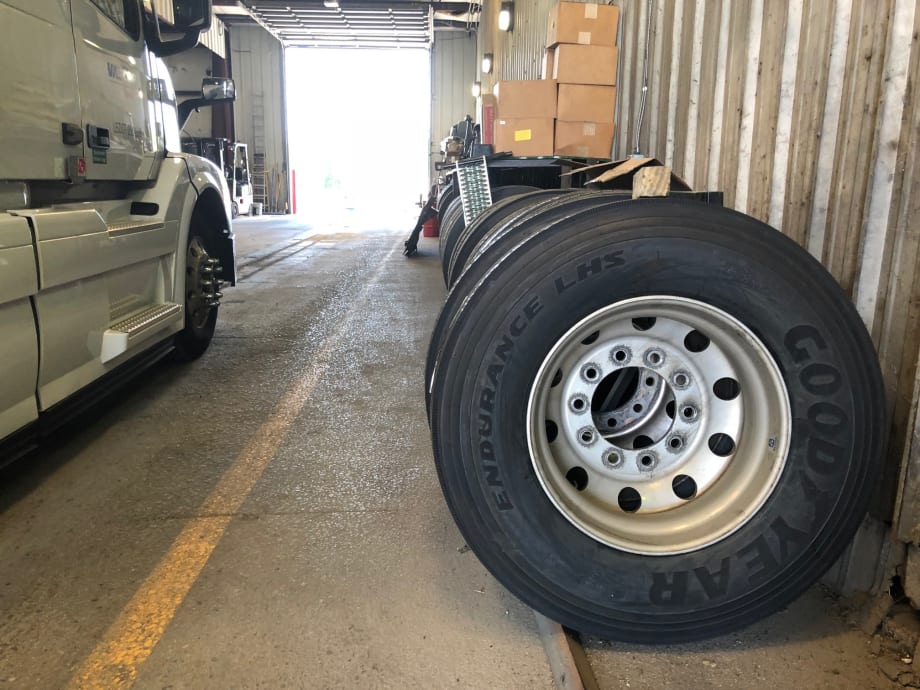
Tire testing can be tough to get right given all the variables in play. But consistent maintenance and attention to detail can deliver good results for your fleet.
Photo: Jack Roberts
Tires can be an endless headache for fleet managers trying to determine which brands and types perform best in their applications. The best way to make that determination is to conduct a tire test to see how a prospective tire stacks up when compared to other makes and models.
To help fleets run tire tests with accurate results, the American Trucking Associations' Technology & Maintenance Council hosted a session on Proven Strategies for Successful Fleet Tire Testing at its annual meeting in Atlanta in March, with several noted tire experts offering best practices for obtaining reliable results and usable data from these tests.
Peggy Fisher, an experienced fleet manager who is now president of Tire Stamp, told TMC attendees that in the real world, tire tests are always a challenge due to the many variables. These can include vehicle models, routes, loads, weather, and drivers, to name a few. And each and every one can affect the outcome of a tire test to one degree or another.
“Running a test is more than just throwing a few tires on a few trucks and seeing what happens,” Fisher cautioned attendees. “Tire testing requires that you establish and follow a testing protocol as closely as possible in real world operations.”
To begin with, Fisher said fleets should start with a reasonably large group of tires, with a goal of having 30 test tires in service at the end of the test. “You should plan on losing 10% to 15% of the tires during the test and plan accordingly,” Fisher said. “You can use smaller sample sizes, but your results will not be as accurate as 30 tires to examine at the end of the test.”
For best results, Fisher suggested using broken-in trucks with at least 15,000 to 30,000 miles on them. She also recommended keeping the vehicle loads and weights on trucks in the test as similar as possible. Along the same lines, she said fleets should conduct alignments on all test trucks and replace any worn steering or suspension components prior to beginning the test. “I’d also screen out any drivers known for having unusual or erratic driving habits,” she said. “You also need to be consistent with the use of aluminum or steel wheels and their respective sizes.”
Retreads are totally in bounds for tire tests too, Fisher said, although she recommends that all casings be from the same manufacturer and any retreading should have been done within a one-year time frame.
Making sure everyone on the fleet knows a tire test is being conducted is critical as well, Fisher added. To do this, she said it is important to uniquely ID all test tires using radio tags, bar codes or labels. Going one step further, she also recommended stenciling "test tire" in bold letters on the tires so people can’t miss it. “Make sure your drivers are alerted to the fact that there is a tire test under way, too,” she said.
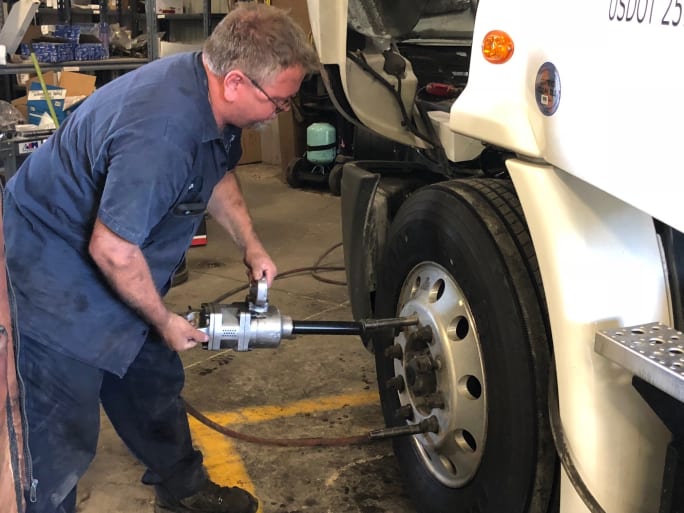
Communication is key for a successful tire test. Everyone involved, from the front office, to the shop to the truck cab should be aware that a tire test is being conducted and what is expected from them to help that test be successful.
Photo: Jack Roberts
Additionally, Fisher recommended:
Usie standard inflation pressures and checking them on all tires at least once a month.
Continue with a normal tire rotation program – but do not begin tire rotations if this is not a normal maintenance procedure for your fleet.
Check vehicle alignments several times during the course of the tire test.
Check tires for nails and remove any found, even if they haven’t punctured through to the tire’s pressure chamber yet.
Take tread depth measurements at regular intervals – every 30,000 miles and at scheduled maintenance intervals. Take these measurements consistently at the same spot in a major tread groove. Use valve stems as a reference point for taking tread measurements.
Keep data on tires removed from test due to damage. Note the reason for removal, tread depth, condition, and mileage. Label the removed tire with vehicle number, mileage, and wheel position, and photograph the tire for future reference.
Once the test is under way, Fisher said preliminary findings, including indications of the tires’ performance, can start to be made when the test tires are at least 50% worn down. She cautioned attendees to remember that tire wear rates vary according to axle and wheel positions – with left-hand steer tires typically wearing faster than right-hand steer tires.
More Maintenance

Color Match Smarter: Tools That Restore & Perform
For fleet managers and collision repair professionals keeping heavy-duty trucks on the road, getting the color right the first time isn't just about appearance — it's about efficiency, turnaround time, and bottom-line results. Discover how today's digital color tools are transforming the repair process from guesswork to precision.
Read More →
Wrong Repair Prompts Recall of Freightliner, Western Star 4x2 Trucks
DTNA is recalling more than 2,400 trucks that received an incompatible software fix instead of the hardware repair required to address brake valve corrosion.
Read More →
Truck Drivers Need More Than Another Alert
Fleets have more visibility into truck health, safety events, and driver activity than ever. The next challenge is turning all that information into useful guidance for the person who has to decide what to do next.
Read More →
The Maintenance Checks Trucking Fleets Should Prioritize Before Fall Freight Picks Up
Making it through August isn’t the same as being ready for the next several months of operation. Find out what systems may have suffered from summer heat and need to be checked out before fall.
Read More →
What Three Fleets Are Doing Differently When Buying Truck Parts in 2026
With freight improving but costs still climbing, fleet maintenance executives explain how they're balancing price, quality, and supplier relationships.
Read More →
Paccar Recalls 2027 Trucks Built This Summer for Possible Electrical Problem
The nearly 6,000 Kenworth and Peterbilt trucks in the recall could potentially lose engine power, among other things.
Read More →
Will API PC-12 Oil Change Trucking Fleet Maintenance?
The new API PC-12 heavy-duty engine oil category reflects the changing demands of modern diesel engines. But fleets like Foodliner are looking to getting their own data before making decisions on adopting the new oils and questions such as extending oil drain intervals.
Read More →
Brake Safety Week to Focus on Drums and Rotors
Commercial vehicle inspectors are focusing on truck brakes during CVSA's Brake Safety Week, August 23-29.
Read More →
Possible Battery-Cable Fires Prompt Recall of 15,000+ International MV and HV Trucks
On the recalled vehicles, manufacturing variations can cause the battery interconnect cable to contact the auxiliary stud and hold down the bracket.
Read More →
Rush, MCT Team Up to Grow Refrigeration Service Network
The joint venture will operate MCT's network of Carrier Transicold dealerships and mobile service locations, with the companies promising greater service capacity and uptime for refrigerated fleets.
Read More →