




Senators, Former EPA Chiefs Urge Agency to Drop Glider Reg Repeal
Two Democratic senators who oversee environmental issues sent a letter on March 12 to Environmental Protection Agency Administrator Scott Pruitt, urging him to reverse his November 2017 proposal to repeal air emission standards for glider kits.

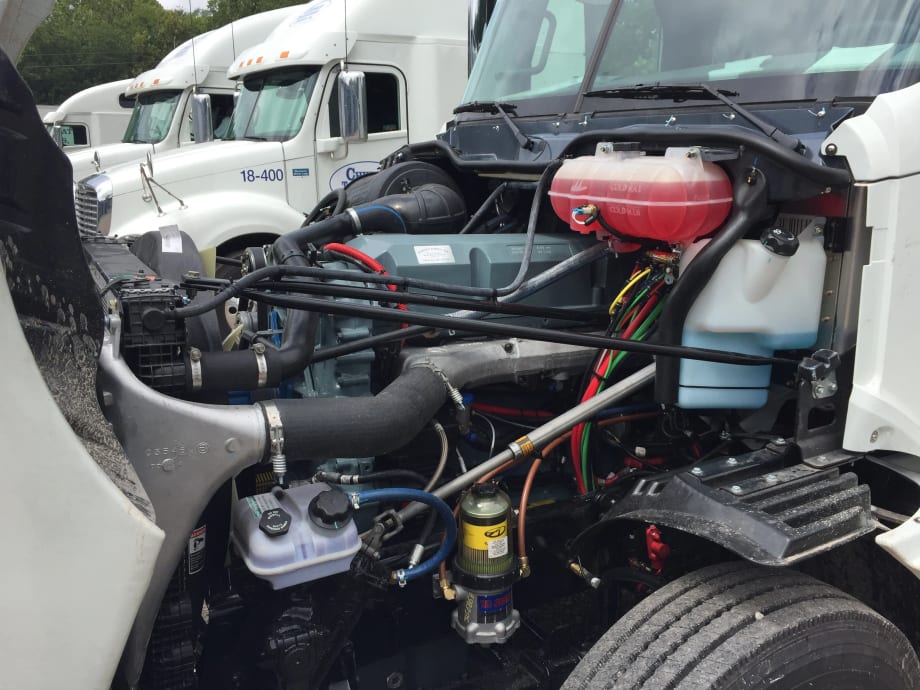
Some fleets use glider kits to get the benefits of the latest aerodynamic trucks with less-troublesome pre-emissions-regs engines. Photo: Deborah Lockridge
Some fleets use glider kits to get the benefits of the latest aerodynamic trucks with less-troublesome pre-emissions-regs engines.Photo: Deborah Lockridge
Two Democratic senators who oversee environmental issues sent a letter on March 12 to Environmental Protection Agency Administrator Scott Pruitt, urging him to reverse his November 2017 proposal to repeal air emission standards for glider kits.
EPA’s November proposal would eliminate provisions affecting glider kits within the Phase 2 Greenhouse Gas Emissions and Fuel Efficiency Standards. The Phase 2 rules as written would allow glider kits only for their original purpose, which was seen as reclaiming powertrains from wrecked trucks and reusing them in new bodies and chassis. Increasingly, they are being used to avoid using more costly and repair-prone cleaner-emissions engines.
Calling them “zombie trucks,” Sen. Tom Carper (D-Del.), ranking member of the Senate Environment and Public Works Committee, and Sen. Tom Udall (D-N.M.), top Democrat on the Senate Appropriations Subcommittee that oversees EPA, cited adverse health effects and faulty research in their call to withdraw the rule.
In addition, two former EPA Administrators, Carol Browner and Christine Todd Whitman, who served under Presidents Bill Clinton and George W. Bush, respectively, sent a letter to Administrator Pruitt expressing deep concerns over EPA’s failure to use the best science available in its decision to repeal the final glider regulations.
Pollution and Politics
The Carper-Udall letter noted that “according to internal agency research not released until after EPA published this proposal, a new 2017 glider kit can emit up to 450 times the particulate matter (PM) pollution and up to 43 times the nitrous oxide (NOx) pollution of model year 2014 and 2015 trucks. Other EPA analyses concluded that, if left unregulated, glider vehicle emissions could prematurely kill thousands of people, and increase instance of lung cancer, chronic lung disease, heart disease, and severe asthma attacks. We are also deeply troubled that this proposal, which appears to largely benefit a single company, was influenced by an industry-funded ‘study' that is currently the subject of an official investigation into research misconduct for failing to adhere to basic scientific standards.”
The proposal to withdraw the regulation has drawn criticism from a number of fronts, from environmental groups to truck and engine makers.
Just last month, Tennessee Technical University asked the EPA to withhold any use or reference to a controversial study the university conducted on the environmental impact of glider kit vehicles until it has fully investigated the validity of the study's results.
Browner and Whitman note in their letter, "Not only does it appear that the Tennessee Tech study failed to follow proper research protocol, the conclusions of the study are contrary to a well-established understanding of the pollution from older diesel engines."
The senators' letter notes that no one from the glider industry challenged the final GHG provisions in court, yet in May of last year, Pruitt “personally met with representatives of Fitzgerald Glider Kits… the self-proclaimed, ‘largest glider kit dealer in the country’ and a political supporter of President Trump.’" Two months after that meeting, Fitzgerald and two other glider kit dealers petitioned the EPA seeking reconsideration of the glider requirements.
In addition to asking Pruitt to withdraw this “dangerous, legally questionable proposal immediately,” the letter requests non-redacted copies of documents relating to EPA scientific analyses and emissions testing, correspondence between EPA representatives and the glider kit dealers asking for the repeal, and documents related to the controversial Tennessee Tech study on glider vehicle emissions.
It also asks questions regarding the EPA’s authority to regulate glider kits. Part of the argument in favor of repealing the glider kit part of the GHG regulation has been that glider kits may not be “new motor vehicles” as defined by the Environmental Protection Act and thus not legally subject to EPA regulations.
The letter asks for a response no later than April 2.
More Fuel Smarts

Why Diesel Price Relief Efforts May Fall Short
Diesel prices have eased from September’s record high, but doubts about additional Russian supply and limits on dyed-diesel tax relief mean trucking fleets still face expensive fuel. And prices could go higher.
Read More →
Why Small Fuel Savings Matter in Trucking
Can better fuel economy help pay for driver raises? In this podcast, GP Transco explains how small efficiency gains create room to reinvest in its people.
Read More →
How GP Transco Cuts Trucking Fuel Costs, a Tenth of a Gallon at a Time
What’s another tenth of a mile per gallon worth? GP Transco shares how equipment upgrades and driver coaching turn small gains into meaningful fuel savings.
Read More →
Electric Yard Tractors Move Beyond Pilots
Operating-cost savings have overtaken sustainability goals as the leading reason surveyed fleets are adopting battery-electric terminal tractors, according to new NACFE research.
Read More →
Geotab Links Fleet Card to Vehicle Data
The new card combines fuel discounts with telematics-based purchase controls. Geotab’s analysis also points to potential savings from choosing lower-priced fuel stops.
Read More →
Fleet Economics Shape Electric Truck Outlook
ACT Research expects costs, charging infrastructure, and technology improvements to drive zero-emission commercial vehicle adoption as federal regulations and incentives retreat.
Read More →
Wex Adds Cardless Fuel Payments for Over-the-Road Customers
A new fuel card feature for Wex customers offers convenience and security.
Read More →
New California Law Could Shed Light on Electric Truck Prices
Why do battery-electric Class 8 trucks remain so expensive? A California bill signed by Gov. Gavin Newsom would give fleets and state agencies more visibility into what manufacturers charge.
Read More →
How Volvo Updated Its D13 for EPA 2027 [Watch]
Volvo’s updated D13 promises lower emissions without sacrificing performance or fuel economy. Take a closer look at what changed inside the engine in this HDT Spotlight video.
Read More →
Diesel Price Spike Shortens Payback for Natural Gas Trucks, Report Says
Energy Vision estimates fleets could recover the higher purchase price of an RNG-fueled Class 8 tractor in 1.3 to 2.8 years under current fuel-price scenarios.
Read More →