Mesilla Valley Streamlined Billing Boosts Working Capital
Long known for working diligently to squeeze every mile possible out of a gallon of fuel, Mesilla Valley Transportation also aims to wring costs out of every facet of its operation, including its back office.
David Cullen・[Former] Business/Washington Contributing Editor
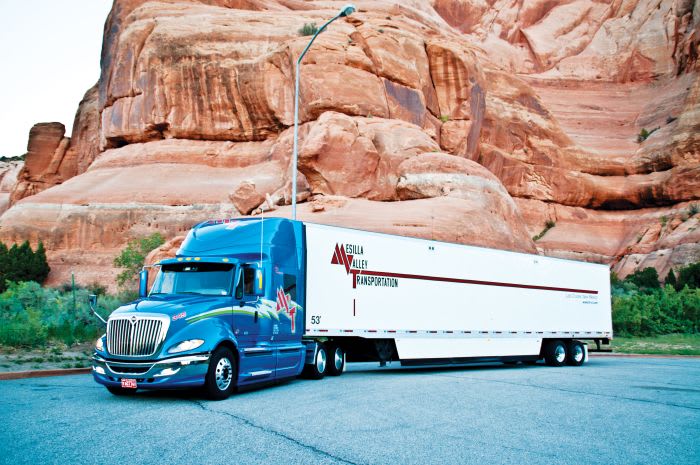
Mesilla Valley is known for fuel efficiency, but it wanted to improve back-office efficiencies as well.Photo: Mesilla Valley Transportation
2 min to read
Mesilla Valley is known for fuel efficiency, but it wanted to improve back-office efficiencies as well.Photo: Mesilla Valley Transportation
Long known for working diligently to squeeze every mile possible out of a gallon of fuel, Mesilla Valley Transportation also aims to wring costs out of every facet of its operation, including its back office.
Ad Loading...
Mesilla Valley was launched in 1981 by Royal Jones, then an owner-operator and now the CEO, president and majority owner. The fleet started out hauling refrigerated freight and by the early ’90s had begun expanding its service offerings. It now ranks as one of the largest full-service truckload carriers based in the Southwest and operates nationwide as well as internationally.
Unsettled by the amount of manual intervention required by an electronic billing and settlement system — despite it being dubbed “paperless” — the fleet began looking for a more streamlined way to handle the process.
Ad Loading...
Robert del Plain, Mesilla Valley’s director of information technology, explains that the existing system lacked integration with the carrier’s back office setup. As a result, billers were “spending time manually reviewing every bill and then they had to get the right documents to the right people.”
Determined to cut out that inefficiency, Mesilla Valley opted to implement the SHIPS billing and settlement solution. The provider, EBE, promised that SHIPS would integrate robustly with the fleet’s systems and that its automated decision-support applications would improve the workflow for the billers.
After implementing the new system, Mesilla Valley gained a one-day reduction in its billing cycle and recorded a significant uptick in billers’ productivity.
“In the months since we deployed EBE, we have been able to free up more than a million dollars in working capital while improving productivity,” says del Plain.
He says that with SHIPS up and running, billers were able to finish their work in six hours rather than eight, as they no longer needed to manually check the accuracy of documents. In addition, the EBE system integrated in such a way that it let Mesilla Valley take full advantage of its other systems. What’s more, billers reported a 35% reduction in the amount of time spent processing invoices.
Ad Loading...
“These process improvements and higher productivity stretched across the entire organization,” del Plain says, “as the filing and approval of documents became streamlined.”
Fleet Snapshot
Who: Mesilla Valley Transportation
Where: Las Cruces, N.M.
Fleet: 1,400 International ProStar tractors and 5,000 van trailers for hauling dry and refrigerated freight
Operations: Full-service truckload services, operating between all major manufacturing centers of the U.S., Canada and Mexico via 20 locations.
Fun Fact: The fleet runs a B20 biodiesel blend that it produces itself out of used cooking oil, selling its surplus “green” fuel to area truckstops.
Challenge: Although electronic, its existing billing and settlement system required excessive manual intervention.
For fleet managers and collision repair professionals keeping heavy-duty trucks on the road, getting the color right the first time isn't just about appearance — it's about efficiency, turnaround time, and bottom-line results. Discover how today's digital color tools are transforming the repair process from guesswork to precision.
Carriers whose updates were due on or after June 1 have more time, while FMCSA works to stabilize its new registration system and warns of phishing sites impersonating its new carrier registration system, Motus.
Cargo theft is no longer just the cost of doing business. It's a multi-billion-dollar criminal enterprise exploiting vulnerabilities across your fleet, drivers, and supply chain.
Explore how telematics help refrigerated fleets improve visibility, uptime, efficiency, compliance, and cargo protection across connected cold chain operations.
Escalating U.S.-Canada tariffs could disrupt cross-border freight, reduce truck volumes, raise costs, and create new uncertainty for carriers on both sides of the border.
The American Transportation Research Institute wants to know what's worrying trucking fleet managers, drivers, and other stakeholders in its annual Industry Issues survey.
HDT Truck Fleet Innovator Adam Buttgenbach helped PepsiCo build one of North America’s largest EV fleets by focusing on where electric trucks make operational sense.