




Many companies have determined that locating a bulk fuel tank in their own yard provides the most cost-effective method for their fleet fueling requirements.
Do You Know Where the Fuel From Your Yard's Fuel Tank is Going?
A bulk fuel tank in your own yard could be the most cost-effective fleet fueling option -- assuming your tank doesn't "leak."
by Glen Sokolis
July 22, 20143 min to read
Bulk tanks certainly come with insurance and environmental challenges, but they can be overcome with careful planning. It’s also costly to purchase and install a bulk tank, but significant net savings may be achieved compared to alternative fleet fueling options -- assuming your tank doesn’t “leak.”
When I say “leak,” I don’t mean fuel seeping into the ground. I’m referring to a tank that lacks a fully integrated inventory tracking process, including a card reader. Without it, fuel will be dispensed from the tank and it will be difficult, if not impossible, to know where it all went. Misuse and theft can easily go undetected without strong inventory controls. The loss of fuel will quickly wipe out any cost advantage of having the tank in the first place.
One of the worst inventory control scenarios would allow anyone in the yard to drive up to the tank and dispense fuel without tracking the driver AND vehicle. A small improvement, although primitive by today’s standards, would involve placing a clipboard and pen near the tank (in a weatherproof location) for someone to note their fueling activity. That might work if everyone followed the rules and the clipboard didn’t get misplaced. Also, the back office staff will need to spend the time to rekey all the information accurately assuming they could read the writing on the clipboard.
A better scenario is a tank with a card reader system, but we often see companies with old equipment that cannot transmit information. Fueling transaction data is actually trapped inside the reader until someone physically downloads it. “Memory full” error? Let’s hope it doesn’t result in fuel being pumped without being recorded, or we’re back to the worst-case scenario.
The preferred solution is to equip the tank with a card reader system that provides fueling data in real-time, whether it be through a wired or wireless connection. In addition, the data should be in a format that is easily integrated into an inventory control system with robust reporting, possibly using a company’s G/L system for full cost accounting and P&L tracking. Modern card readers offer those capabilities as basic features.
If you’re concerned about the cost of investing in a new bulk tank inventory control system, it’s worth noting that there are major fleet fuel card providers in the market that are willing to absorb most of the cost, including installation expenses, in exchange for earning transaction fees over an extended period of time. These arrangements can be very attractive for companies with limited cap-ex budgets. voiding the up-front cash outlay can help quickly provide financial returns from improved inventory controls, even net of transaction fees.
This article was authored by The Sokolis Group, which offers fuel purchasing, management and consulting services. It originally appeared on the company's blog, and was chosen by HDT's editors as useful information for our readers, subject to our normal editorial standards and editing processs.
Subscribe to Our Newsletter
More Fuel Smarts

Run on Less “Messy Middle” Data Shows Multiple Paths for Truck Powertrains [Listen]
Listen as Mike Roeth of the North American Council for Freight Efficiency shares insights into battery-electric trucks, natural gas, biofuels, and clean diesel on this episode of HDT Talks Trucking.
Read More →
Run on Less “Messy Middle” Data Shows Multiple Paths Forward for Truck Powertrains [Watch]
NACFE's Run on Less - Messy Middle project demonstrates the power of data in helping to guide the future of alternative fuels and powertrains for heavy-duty trucks.
Read More →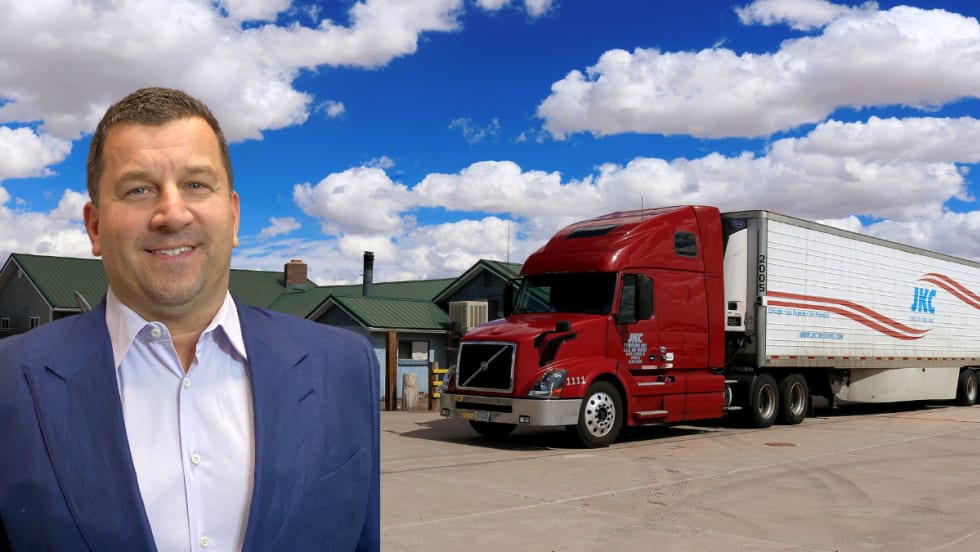
Trucking Executive Warns Fuel Spike from Middle East Conflict Hitting Fleets Fast
Mike Kucharski, vice president of refrigerated carrier JKC Trucking, says diesel price jumps tied to global instability are squeezing carriers already struggling with weak freight rates.
Read More →
Smarter Maintenance Strategies to Keep Trucks Rolling
In today’s cost-conscious market, fleets are finding new ways to get more value from every truck on the road. See how smarter maintenance strategies can boost uptime, control costs and drive stronger long-term returns.
Read More →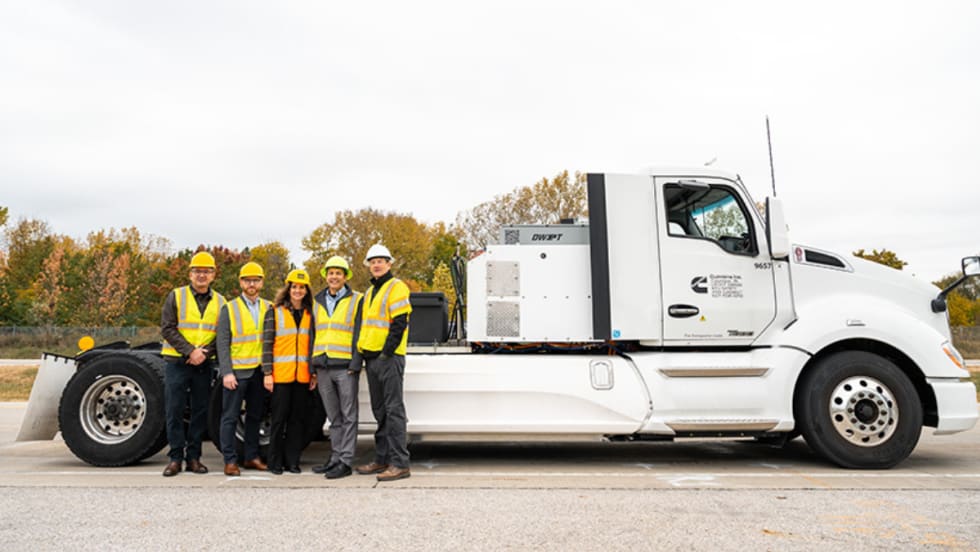
Researchers Demonstrate Wireless Charging of Electric Heavy-Duty Truck at Highway Speeds
Purdue researchers demonstrated a high-power wireless charging system capable of delivering energy to electric heavy-duty trucks at highway speeds, advancing the concept of electrified roadways for freight transportation.
Read More →
EPA Wants to Know: Are DEF De-Rates Really Needed for Diesel Emissions Compliance?
The Environmental Protection Agency is asking diesel engine makers to provide information about diesel exhaust fluid system failures as it considers changes to emissions regulations.
Read More →
Sponsored•February 1, 2026
Stop Watching Footage, Start Driving Results
6 intelligent dashcam tactics to improve safety and boost ROI
Read More →
California: Clean Truck Check Rules Still in Force for Out-of-State Trucks, Despite EPA Disapproval
The Environmental Protection Agency said California can’t enforce its Heavy-Duty Inspection and Maintenance Regulation, known as Clean Truck Check, on vehicles registered outside the state. But California said it will keep enforcing the rule.
Read More →
Justice Department Pulls Back on Criminal Prosecution of Diesel Emissions Deletes
The Trump administration has announced it will no longer criminally prosecute “diesel delete” cases of truck owners altering emissions systems in violation of EPA regulations. What does that mean for heavy-duty fleets?
Read More →
Why the Cummins X15N Changed the Conversation About Natural Gas Trucking
Natural gas is quietly building a reputation as a clean, affordable, and reliable alternative fuel for long-haul trucks. And Ian MacDonald with Hexagon Agility says the Cummins X15N is a big reason why.
Read More →