A driver's suggestion saved this small fleet $1 million on fuel in just two years..
by Steve Sturgess, Executive Editor
June 1, 2008
4 min to read
When the transistor was invented in Bell Labs in 1947, its creators could have had no inkling of the uses it would create. Similarly, a small group in Ada, Mich., is casting around for applications for new technology: smart electrical power over an air gap.
Ad Loading...
Power-over-an-air-gap is the ability to transmit electrical power without a physical hard-wired connection.
Ad Loading...
Yes, you say, I know about that. My electric toothbrush charges in its cradle; those European kettles boil water when placed over their bases.
And to an extent, that's right. Except these applications are not "smart."
A new company, Fulton Innovation, has developed a technology that uses similar inductive coupling to get power from a primary winding to a second, but it is accompanied by electronics that recognize what that secondary is: its voltage, the power required, even the way the power is conditioned to best be used by the secondary.
A great illustration of the application of this technology was shown at the National Truck Equipment Association's Work Truck Show, where it garnered the award for the most innovative new product. Installed on a Legget & Platt converted utility van, the shelving and accessories of the van were configured so that 36-volt power tools automatically recharged simply by placing them on a work surface.
The vehicle in the show had a counter with a decal indicating where to rest the Bosch tool. The battery was then in close proximity to the coil embedded in the table. This and the associated electronics queried the battery in the tool, discovering it was a 36-volt rechargeable. A light at the edge of the table illuminates to indicate the battery is charging. Moreover, the battery has been queried to see if it is relatively new, or has been deep cycled thousands of times. It then gets the optimum charge cycle.
Ad Loading...
When work at the site is complete, the tools - say a drill and a reciprocating saw for instance - are put back into the compartments in their carry case, and it is put into its bin on the vehicle's racking. The case has an enabled liner that talks to the tools, the liner talks to the van through the shelf and the tools recharge on the way back to the depot. There are no power bricks, no inverters. The whole thing just runs off the van's 12-volt system.
Outside, the van has a flip-down work surface with a recharge spot. Working with the tools, the operator simply needs to rest them back on the spot for batteries to be kept up to charge.
Want a sign that says "Danger?" Just hang it over the power point installed at the rear of the vehicle and it gets its power wirelessly.
You can do the same in the vehicle's center console. Throw your cellphone, Blackberry and iPod into one of the available mini-bins and the system recognizes them for a recharge. Three-volt battery powered flashlight? Just chuck it in. The system will find its resonance and hook it up to charge. You could have an embedded primary in the windshield where you attach the navigation system. Clamp it to the glass and it is automatically powered.
Pretty cool. Now think about that flip-down table in the sleeper of a long and tall. A power spot there means a driver can pull out the 110-volt coffee pot, set it down appropriately filled with water and ground coffee, and in moments there's fresh brewed coffee. Or place the laptop there. The system sees a 15-volt battery and hooks it up. Imagine a truck cab free of recharger bricks for each portable electronic aid. And also imagine drivers not plugging too big an inverter into a cigar lighter outlet and frying the electrical system or burning down the truck. Definitely a good thing.
Ad Loading...
And how about electrical connections that are subject to corrosion, such as the J560 cord between tractor and trailer? All those connections can be made through non-contact power connections using this technology.
Maybe you don't need IdleAire or plug-in shore power. All you need is a pigtail that suction-mounts to the appropriate panel on the outside of the truck. You could just pull up to a wheel chock to locate the truck and you're hooked to an in-ground power primary. You still need some electrical infrastructure at the truckstop or terminal, but you have no conductor-connection with its associated dangers in wet weather. Conceivably, you could hook up an electrical standby to a reefer in exactly the same way, since according to the Fulton scientists, the power-over-air-gap is entirely scalable.
It's a fascinating technology with applications that are likely limited only by our imaginations.
BeyondTrucks says its new RateAgents can turn plain-language rate logic into working code, starting with fuel surcharges — a critical but notoriously complex piece of carrier revenue.
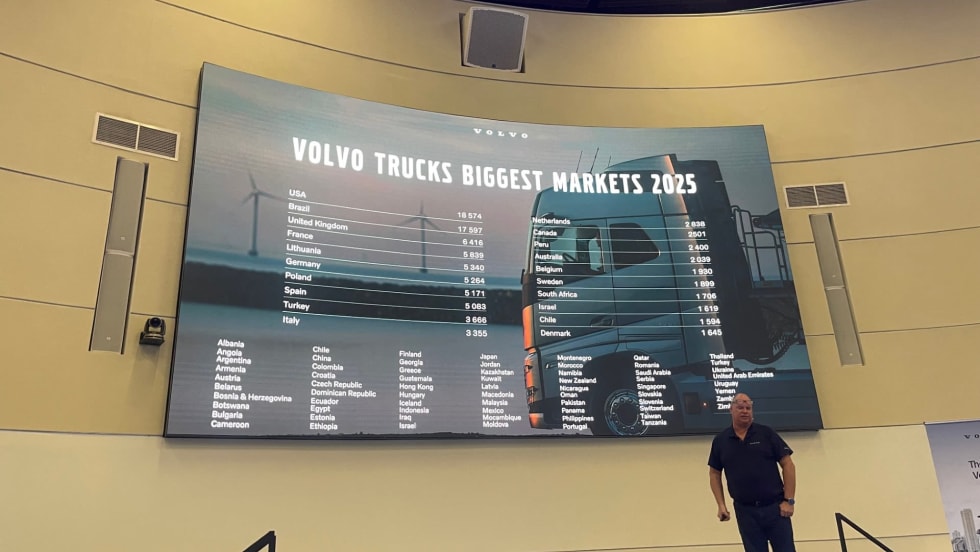
Soft freight conditions persist, but aging fleets, strong order intake, and new-product momentum signal a more optimistic second half of 2026, Volvo Trucks North America says.
Cargo theft is evolving from regional smash-and-grab operations to sophisticated fraud schemes. Strategic theft now accounts for roughly a third of cargo crime, with incidents rising sharply in recent years. Here’s how the schemes work — and what fleets can do to protect themselves.
Heavy Duty Trucking's Top 20 Products awards recognize the best new products and technologies. Check out the award presentations at the 2026 Technology & Maintenance Council annual meeting.
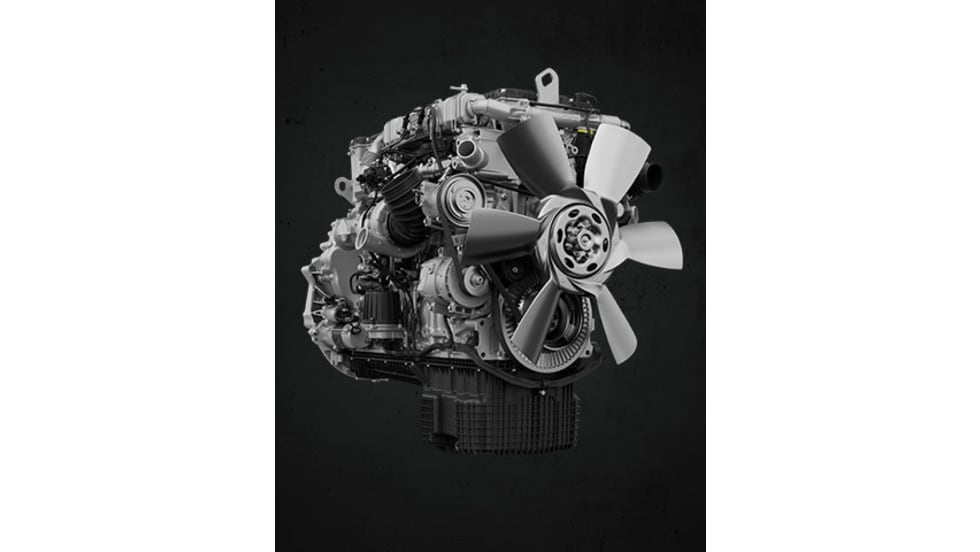
The Detroit® Gen 6 engine platform proves that real progress doesn’t require a complete redesign. Built on 20 years of trusted technology, these engines are designed for efficiency, stronger performance, and greater reliability than before. And they do it all while complying with 2027 EPA standards on every mile.
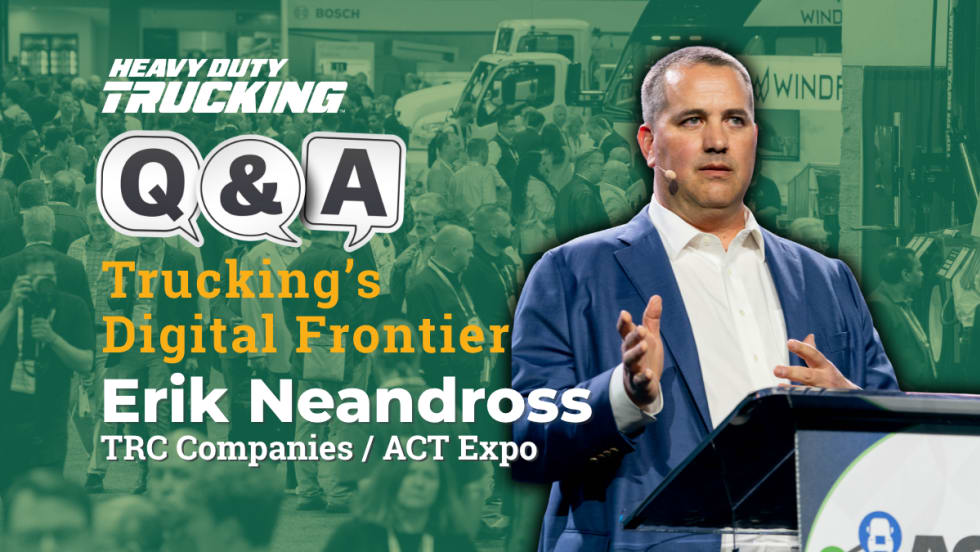
The 2026 ACT Expo is focusing heavily on what organizer Erik Neandross calls trucking's digital frontier. This interview excerpt dives into artificial intelligence, zero-emission vehicles, and tips to make sense of it all.
There's an amazing amount of new technology for trucking out there. For fleets, the challenge is figuring out what’s real, what’s hype, and what’s worth investing in.
Artificial intelligence, the software-defined vehicle, telematics, autonomous trucks, electric trucks and alternative fuels, and more in this HDT Talks Trucking interview
ACT Research data shows volumes hitting a four-year high and supply-demand balance strengthening, but higher oil prices are undercutting tariff relief and tempering optimism.
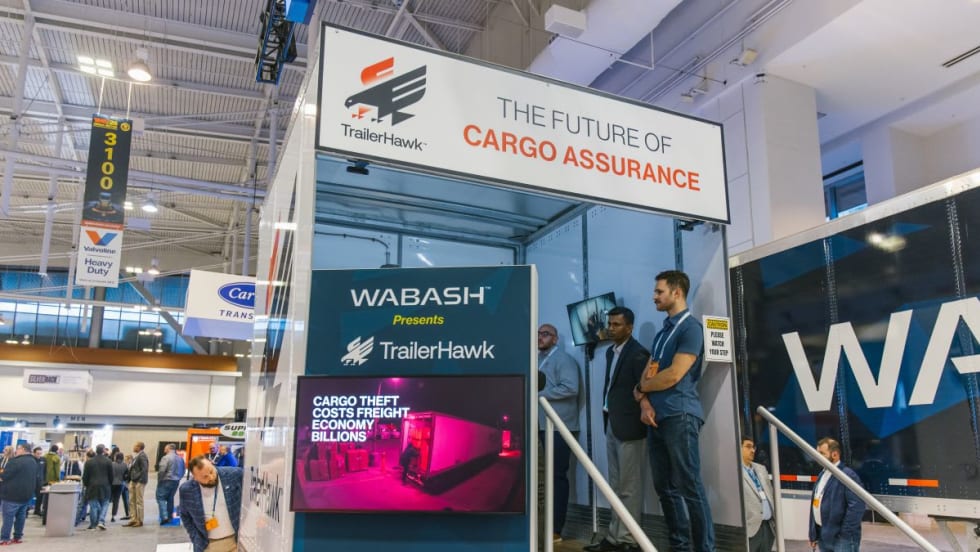
The patent-pending cargo solution integrates a digitally connected cargo door and an intelligent locking system with the TrailerHawk.AI technology platform.