





Technology in the shop is nothing new; in fact, it's absolutely necessary to diagnose, troubleshoot and repair today's trucks. But fleets are finding there are technologies they can use outside of the shop to monitor vehicle health and diagnose problems.
Technology that a number of fleets already deploy can provide data that allows managers to track vehicle health even when the vehicle is on the road. Onboard computer systems and mobile communications systems can transmit a variety of engine data back to headquarters. Fleets already remotely monitor mileage, speed, mpg and other performance indicators. They can monitor fault codes as well.
Adam Kahn, director of marketing, product and indirect channels, Qualcomm Enterprise Services, says there is an increasing interest from fleets in obtaining diagnostic information.
"For any fleet, one of the things they want to avoid is having a truck break down on the road loaded with freight," he says. "If you can figure out that truck A may be about to have a maintenance issue, you can switch the load to truck B instead."
A few years ago, having limited visibility of what is happening with the truck was standard operating procedure. Vehicle inspections and routine service provided the visibility.
"Now there is increased awareness of how things might affect CSA scores and the impact those scores might have on shippers," Kahn says. "There's a greater focus on fleet managers to be aware of that vehicle. And there is trending data you can use to set service intervals, or pull a truck off the road for a service stop."
Kahn notes that while there are literally thousands of fault codes in the SAE standards, there are 10 to 15 that you can really watch to see how your truck is doing, such as oil pressure, coolant temperature, engine oil temperature, battery voltage and fuel temperature.
"These are critical things that over time allow you to see, for instance, that a vehicle s oil pressure has been dropping."
Diagnostics on the Move: Telematics Help Fleets Stay Ahead in Maintenance
Technology in the shop is nothing new; in fact, it's absolutely necessary to diagnose, troubleshoot and repair today's trucks. But fleets are finding there are technologies they can use outside of the shop to monitor vehicle health and diagnose problems
There are many companies that offer telematics products, and the offerings are expanding all the time.
For instance, Zonar, Seattle, Wash., which provides electronic inspection, tracking and operations systems, recently introduced the V3 telematics platform that features real-time vehicle diagnostics.
Fault code data is instantly delivered to fleet managers and dispatchers so fleets can schedule shop time and maintenance resources in advance to reduce vehicle downtime. All performance and diagnostic information is available through Zonar's Web-based Ground Traffic Control application.
One company that makes use of fault code data from trucks on the road is Mesilla Valley Transportation, Las Cruces, N.M. Speaking as part of an industry panel on fuel mileage earlier this year, Mike Kelley, Mesilla's director of IT, said his company's shops use trend data from fault codes to develop maintenance schedules and routines with the goal of reducing progressive damage, reducing on-road repairs, avoiding false diagnostics, and avoiding towing fees.
Adopting technology originally designed for use on deployed military vehicles, Vnomics, Pitttsford, N.Y., offers a predictive maintenance system that monitors a number of systems and vehicle performance indicators, according to Alex Popov, senior vice president. The system can monitor speed, fuel economy, interior and exterior temperatures, air intake, oil, cooling, fuel system, battery, alternator, load, transmission, transfer case, differential, traction control, brakes, hydraulics, tires, emissions systems, trailers and other systems via various sensors.
Vnomic's In-Cab Advisor alerts drivers via an in-cab display when they are operating outside of best-driving practices in terms of shifting, hard braking and other performance data. The system also includes a real-time communication module to transmit data back to dispatch.
It's not enough to simply have the data beamed from the truck to the office. You need to be able to use that data to analyze what's going on.
Technologies fleets already deploy to improve fuel economy and driver performance can also spot maintenance issues. Using predictive modeling and analytics, like the services provided by PeopleNet's Vusion division, some fleets find that poor fuel mileage may be caused by vehicle condition rather than poor driving habits.
Thomas Fansler, general manager at Vusion, says when one customer brought in underperforming trucks for evaluation, they found a maintenance issue was behind poor mpg performance for over 80% of the trucks, and that 58% of those problems were major service issues.
Addressing a panel on improving mpg at an industry conference in August, Randy Black, project manager for Shaw Industries, said his company uses analytics to evaluate vehicles in the fleet in terms of mpg performance. He said the first thing you look at with a truck that is not performing as well as others in its group is maintenance. In one instance, an injector problem was identified. Once fixed, that truck's mpg went from 4.8 to 7.6.
On the same panel, Steve Kane with Old Dominion Freight Line, Thomas-ville, N.C., said when their data identifies underperforming vehicles, the first thing they do is refer them to the shop for a performance analysis.
QES's Kahn says his company's Fleet Risk Advisors subsidiary is developing business models that look at much larger macro trends, such as the differences in performance between makes of vehicles, engines, other specs and add-ons.
"You can apply modeling to vehicle uptime and look at the types of vehicles, driver habits, the kind of routes they run and other factors," he says. "The models are getting much better at being able to say you will have a maintenance issue in 5,000 miles. There are better tools coming very quickly that will allow fleets to make better decisions on vehicle uptime."
Inside the shop, technicians use high-tech tools designed to help them diagnose and repair today's sophisticated truck engines and other components. "Technicians coming out of diesel mechanic school deal with much more sophisticated engines than guys 10 or 20 years ago," says Dave Costantino, director of the commercial vehicle group at Mitchell 1, Poway, Calif.
"In the old days, you could memorize part numbers and procedures. Now you can't memorize everything," he explains. "You have hundreds, or in some cases, thousands of fault codes that you are responsible for - and that's just from one make of engine. A shop that works on all makes, they are responsible for all of these engines, each of which has a different computer, and each of which has different codes. You have to be able to use a computer to work on trucks now."
Diagnostic tools called vehicle communication interfaces plug into an engine's computer to extract fault codes and other information. A software application on the computer evaluates the fault codes and returns an SAE-defined short description. For more detailed information, technicians can type the fault codes into another application to find more detailed service information.
To make that task easier, Mitchell 1 and Noregon Systems, which manufacturesVCIs and other shop tools, announced earlier this year they would integrate Noregon's JPro commercial fleet products and Mitchell 1's Repair-Connect.net.
Costantino says the integration automates what has been a manual process. "TheVCI pulls the code, and gives a brief description, which was developed by SAE, but it's a bare-bones description," he says.That's where applications such as Repair-Connect.net come in. It provides a detailed description of what the fault code means, which component is involved, and other information such as diagrams, replacement procedures and specifications.
From the November issue of HDT.
More Fleet Management
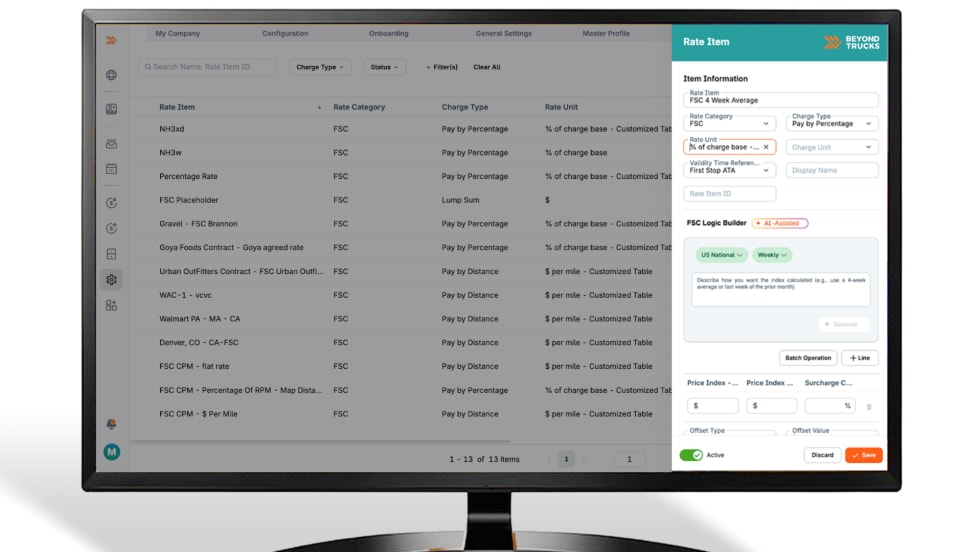
BeyondTrucks Targets Rate Complexity with New AI RateAgents
BeyondTrucks says its new RateAgents can turn plain-language rate logic into working code, starting with fuel surcharges — a critical but notoriously complex piece of carrier revenue.
Read More →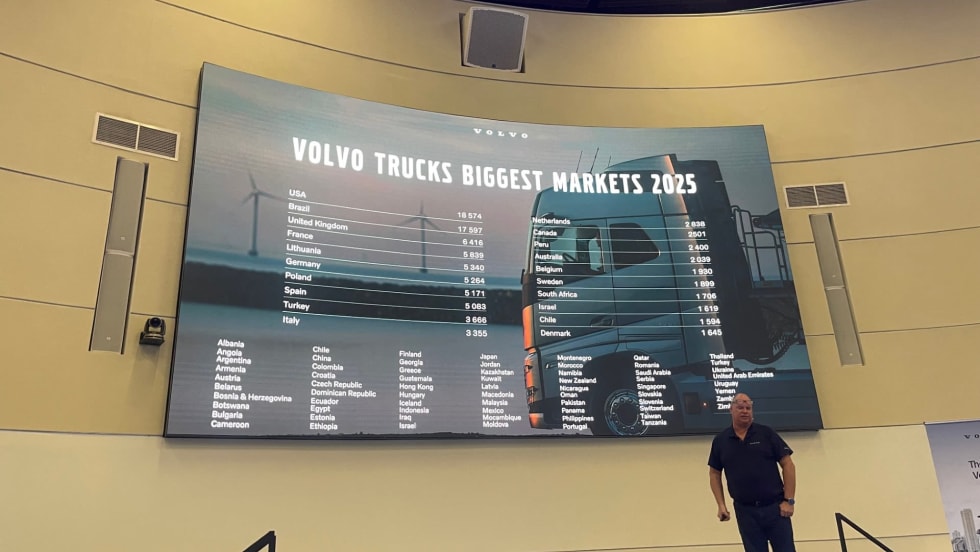
Volvo Sees Market ‘Tipping Point’ as New VNL Orders Surge
Soft freight conditions persist, but aging fleets, strong order intake, and new-product momentum signal a more optimistic second half of 2026, Volvo Trucks North America says.
Read More →
Cargo Theft’s New Playbook: Strategic Fraud, Double Brokering, and Cybercrime Hit Trucking
Cargo theft is evolving from regional smash-and-grab operations to sophisticated fraud schemes. Strategic theft now accounts for roughly a third of cargo crime, with incidents rising sharply in recent years. Here’s how the schemes work — and what fleets can do to protect themselves.
Read More →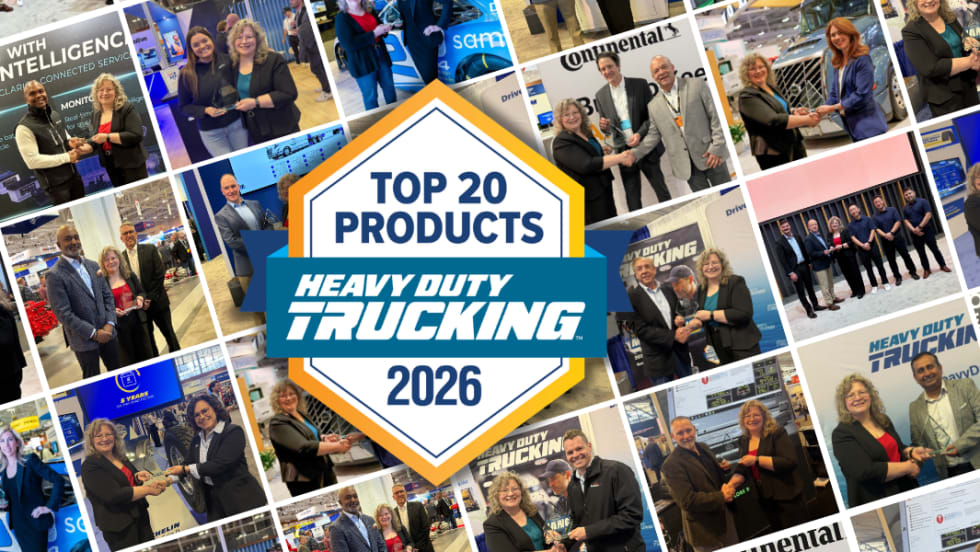
HDT Honors the Best New Products of 2025 at TMC [Photos]
Heavy Duty Trucking's Top 20 Products awards recognize the best new products and technologies. Check out the award presentations at the 2026 Technology & Maintenance Council annual meeting.
Read More →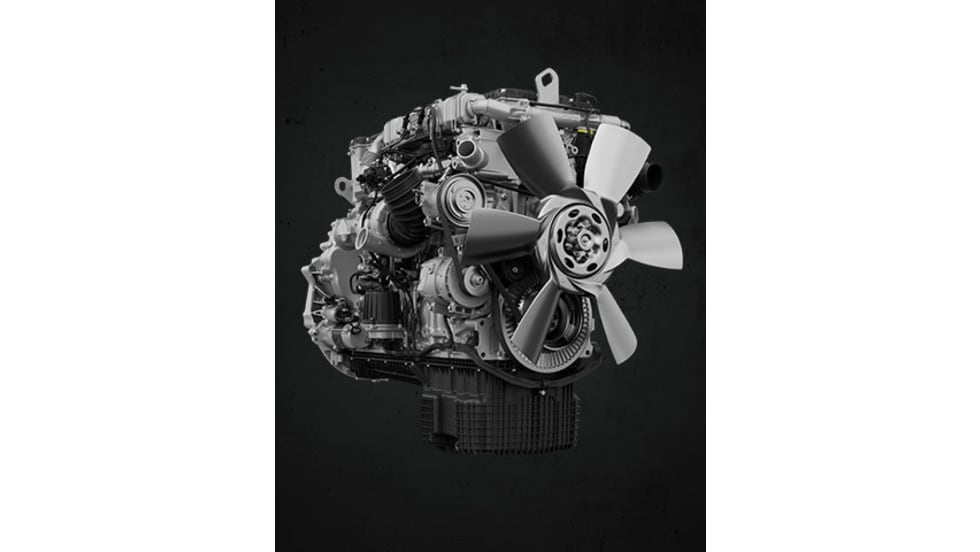
Detroit Engines: Trusted Performance, Built for What's Next
The Detroit® Gen 6 engine platform proves that real progress doesn’t require a complete redesign. Built on 20 years of trusted technology, these engines are designed for efficiency, stronger performance, and greater reliability than before. And they do it all while complying with 2027 EPA standards on every mile.
Read More →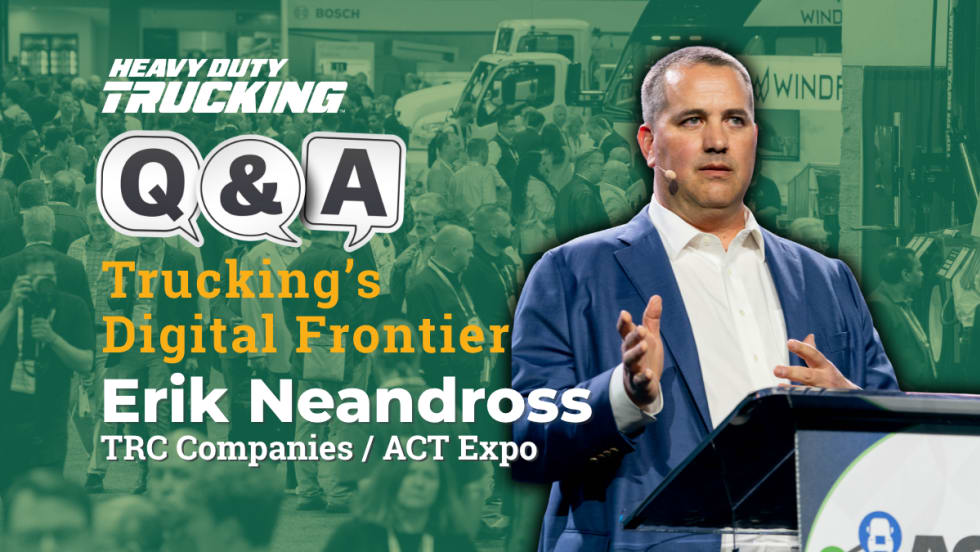
Q&A: What's Real in Advanced Truck Tech? ACT Expo's Erik Neandross Weighs In
The 2026 ACT Expo is focusing heavily on what organizer Erik Neandross calls trucking's digital frontier. This interview excerpt dives into artificial intelligence, zero-emission vehicles, and tips to make sense of it all.
Read More →
Trucking's Digital Frontier: AI, Connected Vehicles, Alternative Fuels and More
There's an amazing amount of new technology for trucking out there. For fleets, the challenge is figuring out what’s real, what’s hype, and what’s worth investing in.
Read More →
What's Real in Advanced Truck Technology? ACT Expo's Erik Neandross Weighs In
Artificial intelligence, the software-defined vehicle, telematics, autonomous trucks, electric trucks and alternative fuels, and more in this HDT Talks Trucking interview
Read More →
ACT: Trucking Volumes Rise, Capacity Tightens as Fuel Prices Cloud Outlook
ACT Research data shows volumes hitting a four-year high and supply-demand balance strengthening, but higher oil prices are undercutting tariff relief and tempering optimism.
Read More →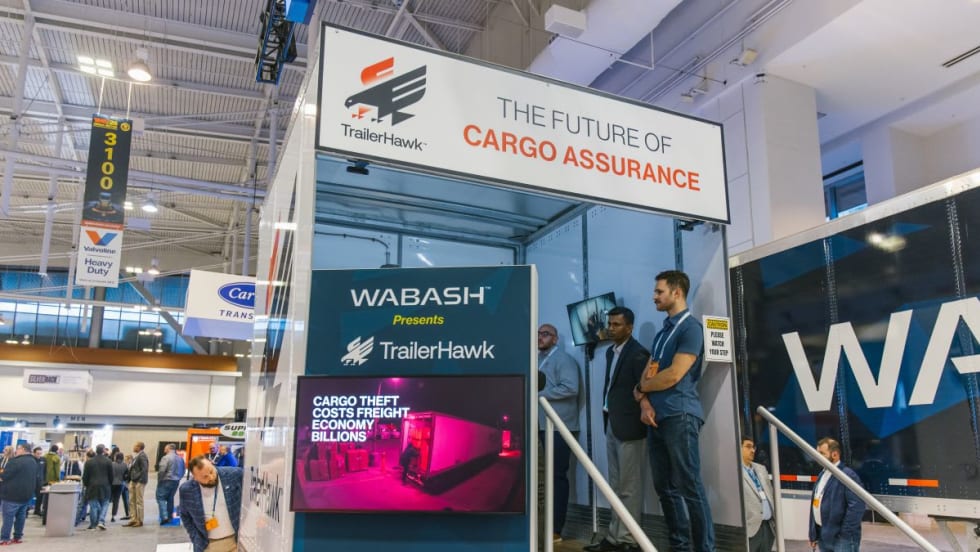
Wabash Teams Physical Security With Digital Tech For Better Cargo Visibility
The patent-pending cargo solution integrates a digitally connected cargo door and an intelligent locking system with the TrailerHawk.AI technology platform.
Read More →