Heavy Duty Trucking Logo
MenuMENU
SearchSEARCH

Training Technicians - Part Two

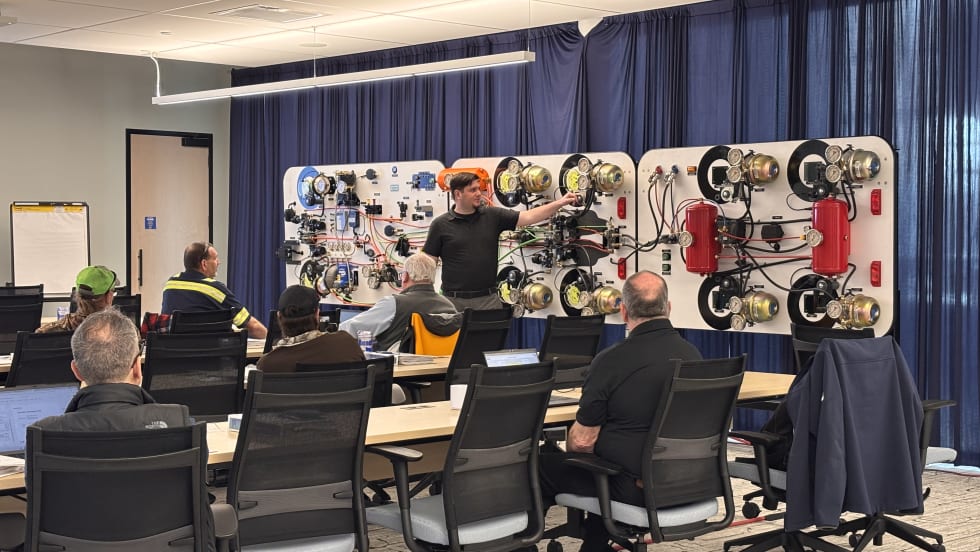
In part one, we talked about how important it is to train technicians, and how classroom training that affords hands-on experience is the best. However, it's not always feasible to send your techs off for training or even to allot hands-on time at your own location

by Rolf Lockwood, Contributing Editor
February 14, 2012
Training Technicians - Part Two

Younger people don't much want to read training manuals, and they're adept at computer use. Tailor your training accordingly.

4 min to read


In part one, we talked about how important it is to train technicians, and how classroom training that affords hands-on experience is the best. However, it's not always feasible to send your techs off for training or even to allot hands-on time at your own location.


Internet-based training is a logical alternative if the challenge of finding a quiet space can be met. Retention of 75% is claimed by some purveyors using this method, largely because it can be very interactive and can use all manner of video and animation. Communication among trainees and trainers can theoretically be accomplished through real-time chat, discussion groups, and news postings. Trainee feedback surveys are easy to do, and comprehension testing can be easily collected and stored in a central database.

Detractors, however, say the online approach has a fatal flaw: There's generally no instructor present to talk with, to clarify difficult points, to guide the student along. Questions can be e-mailed, of course, but the promise of an answer within 24 hours can be a frustration, rather than a solution.

Bendix is nonetheless about to go down this road, in addition to its more traditional training approaches, says training manager John Reid.

"As the younger generations - those who have a much greater exposure to technology - continue to join the workforce, and as all of us find ourselves more pressed for time during each work day, with the members of our workforces often geographically dispersed and our training budgets taxed, the need for access to education delivered in ways beyond the traditional means is quickly changing," Reid says.

Access to Web-based training and interactive delivery are essential to extend and expand the company's reach, Reid explains, so Bendix is preparing to extend the interactive tools it uses for its own employees to its customers as well.

In addition to product-specific training from component and engine makers, there are companies that specialize just in training. For instance, Delmar Cengage Learning offers its Professional Truck Technician Training Series in CD-Rom and Web-based formats, offering interactive training in brakes, diesel engines, electricity/electronics, preventive maintenance, suspension and steering, HVAC and drivetrain.

The courses combine theory, diagnosis and repair information into one training tool. These courses require that technicians engage with the course content and animations and interactive elements are used to help explain complex processes. Periodic process checks and end-of-section review questions help make sure users are retaining information as they work through the material. A comprehensive exam is conducted after the user completes all sections of the course.
Ad Loading...
First fight: Literacy


The training challenge is further complicated by the issue of literacy. We're not talking about the simple ability to read. We're really talking about something broader, about the skills needed to function successfully in a complicated world - and to hold down a job.

In terms of training technicians, don't assume that every mechanic is going to understand what the trainer says or what he's written. In some cases English isn't their first language, but in many more instances they just plain won't be able to read well enough to comprehend a service bulletin. That's not a knock against technicians, it's just a fact about American society.

A massive study conducted in 2003 - the National Assessment of Adult Literacy - showed that only 13% of American adults are proficiently literate, and they're almost entirely college graduates. Most people have intermediate literacy skills, which means that most of them can read and deal with numbers to some large extent but maybe not well enough to climb very high up the employment ladder. A complex service bulletin will challenge those on the lower rungs of that category.

The scary figure is that 43% of the U.S. adult population has basic or below-basic skills. Worse, 20% are functionally illiterate, meaning the instructions on a pill bottle will be beyond them.

The 2003 study was the first since similar research was done in 1992. In the intervening years, the average literacy of adults 50 years of age and older increased slightly, but there was a decline in adults between the ages of 25 and 49.

This has implications in the shop, where literacy demands have risen in those years.

"The advanced technology utilized by Cummins products has driven a slight increase in literacy requirements, not only for technicians to complete the training, but also to apply the training when they return to the shop," says Larry Osland, service training manager for the engine maker.

"By design, our service literature and training materials limit the technical vocabulary to an appropriate level. New technical terminology is always part of a training package, but engineering terminology is avoided when possible."

Rick Martin, manager of technical training at Meritor, puts it a little more simply, making much the same point in a different way, and we'll give him the last word.

"Technicians need more than the sixth-grade education that was sufficient 35 years ago," he says.

From the February 2012 issue of HDT.

Click here to read Training Technicians - Part One.

Subscribe to Our Newsletter

More Maintenance

Photo of truck driver in yellow safety vest walking alongside tractor-trailer
Driversby Deborah LockridgeFebruary 25, 2026

How One Company is Using Smart Suspension Technology to Reduce Driver Injuries and Improve Retention

America’s Service Line adopted Link’s SmartValve and ROI Cabmate systems to address whole-body vibration, repetitive strain, and driver turnover. The trucking fleet is already seeing measurable results.

Read More →
Fleetio benchmark report.
Maintenanceby News/Media ReleaseFebruary 23, 2026

Fleetio Benchmark Report: Aging Vehicles, Rising Costs Strain Fleet Maintenance

Fleetio’s analysis of 1.2 million commercial vehicles finds older assets driving outsized service spend, while most fleets remain cautious on AI adoption.

Read More →
HDT Talks Trucking podcast cover art saying "Brakes: Trucking's Final Telematics Frontier?"
MaintenanceFebruary 20, 2026

The Future of Class 8 Brake Telematics

Brakes are tough when it comes to telematics. But Hendrickson believes it is close to having a game-changing solution for fleets.

Read More →
Ad Loading...
Bendix Brake School
Maintenanceby News/Media ReleaseFebruary 19, 2026

Bendix Expands 2026 Brake School Schedule with More Advanced Tech Training

Bendix Commercial Vehicle Systems will roll out its 2026 technical training calendar with expanded access to its Advanced Technology Training program, alongside its long-running Air Brake Training course.

Read More →
Maintenanceby StaffFebruary 17, 2026

Western Star Expands Recall After Previous Battery Fix Fails to Prevent Fire Risk

After reports of corrosion and thermal events on trucks already repaired under a prior campaign, DTNA is recalling nearly 27,000 Western Star 47X and 49X models to address a battery junction stud defect.

Read More →
SponsoredFebruary 1, 2026

Reducing Fleet Downtime with Advanced Diagnostics

This white paper examines how advanced commercial vehicle diagnostics can significantly reduce fleet downtime as heavy duty vehicles become more complex. It shows how Autel’s CV diagnostic tools enable in-house troubleshooting, preventive maintenance, and faster repairs, helping fleets cut emissions-related downtime, reduce dealer dependence, and improve overall vehicle uptime and operating costs.

Read More →
Ad Loading...
SponsoredFebruary 1, 2026

Stop Watching Footage, Start Driving Results

6 intelligent dashcam tactics to improve safety and boost ROI

Read More →
Brake telematics in heavy trucks.
Maintenanceby Jack RobertsJanuary 30, 2026

Why Are Brake Telematics So Tough for Class 8 Trucks?

Brakes are the final frontier for telematics on Class 8 trucks. But Hendrickson is close to a breakthrough that could change the game in getting real-time brake system information back to fleets.

Read More →
Warehouse aisle with pallet racking filled with boxed inventory at a distribution center.
Maintenanceby News/Media ReleaseJanuary 28, 2026

Phillips Opens High-Tech Distribution Center for Faster Parts Delivery

Phillips Industries’ new Cincinnati-area distribution center is now shipping aftermarket trucking parts nationwide, aiming to speed up delivery times for customers.

Read More →
Ad Loading...
Cummins MFlex4 heavy-duty brake pad.
Maintenanceby News/Media ReleaseJanuary 20, 2026

Cummins Launches MFlex4 Air Disc Brake Pad for Heavy Duty Aftermarket

Cummins used Heavy Duty Aftermarket Week (HDAW) to introduce a new brake pad platform aimed squarely at one of the aftermarket’s biggest pain points: Complexity.

Read More →