




FTR: The Economics of 33' Trailers Only Benefit a Few Markets
FTR released a new report detailing the economics of using twin 33-foot trailers, showing that only in specific cases would the extra capacity lead to a benefit. However, for those fleets, the increase would be worth it.
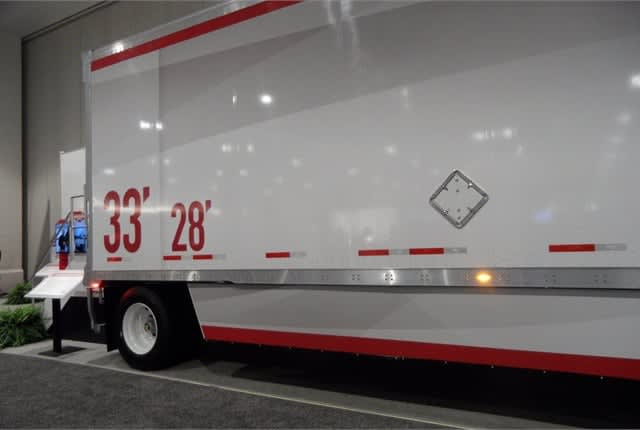
Photo: Tom Berg
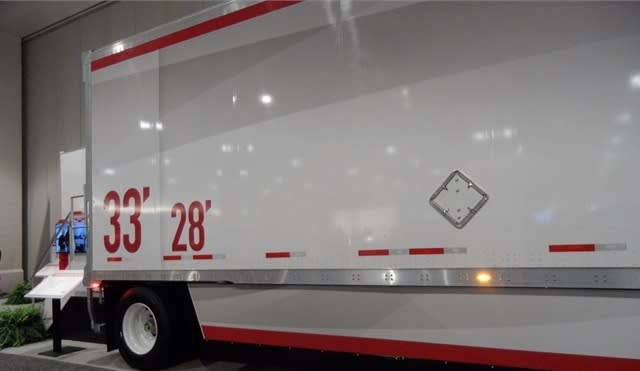
Photo: Tom Berg
FTR released a new report detailing the economics of using twin 33-foot trailers compared to twin 28-foot trailers and standard 53-foot trailers, showing that in only specific cases would the extra capacity lead to a benefit.
The change from 28-foot to 33-foot double trailers has primarily been based on safety concerns, but newer technologies have allowed for the safe operation of larger trucks since the last expansion of length limits in the early 1990s, according to FTR. Regulators have been debating a proposal to increase the federal maximum length, which would lead to an overall increase of 10 feet for the entire rig.
The thinking behind such an increase is that it would increase capacity per truck. But in reviewing the economics of the change, FTR found that adoption of double 33-foot trailers would likely be limited. It would benefit primarily less-than-truckload and parcel carriers and more niche operations such as the movement of caskets or insulation. Based on its own research, FTR expects load conversion in just the 1-2% range.
While double trailers present increased capacity in space and weight over a single trailer, for shippers of low-density freight the gain in loading capacity is only 4%. The main reason that carriers choose twin trailers over a single trailer is what the industry calls "unit" loading, a common practice in LTL and parcel operations. Since the cube advantage over 53-foot trailers is relatively small, the main reason for a carriers’ preference for doubles is to avoid the re-sorting required to consolidate many customer shipments as the freight moves across the hub-and-spoke terminal networks.
FTR found that for the segments most directly affected by increasing the allowable trailer length, they would see as much as a 10% increase in cost savings. It also expects the longer trailers to decrease the number of trucks on the road by 18% in the affected segments of trucking, which would lead to lower overall emissions.
Trucking costs don’t increase in proportion to the length of a trailer, which means that 33-foot trailers would be cheaper to operate than 28-foot trailers on a per-ton basis, according to FTR. A drawback to using longer trailers in the increased handling and need for additional loading space, with FTR calling the change a niche play only.
The limited scope of fleets that would be interested in longer double trailers is actually one of the advantages that FTR wants lawmakers to consider while pushing for the increased maximum length. This could downplay public fears about significant amounts of larger vehicles on the road because the change would not be as obvious.
FTR also believes the because the change is simple and requires no new technology and no need for costly changes to infrastructure, longer trailers would also be an easy sell. Lastly, the tradeoffs for the fleets that would use them are obvious and significant.
The full report is available here.
More Fleet Management

Kodiak Lines Up Fleets for Driverless Trucking
An agreement for 75 trucks, a new Texas freight lane, and progress on safety validation move Kodiak closer to its planned driverless highway launch.
Read More →
ITS Logistics Settles Religious Harassment Case
The Nevada-based logistics firm agreed to pay more than $396,000 to settle a religious harassment charge involving an employee's Jewish identity.
Read More →
Your Trucks Are Busy. That Doesn’t Mean They’re Winning.
High utilization doesn’t always mean strong margins. Looking beyond the current load can help fleets make better dispatch decisions and get more value from each truck’s time.
Read More →
Why This Trucking Recovery Is Different
Freight demand remains sluggish, but rising costs and tougher enforcement have taken enough capacity out of the market to change the outlook for motor carriers.
Read More →
Platform Science Adds Dispatch and Safety Tools
Four additions to PS Fleet help fleets monitor loads, manage driver coaching, share truck locations and adjust video system settings.
Read More →
PrePass Intelligence Mines Fleet Bypass, Toll and Safety Data
PrePass Intelligence helps fleets measure bypass savings, flag potential toll overcharges, and spot suspicious transactions by combining data from separate systems.
Read More →
Motive Adds AI Agents for Fleet Operations
New tools automate follow-up on fleet data, from maintenance work orders to driver alerts, with two-way voice conversations planned for later this year.
Read More →
Can You Beat Our Trucking Trivia Challenge?
Test your truck knowledge with 19 trivia questions from Heavy Duty Trucking Exchange. Can you keep up with the fleet pros?
Read More →
BeyondTrucks Adds Rules Checks to Dispatch
New Compatibility Engine checks driver qualifications, equipment requirements and fleet policies before loads are dispatched.
Read More →
Diesel Prices Hijack Trucking’s Worry List
ATRI’s annual survey finds cautious optimism about freight, but diesel costs, litigation, and insurance continue to squeeze fleets. Drivers have different priorities on several issues.
Read More →