





Related: FMCSA Finally Issues Final Rule on Driver-Training Standards
Groups Want Behind-the-Wheel Time Restored to Entry-Level Driver Rule
A trucking association and several safety advocacy groups have petitioned FCMSA to reconsider the Entry-Level Driver Training Final Rule and add minimum behind-the-wheel training time for student CDL drivers.
December 30, 2016
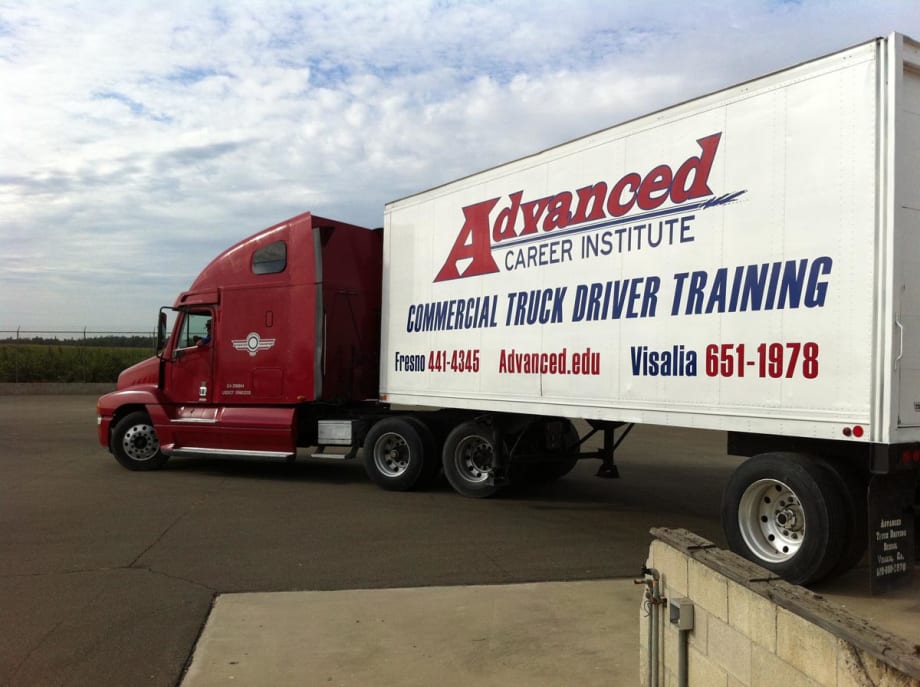
Photo courtesy Advanced Career Institute.
4 min to read
Photo courtesy Advanced Career Institute.
Four groups have petitioned the Federal Motor Carrier Safety Administration to reconsider provisions of the Final Rule for Entry-Level Driver requirements, which the agency issued on Dec. 7.
The final rule does not include a requirement for 30 hours of behind-the-wheel training for new drivers. Last March, FCMSA had included in its proposed rule a minimum of 10 hours of training on a “driving range” as well as an unspecified amount of time driving on a public road. The final rule requires no behind-the-wheel standard for student drivers, instead deferring to skills tests administered by state licensing agencies. The petition notes that under the new rule, the determination of whether a student driver has the skill set required to operate safely on public roadways is “entirely in the hands of the instructor.”
The petition to reconsider was filed by Advocates for Highway and Auto Safety, the Owner-Operator Independent Drivers Association, the Truck Safety Coalition and Citizens for Reliable and Safe Highways on Dec. 21. In it, the petitioners noted that;
“The performance standard in the Final Rule does not ensure that CDL applicants who can pass the state CDL skills test will spend any time actually operating a CMV on public roads with an experienced instructor encountering safety critical situations. This type of real-world training and experience that CDL candidates need, and that several bodies of experts have determined should be required, in order to enhance the ability of CDL applicants to operate a truck-trailer combination vehicle safely and to avoid crashes. Instead, the Final Rule does nothing more than ensure that future CDL candidates will acquire only the most rudimentary skill set needed to pass the most basic of maneuvering tests, as has always been the case, while depriving both future CDL applicants, and the traveling public of, developing better trained, more skilled novice CMV drivers.”
Todd Spencer, executive vice president of OOIDA, told HDT, “It’s absurd that the required amount of hours behind the wheel training is zero. Hairdressers and barbers have a minimum. Pilots have a minimum. It’s totally insulting to professional truckers that have dedicated their lives to driving safely and sharing the highways with others.”
The petitioners also made the following points in support of their position:
A 1995 Federal Highway Administration report entitled “Assessing the Adequacy of Commercial Motor Vehicle Driver Training” determined minimum criteria on eight key factors of driver training, including time behind the wheel, which was set as “38.5 hours for heavy trucks and motor coaches as well as 9 hours for school buses.”
A 2005 rejection of a proposed rule for Entry-Level Driver Training by the U.S. Court of Appeals for the District of Columbia Circuit for being woefully deficient, “specifically because it failed to require behind-the-wheel training hours," noting the findings of the 1995 Adequacy Report. The Court held, “The Adequacy Report determined that effective training for CMV drivers required practical, on-the-road instruction on how to operate a heavy vehicle.”
FCMSA’s own response to the 2005 ruling, which included a Notice of Proposed Rule Making in 2007 “to revise the standards for mandatory training requirements for entry-level operators of commercial motor vehicles (CMVs) in interstate operations who are required to possess a commercial driver’s license." This NPRM included a requirement of 44 behind-the-wheel hours for Class A applicants and 32 behind-the-wheel hours for Class B applicants.
Leading CDL training schools nationwide already require their students complete a minimum number of hours of behind-the-wheel training, ranging from 74 to 44 hours.
Several states already have minimum behind-the-wheel training standards in place. Illinois requires 40 hours; Kentucky 45, Maine 44 hours for Class A applicants and 20 hours for Class B applicants; and Ohio at least 40 hours.
The petitioners contend the 2016 Final Rule is “not in the public interest because it does not advance safety beyond current practice in which any and all untrained CDL applicants can perform basic minor movements of CMVs and obtain a CDL without being exposed to the real-world experience of driving a CMV on public roads while receiving instruction from a qualified instructor."
The petitioners have requested a stay of the effective date of the 2016 Final Rule until the Administrator can render a decision on this Petition for Reconsideration.
More Drivers

Truck Drivers Need More Than Another Alert
Fleets have more visibility into truck health, safety events, and driver activity than ever. The next challenge is turning all that information into useful guidance for the person who has to decide what to do next.
Read More →
FMCSA Removes 110 Truck Driver Training Schools from Certified ELDT List
Federal regulators also are targeting more than 160 additional training providers and launching a nationwide audit of third-party CDL skills testers as part of a broader crackdown on trucking fraud.
Read More →
Hours of Service Pilot Programs: FMCSA Readies for 2027 Rollout
Two pilot programs could eventually reshape hours-of-service rules, giving truck drivers options to pause their 14-hour clock or use longer split sleeper rest periods.
Read More →
Medical Cards, English Proficiency Reshape Roadcheck Violations
Medical-card violations jumped to the top of the driver out-of-service list during CVSA’s 2026 International Roadcheck, while English-language proficiency violations appeared among the leading violations for the first time.
Read More →
Driver Trust Can Make or Break the Success of Fleet Safety Technology
New Teletrac Navman research suggests that onboarding, transparency about driver data, and positive feedback can play a significant role in how commercial drivers respond to safety and coaching technology.
Read More →
EEOC Sues KLLM Over Alleged Sex Discrimination in Driver Training
KLLM is facing a federal sex-discrimination lawsuit over policies the EEOC alleges put female truck driver trainees at a disadvantage.
Read More →
FMCSA Moves to Codify English Language Requirements for Commercial Drivers
By changing regulations on English-language proficiency requirements for commercial drivers, rather than relying on a guidance memo, the FMCSA said future administrations won't be able to walk back the Trump administration's stricter enforcement with just a memo.
Read More →
Drivers Put Western Star Trucks to the Test at Star Nation Experience
Watch to get an inside look at the Western Star trucks, technology, and community behind the Star Nation Experience 2026!
Read More →
Trump Administration Looks to Put More Veterans Behind the Wheel
The Freedom Haulers program pulls together existing and expanded programs at several federal agencies to recruit veterans to drive commercial heavy-duty trucks and cut the red tape for them to get a CDL, training, and employment.
Read More →
Putting Mack’s Command Steer to the Test
A test drive of Mack’s Command Steer active steering system evaluates how it can make truck driving easier and less tiring.
Read More →