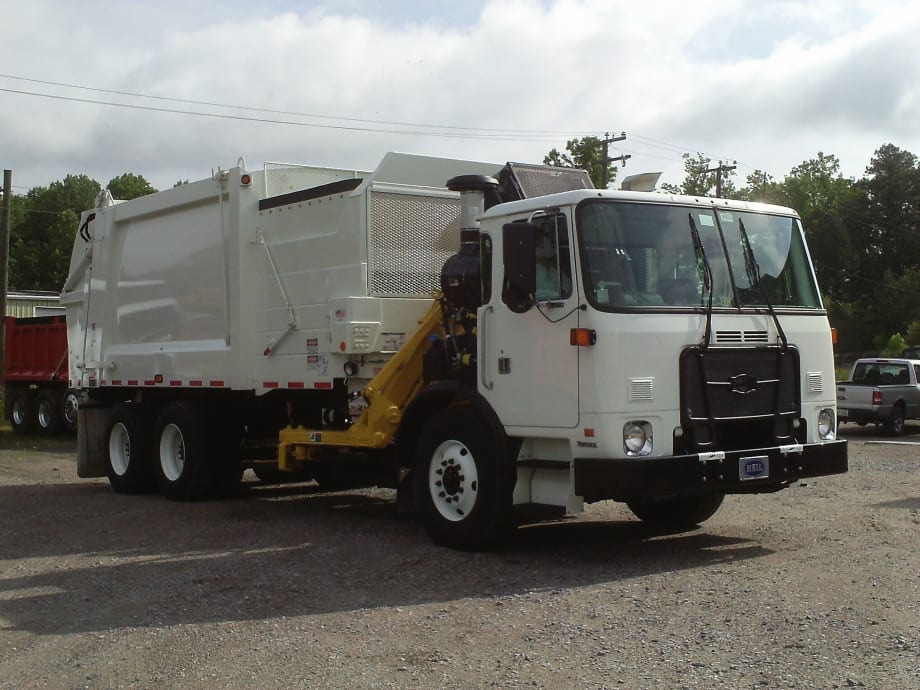
Miami-Dade County, Fla., has placed its third order for Autocar E3 hybrid refuse trucks. This purchase of 29 vehicles brings the total hybrid refuse fleet to 64.
by Staff
November 24, 2014
Photo courtesy of Parker Hannifin
1 min to read
Photo courtesy of Parker Hannifin
Miami-Dade County, Fla., has placed its third order for Autocar E3 hydraulic hybrid refuse trucks that feature Parker Hannifin’s RunWise Advanced Series Hybrid Drive System. The additional purchase of 29 new hybrid trucks brings the total fleet to 64. The county purchased 29 of these vehicles in 2012 and six in 2011.
Ad Loading...
Use of the hybrid vehicles vehicles reduces fuel consumption by up to 50%, according to Parker. The RunWise-equipped refuse trucks capture more than 71% of a vehicle’s otherwise lost braking energy, which can save up to 4,300 gallons of fuel per year, per truck. Trucks with the RunWise system have logged more than 1 million miles of operation.
Ad Loading...
“Miami-Dade’s repeat orders prove that this technology works and continues to cut costs and reduce emissions for the county,” said Shane Terblanche, general manager, hybrid drive systems at Parker Hannifin. “We are encouraged by the positive feedback on RunWise’s environmental and operational results from Miami-Dade, which is among more than 30 other municipalities across the U.S. benefiting from our technology.”
The RunWise version of the Autocar refuse trucks operate in Miami-Dade County and several other municipalities around the country, including Orlando, Fla.; Sacramento, Calif.; Tacoma, Wash; and Houston and Austin, Texas. The Autocar E3 equipped with RunWise technology is also available to waste management companies on a rent-to-own basis.
Listen as Mike Roeth of the North American Council for Freight Efficiency shares insights into battery-electric trucks, natural gas, biofuels, and clean diesel on this episode of HDT Talks Trucking.
NACFE's Run on Less - Messy Middle project demonstrates the power of data in helping to guide the future of alternative fuels and powertrains for heavy-duty trucks.
Mike Kucharski, vice president of refrigerated carrier JKC Trucking, says diesel price jumps tied to global instability are squeezing carriers already struggling with weak freight rates.
In today’s cost-conscious market, fleets are finding new ways to get more value from every truck on the road. See how smarter maintenance strategies can boost uptime, control costs and drive stronger long-term returns.
Purdue researchers demonstrated a high-power wireless charging system capable of delivering energy to electric heavy-duty trucks at highway speeds, advancing the concept of electrified roadways for freight transportation.
The Environmental Protection Agency is asking diesel engine makers to provide information about diesel exhaust fluid system failures as it considers changes to emissions regulations.
The Environmental Protection Agency said California can’t enforce its Heavy-Duty Inspection and Maintenance Regulation, known as Clean Truck Check, on vehicles registered outside the state. But California said it will keep enforcing the rule.
The Trump administration has announced it will no longer criminally prosecute “diesel delete” cases of truck owners altering emissions systems in violation of EPA regulations. What does that mean for heavy-duty fleets?
Natural gas is quietly building a reputation as a clean, affordable, and reliable alternative fuel for long-haul trucks. And Ian MacDonald with Hexagon Agility says the Cummins X15N is a big reason why.