





Watch: Focus On Mack MD7 [Video]
Mack Gives MD Series Larger Cab, New Safety Features
New standard features on the Mack MD medium-duty truck enhance driver comfort and safety and increase body options.
August 12, 2024
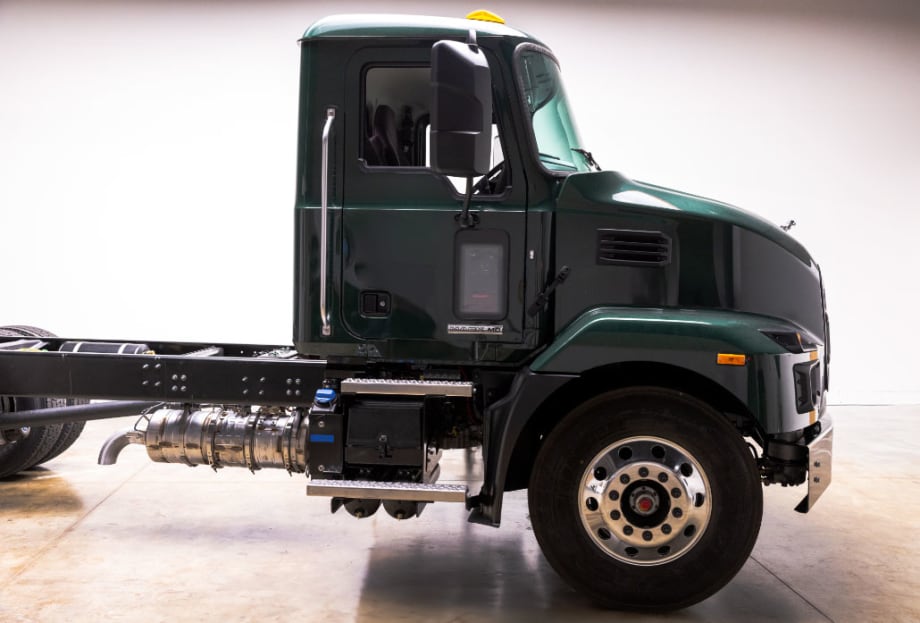
The Mack MD's cab is 4 inches longer than the previous version, giving drivers more seat recline and leg room.
Photo: Mack Trucks
2 min to read
Mack MD Series medium-duty trucks, both diesel and electric models, are getting a “significant refresh,” according to the company, with a larger cab and new safety features.
These updates – now standard on the MD without raising its price – include enhanced driver comfort and safety features, while improving ease of installation for body builders.
The Mack MD cab is now 4 inches longer than the previous version, giving drivers more seat recline and leg room.
Mack noted that this refreshed cab further shows how the Mack Anthem cab influenced the MD cab design and many of the shared driver-comfort features, such as an overhead console for additional storage.
The interior features premium satin aluminum trim, improved seating with lumbar support, and enhanced LED lighting.
New steering wheel controls for cruise control, telephone and audio functions have been added, increasing driver convenience and safety.
Safety and Body Builder Features on Refreshed Mack MD
Mack MD trucks now come standard with several enhanced safety features, including:
A new antilock braking system with automatic traction control
Radio mute in reverse
Park brake alarm
Pre-wired body builder connections, a relocated air dryer, and wheelbases updated to industry-standard Cab to Axle (CA) dimensions make the updated MD Series easier to install an even wider array of body installations than previously.
“Since the MD Series was introduced in 2020, Mack has continued to listen to our customers and make ongoing improvements to meet their operational needs,” said Jonathan Randall, president of Mack Trucks North America.
The Mack MD Series is available with diesel or electric drivetrain options in the MD6, a Class 6 model with a Gross Vehicle Weight Rating (GVWR) of 25,995 pounds, and the MD7, a Class 7 model with a GVWR of 33,000 pounds.
Both models are exempt from the 12% Federal Excise Tax (FET).
The MD Series is a popular choice for various applications, including dry van/refrigerated, stake/flatbed, dump truck and tank truck vocations.
The MD6 model does not require a Commercial Driver's License (CDL) to operate for non-hazardous payloads.
More Equipment

How Volvo Updated Its D13 for EPA 2027 [Watch]
Volvo’s updated D13 promises lower emissions without sacrificing performance or fuel economy. Take a closer look at what changed inside the engine in this HDT Spotlight video.
Read More →
Michelin Tire Improves Efficiency and Durability for Regional Fleets
The Michelin X Multi Energy D2 is a regional haul drive tire engineered to help fleets improve fuel efficiency, durability and traction in demanding stop-and-go operations.
Read More →
ZF Expands Commercial Vehicle Push in North America
ZF is expanding its North American commercial-vehicle presence with new transmission applications, electrification, trailer technology and autonomous-driving systems.
Read More →
Tesla Wants a Self-Driving Semi. Are Cameras Enough?
Could Tesla’s camera-only autonomous driving technology work on an 80,000-pound Semi? In this commentary, HDT's Deborah Lockridge takes a look at Tesla, Cybercab, and how autonomous trucks see the road.
Read More →
Kodiak: Driverless Long-Haul Truck Launch on Track for 2026
Kodiak AI says its driverless long-haul safety case is 93% complete and it remains on track to begin commercial operations by year-end 2026.
Read More →
What DOT’s Automated Vehicle Strategy Means for Trucking
The U.S. Department of Transportation issued a new automated-vehicle strategy that outlines plans for driverless-truck regulations, cross-state freight corridors, and federal safety standards.
Read More →
East Coast Port Launches $45M Electric Truck Push
The Port Authority of New York and New Jersey announced millions in incentives for zero-emission drayage trucks, yard tractors, and new charging hubs near the port.
Read More →
PlusAI Going Public to Fund Autonomous Truck Launch
A SPAC deal could provide PlusAI with up to $300 million as it works toward a 2027 commercial launch of factory-built autonomous trucks.
Read More →
NHTSA Moves to Rewrite Truck Fuel-Economy Rules
The National Highway Traffic Safety Administration says it lacks authority to regulate medium- and heavy-duty truck engines separately from complete vehicles, but the existing standards have not yet been eliminated.
Read More →
Detroit Opens Orders for EPA 2027 Engines
Detroit isn’t starting from scratch to meet EPA 2027 diesel emissions standards. Its Gen 6 DD13 and DD15 engines keep much of today’s platform while updating the fuel and aftertreatment systems.
Read More →