





Are Heavy-Duty Emissions Regulations a Disaster in the Making?
American Petroleum Institute Sues EPA Over Emissions Regulations
The American Petroleum institute has filed a lawsuit challenging the U.S. Environmental Protection Agency’s (EPA) heavy-duty (HD) vehicle emissions standards for model years (MY) 2027-2032.
June 18, 2024
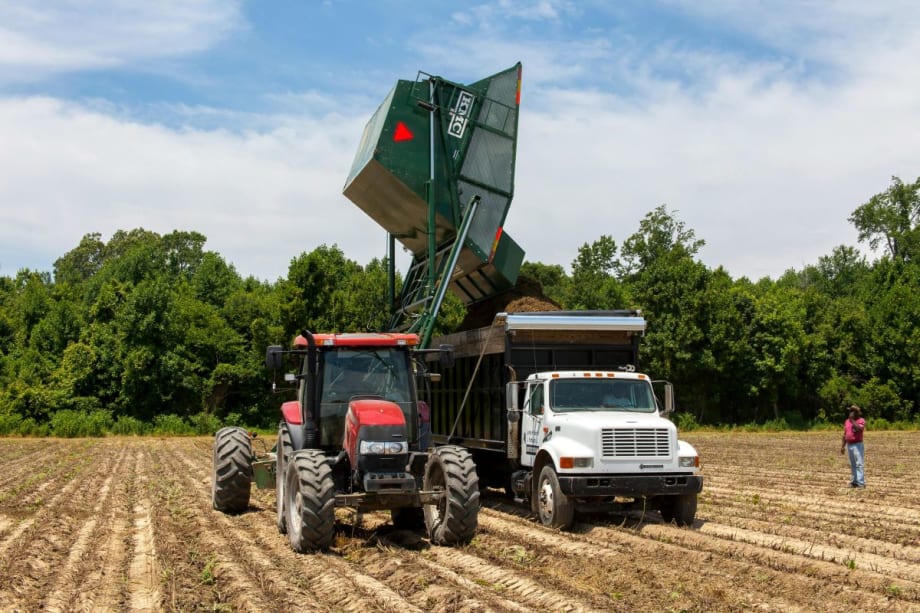
The National Corn Growers and the American Farm Bureau have joined API's lawsuit challenging EPA's heavy-duty emissions standards regulations.
Photo: Mark Stebnicki
3 min to read
The American Petroleum Institute (API) has filed a lawsuit challenging the U.S. Environmental Protection Agency’s heavy-duty (HD) vehicle emissions standards for model years (MY) 2027-2032. API filed the lawsuit on June 18 in the in the D.C. Circuit Court of Appeals.
API represents all segments of America’s natural gas and oil industry, which supports nearly 11 million U.S. jobs. Its members produce, process and distribute the majority of the nation’s energy.
API has been joined in the lawsuit by the Owner-Operator Independent Drivers Association (OOIDA), National Corn Growers and the American Farm Bureau Federation. The American Farm Bureau is an advocacy group representing American famers and the agricultural industry.
Regulated Out of Existence
“Today, we are standing up for consumers who rely on trucks to deliver the goods they use every single day,” said API Senior Vice President and General Counsel Ryan Meyers. “The EPA is forcing a switch to technology that simply does not presently exist for these kinds of vehicles – and even if it were someday possible, it will almost certainly have consequences for your average American. This is sadly yet another example of this administration pushing unpopular policy mandates that lack statutory authority, and we look forward to holding them accountable in court.”
“Small business truckers make up 96% of trucking and could be regulated out of existence if the EPA’s unworkable heavy-duty rule comes into effect,” said Todd Spencer, president, Owner-Operator Independent Drivers Association. “This rule would devastate the reliability of America’s supply chain and ultimately increase costs for consumers. Mom and pop trucking businesses would be suffocated by the sheer cost and operational challenges of effectively mandating zero emission trucks, but this administration appears intent on forcing through its deluge of misguided environmental mandates. As the voice of over 150,000 small-business truckers, we owe it to our members and every small-business trucker in America to leave no stone unturned in fighting these radical environmental policies.”
One-Size-Fits-All Won’t Work
“EPA has tried to impose a one-size-fits-all approach to addressing climate change by prioritizing electric vehicles over other climate remedies like corn ethanol,” said Minnesota farmer and National Corn Growers Association President Harold Wolle. “But while it could take decades to get enough electric vehicles on the road to make a dent in GHG emissions, lower carbon fuels such as ethanol are critical and effective climate tools that are available now. Ethanol is not only critical in the climate fight, but it also saves consumers money at the pump while benefiting America’s rural economies. We look forward to making this case in court.”
“Farmers rely on heavy-duty trucks to transport livestock long distances, and they choose the most efficient routes to ensure the animals in their care remain on the vehicle for as little time as possible, said American Farm Bureau Federation President Zippy Duvall. “Unfortunately, heavy-duty vehicles that are powered by batteries have short ranges and require hours to charge. Impractical regulations will extend the amount of time on the road, putting the health and safety of drivers and livestock at risk if they need to stop for long periods of time to charge.”

Lack of BEV charging facilities is a major problem for agricultural fleets operating in remote areas.
Photo: Tom Fisk
In April, the Biden administration finalized new federal emissions standards for heavy-duty vehicles (including commercial vehicles). In the final rule, EPA projects that there would need to be significant deployment of zero emission vehicles (ZEV) throughout the HD fleet to meet emissions standards. For example, over 40% of vocational vehicles (work trucks) would need to be ZEVs by MY 2032. Additionally, long-haul tractors (semi-trucks), which currently have no ZEV deployment, would need to go from zero percent today to 25% of the fleet by MY 2032.
More Fuel Smarts

How Volvo Updated Its D13 for EPA 2027 [Watch]
Volvo’s updated D13 promises lower emissions without sacrificing performance or fuel economy. Take a closer look at what changed inside the engine in this HDT Spotlight video.
Read More →
Diesel Price Spike Shortens Payback for Natural Gas Trucks, Report Says
Energy Vision estimates fleets could recover the higher purchase price of an RNG-fueled Class 8 tractor in 1.3 to 2.8 years under current fuel-price scenarios.
Read More →
Calstart Becomes Catalyst Mobility, Reflecting Broader Focus
Calstart is now Catalyst Mobility, reflecting the nonprofit’s growing national role in clean transportation, including zero-emission trucks, infrastructure and incentive programs.
Read More →

Record Diesel Prices Squeeze Trucking Fleets
Average U.S. diesel prices have climbed to nearly $6 a gallon, surpassing the 2022 record as tight refinery capacity and Middle East disruptions keep fuel costs elevated.
Read More →
Sponsored•September 9, 2026
How Fuel Delivery Shapes Engine Performance
Fuel delivery depends on more than what happens at the injector. For fleet, maintenance and technical professionals, looking at the full path from pump to injector can provide useful context for understanding engine performance.
Read More →
East Coast Port Launches $45M Electric Truck Push
The Port Authority of New York and New Jersey announced millions in incentives for zero-emission drayage trucks, yard tractors, and new charging hubs near the port.
Read More →
California Bill Could Shed Light on Electric Truck Prices
Why do battery-electric Class 8 trucks remain so expensive? A California bill headed to Gov. Gavin Newsom would give fleets and state agencies more visibility into what manufacturers charge.
Read More →
Detroit Opens Orders for EPA 2027 Engines
Detroit isn’t starting from scratch to meet EPA 2027 diesel emissions standards. Its Gen 6 DD13 and DD15 engines keep much of today’s platform while updating the fuel and aftertreatment systems.
Read More →
Zero-Emission Truck Corridor Planned for West Coast
California, Oregon, Washington, British Columbia and Baja California are coordinating plans for truck charging and hydrogen fueling from Canada to Mexico.
Read More →
A Closer Look at Kenworth’s Electric T880E Vocational Truck [Video]
Learn more about Kenworth's T880E battery-electric vocational truck at the Paccar Technical Center, including its range, applications, upfitting considerations, and PTO options, in this HDT Spotlight video.
Read More →