





Dig Deeper: How Do Autonomous Trucks “See” the World?
Knight-Swift to use Embark Truck as Part of Truck Transfer Program
The Knight-Swift project is the first public initiative where a carrier will directly own and operate a truck with select features of Embark’s automated driving software.
December 19, 2022
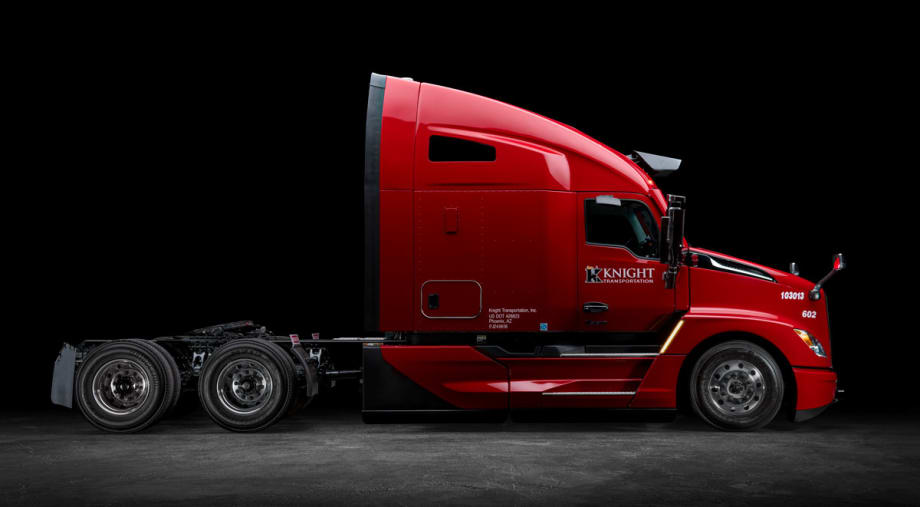
For the first time, a carrier – Knight-Swift – will place its own drivers behind the wheel of an Embark-powered truck.
Photo: Embark
2 min to read
Knight-Swift Transportation will be the first motor carrier to integrate Embark’s autonomous technology into existing operations, operating with a driver behind the wheel.
The autonomous-truck-tech developer announced it has initiated handoff of the first Embark-powered truck to the motor carrier as part of the Truck Transfer Program. The company said TTP marks the first public initiative where a carrier will directly own and operate a truck with select features of Embark’s automated driving software. This subset of features is designed to operate with a trained Knight-Swift driver behind the wheel at all times.
Knight-Swift will be able to collect data regarding system safety and operational performance, while Embark will gain valuable insight from having its system components operating in a carrier customer’s duty cycle.
The first Embark-powered truck will begin integrating into Knight-Swift’s daily operations to move loads for large shippers on the Los Angeles to Phoenix lane.
To meet the uptime requirements of a commercial fleet, Embark has focused on hardening its Embark Universal Interface and Embark Driver software. This includes improvements in calibration and maintainability of the system, enabling quick troubleshooting so trucks can get back on the road.
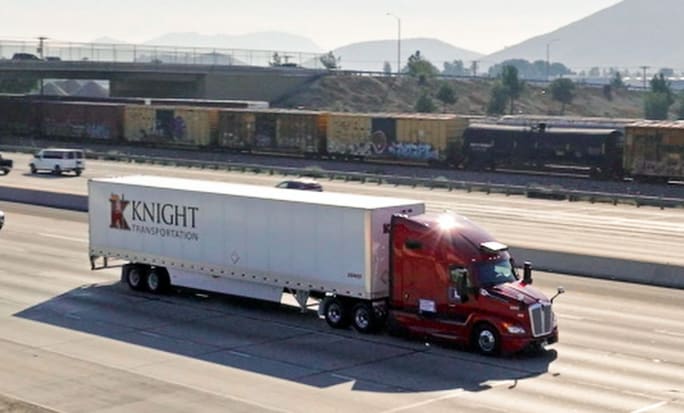
The first Embark-powered truck will begin integrating into Knight-Swift’s daily operations to move loads for large shippers on the Los Angeles to Phoenix lane.
Photo: Embark
Embark and Knight-Swift have been jointly working on several operational initiatives to prepare for the handoff of Embark-powered trucks into Knight-Swift’s daily operations. These include:
Developing maintenance procedures for AV systems
Developing procedures for pre- and post-trip inspections
Training and certifying Knight-Swift drivers
Developing escalation policies for maintenance issues.
Embark is also training Knight-Swift technicians on how to service and interact with the trucks.
While on the road, Embark-powered trucks will be monitored and supported by Embark Guardian, a combination of cloud-based fleet management software and personnel, which together will monitor the health of the Embark system.
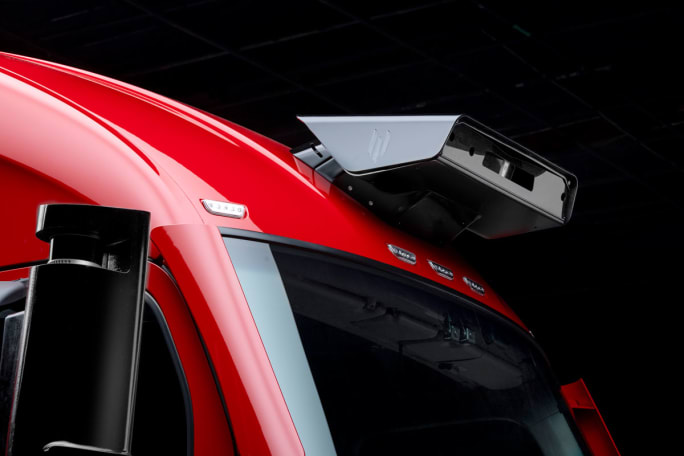
TTP marks the first public initiative where a carrier will directly own and operate a truck with select features of Embark’s automated driving software.
Photo: Embark
“I am excited to take delivery, so our drivers and customers can provide direct feedback on the technology as we use it in day-to-day operations to enable new safety and efficiency in trucking” said Knight Swift CEO Dave Jackson.
Embark CEO Alex Rodrigues said, “Handing over the first Embark-powered truck to the Knight-Swift team tops off a year in which Embark has made critical strides to close the gap between testing our autonomous technology and scaling it across customer fleets. The Truck Transfer Program will be a model for the industry as we move from the R&D and pilot phase toward commercialization.”
The TTP program, announced earlier this year, is a major step on the path to eventual purchase and ownership of Embark-equipped trucks by carriers, according to the company.
More Equipment

How Volvo Updated Its D13 for EPA 2027 [Watch]
Volvo’s updated D13 promises lower emissions without sacrificing performance or fuel economy. Take a closer look at what changed inside the engine in this HDT Spotlight video.
Read More →
Michelin Tire Improves Efficiency and Durability for Regional Fleets
The Michelin X Multi Energy D2 is a regional haul drive tire engineered to help fleets improve fuel efficiency, durability and traction in demanding stop-and-go operations.
Read More →
ZF Expands Commercial Vehicle Push in North America
ZF is expanding its North American commercial-vehicle presence with new transmission applications, electrification, trailer technology and autonomous-driving systems.
Read More →
Tesla Wants a Self-Driving Semi. Are Cameras Enough?
Could Tesla’s camera-only autonomous driving technology work on an 80,000-pound Semi? In this commentary, HDT's Deborah Lockridge takes a look at Tesla, Cybercab, and how autonomous trucks see the road.
Read More →
Kodiak: Driverless Long-Haul Truck Launch on Track for 2026
Kodiak AI says its driverless long-haul safety case is 93% complete and it remains on track to begin commercial operations by year-end 2026.
Read More →
What DOT’s Automated Vehicle Strategy Means for Trucking
The U.S. Department of Transportation issued a new automated-vehicle strategy that outlines plans for driverless-truck regulations, cross-state freight corridors, and federal safety standards.
Read More →
East Coast Port Launches $45M Electric Truck Push
The Port Authority of New York and New Jersey announced millions in incentives for zero-emission drayage trucks, yard tractors, and new charging hubs near the port.
Read More →
PlusAI Going Public to Fund Autonomous Truck Launch
A SPAC deal could provide PlusAI with up to $300 million as it works toward a 2027 commercial launch of factory-built autonomous trucks.
Read More →
NHTSA Moves to Rewrite Truck Fuel-Economy Rules
The National Highway Traffic Safety Administration says it lacks authority to regulate medium- and heavy-duty truck engines separately from complete vehicles, but the existing standards have not yet been eliminated.
Read More →
Detroit Opens Orders for EPA 2027 Engines
Detroit isn’t starting from scratch to meet EPA 2027 diesel emissions standards. Its Gen 6 DD13 and DD15 engines keep much of today’s platform while updating the fuel and aftertreatment systems.
Read More →